A Building That Belongs to Its Place
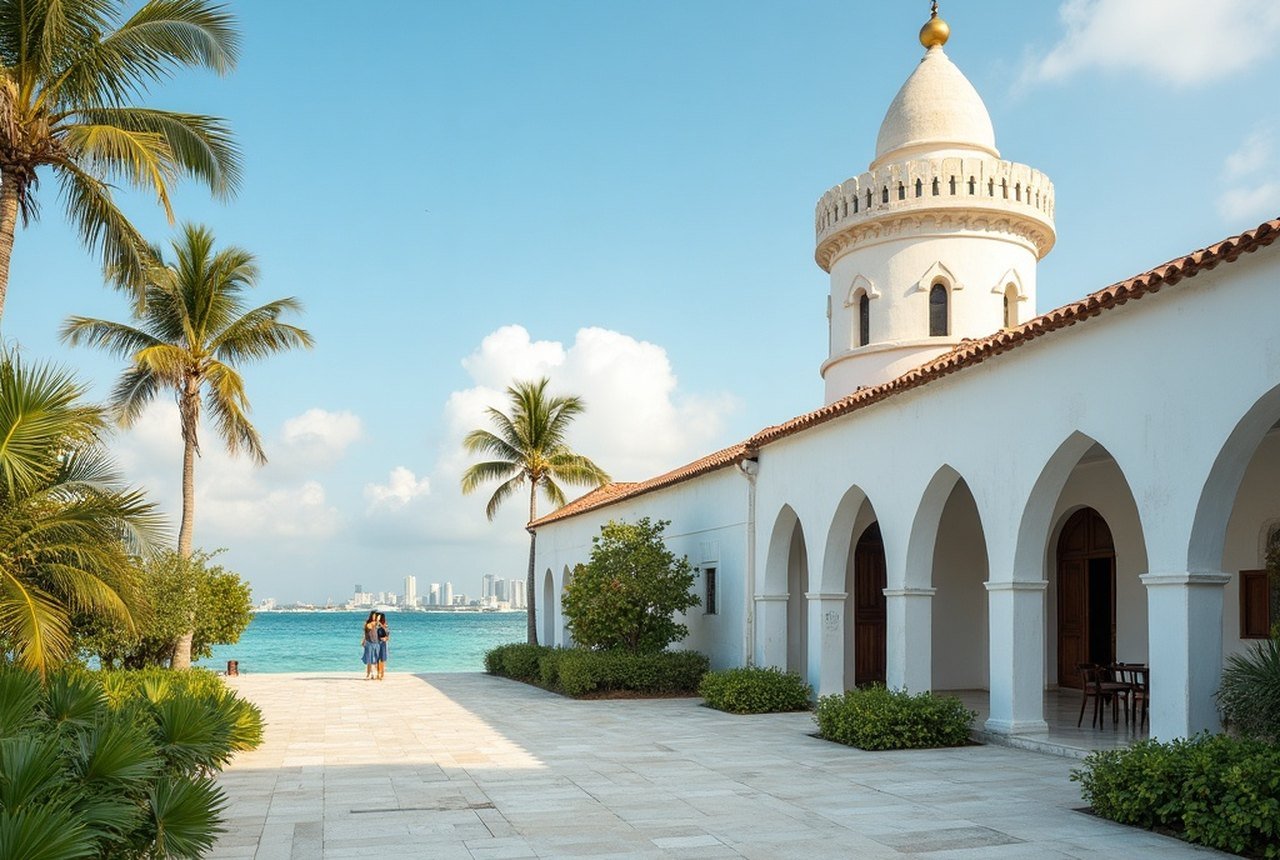
There is a moment, stepping through the low gateway off Medhuziyaaraiy Magu in central Malé, when the city noise drops away. The graveyard opens around you — weathered tombstones leaning at gentle angles, inscribed in the looping curves of Thaana script — and ahead stands Hukuru Miskiy, the Old Friday Mosque, exactly as it has stood since 1658. Nothing about it announces itself. It is low, long and pale, its walls the colour of old bone, rough to the touch because they are made, quite literally, from the reef.
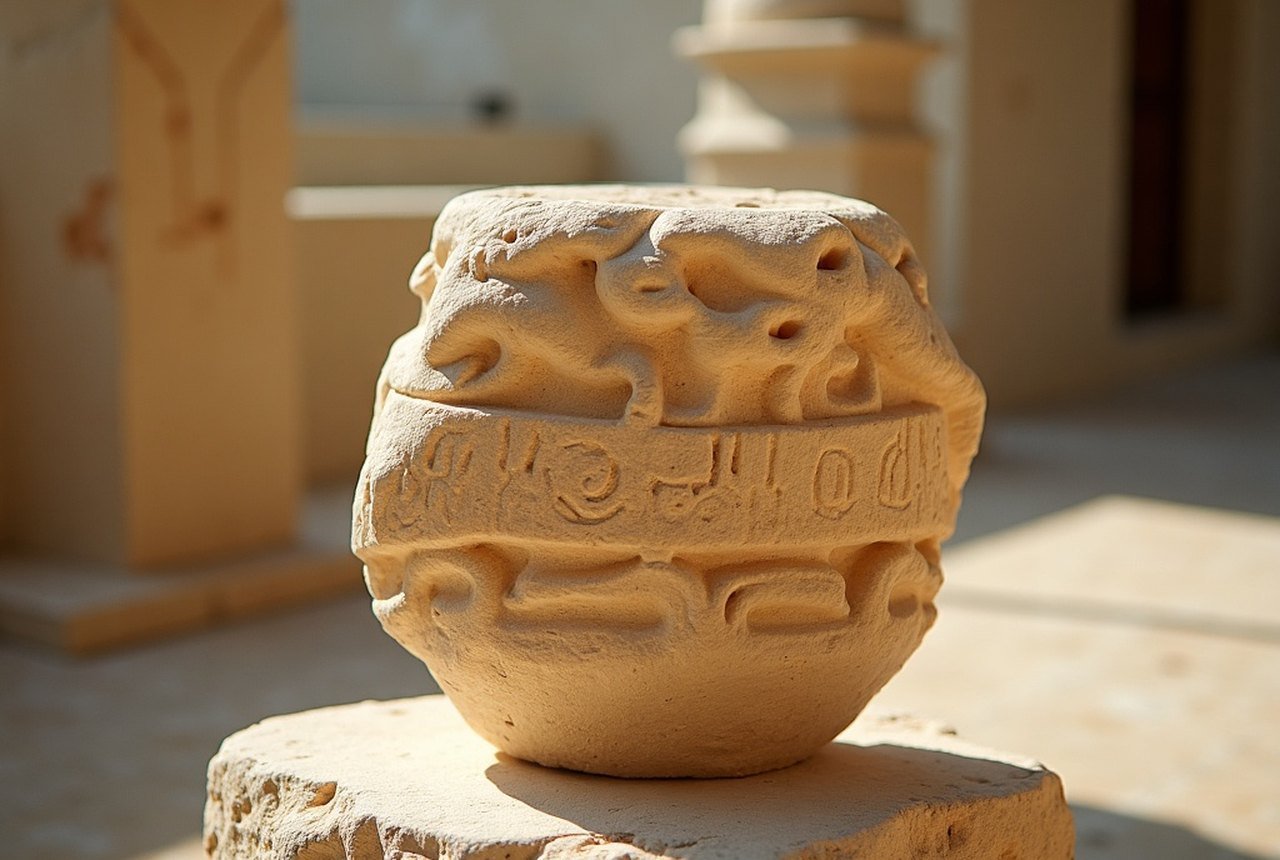
Every block in those walls is coral stone, quarried from the living reef that surrounds these islands and shaped by hands that had no other material to work with. This is what makes Maldivian sacred architecture unlike almost anything else in the Islamic world: it is inseparable from the geology of the place. The archipelago has no mountains, no clay river valleys, no sandstone escarpments. What it has, in limitless supply, is calcium carbonate — coral polyps built into limestone over millennia, then cut and dressed by craftsmen who turned a reef into a house of prayer.
Hukuru Miskiy is the oldest surviving mosque in the Maldives, and it sits on the UNESCO tentative list for World Heritage designation. That status is deserved, though the building needs no institutional endorsement to command attention. It earns it simply by being what it is: a masterpiece of vernacular Islamic architecture that could not have been built anywhere else on earth.
The Reef Carved Into Worship
The mosque was built in 1658 under Sultan Ibrahim Iskandar, one of the more consequential rulers in the long history of the Islamic Sultanate of the Maldives. His reign saw the consolidation of Islamic practice across the atolls, and Hukuru Miskiy was a statement of that commitment — not in marble or dressed limestone imported from abroad, but in the material of the islands themselves.
Coral polyps built into limestone over millennia — then cut and dressed by craftsmen who turned a reef into a house of prayer.
The conversion of the Maldives to Islam is traditionally dated to 1153 CE and attributed to the Moroccan scholar Abu al-Barakat Yusuf al-Barbari, who is said to have defeated the sea demon Rannamaari — a creature of pre-Islamic folklore believed to demand human sacrifice from the people of Malé — through the recitation of Quranic verse. Rannamaari is the kind of story that tells you something true even if you hold it lightly: it speaks to the violence of conversion mythology, the persistence of older folk belief beneath the surface of formal religion, and the way the sea saturated every corner of Maldivian spiritual life. Whatever the precise history, by the twelfth century the sultanate had committed to Sunni Islam, and for the next several centuries successive rulers expressed that commitment in coral stone and calligraphy.
By the time Sultan Ibrahim Iskandar commissioned Hukuru Miskiy in the mid-seventeenth century, there was already a long tradition of mosque building on the site. The new structure absorbed and superseded what came before. Its construction represents the fullest expression of classical Maldivian mosque architecture: a craft tradition that was already mature and that would never again be practised at quite this scale.
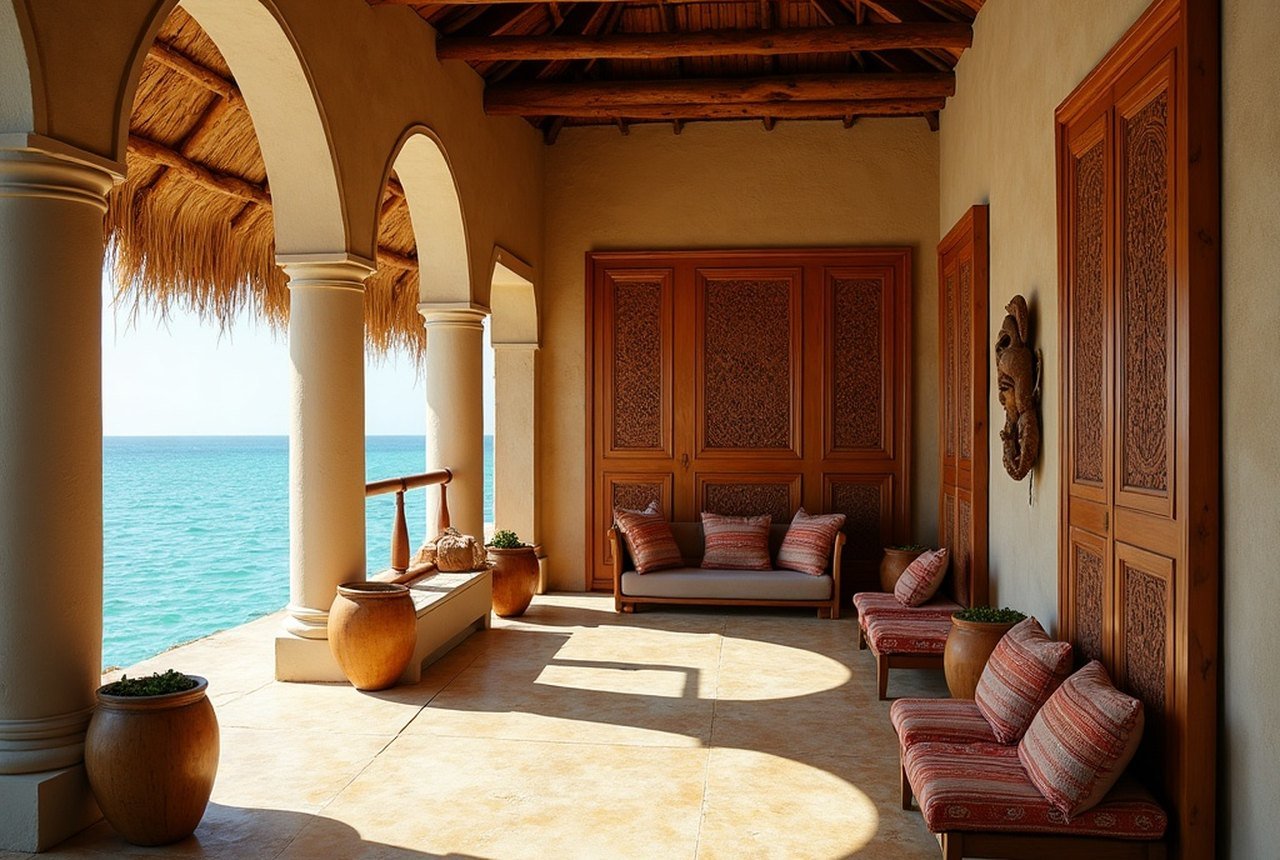
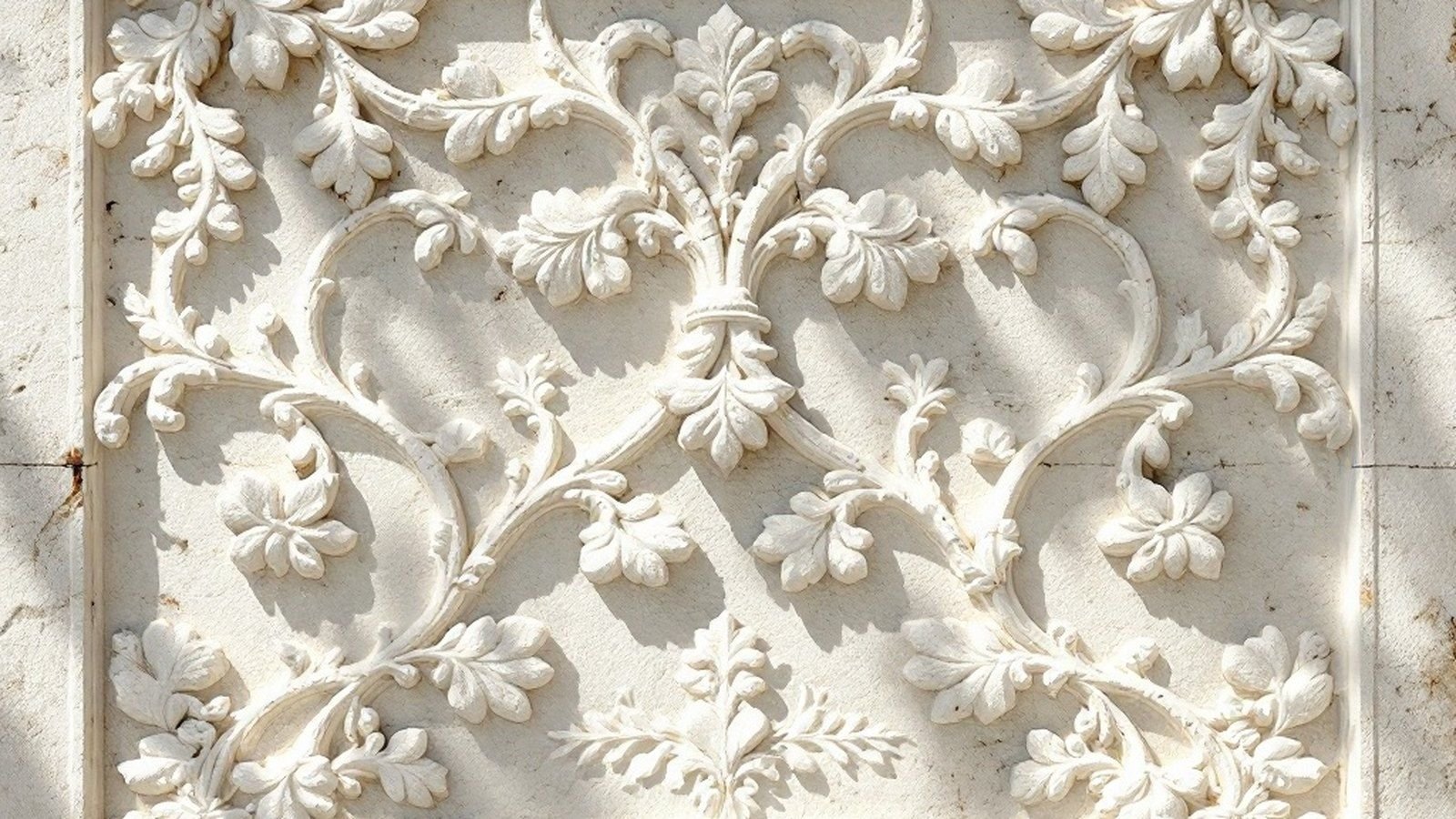
Walk the interior and the quality of the work is immediately apparent. The walls are lined with lacquerwork panels — the same tradition that produced Laajehun ↗, the hand-painted wooden objects decorated with layered resin in red, black and yellow. Here the technique is applied to interior architectural elements, producing bands of intricate geometric and floral pattern that frame the prayer space with quiet intensity. The minbar, the carved pulpit from which the Friday sermon is delivered, is a particularly fine piece: its surface worked in the wood-carving tradition that was, at the time, one of the defining crafts of the archipelago.
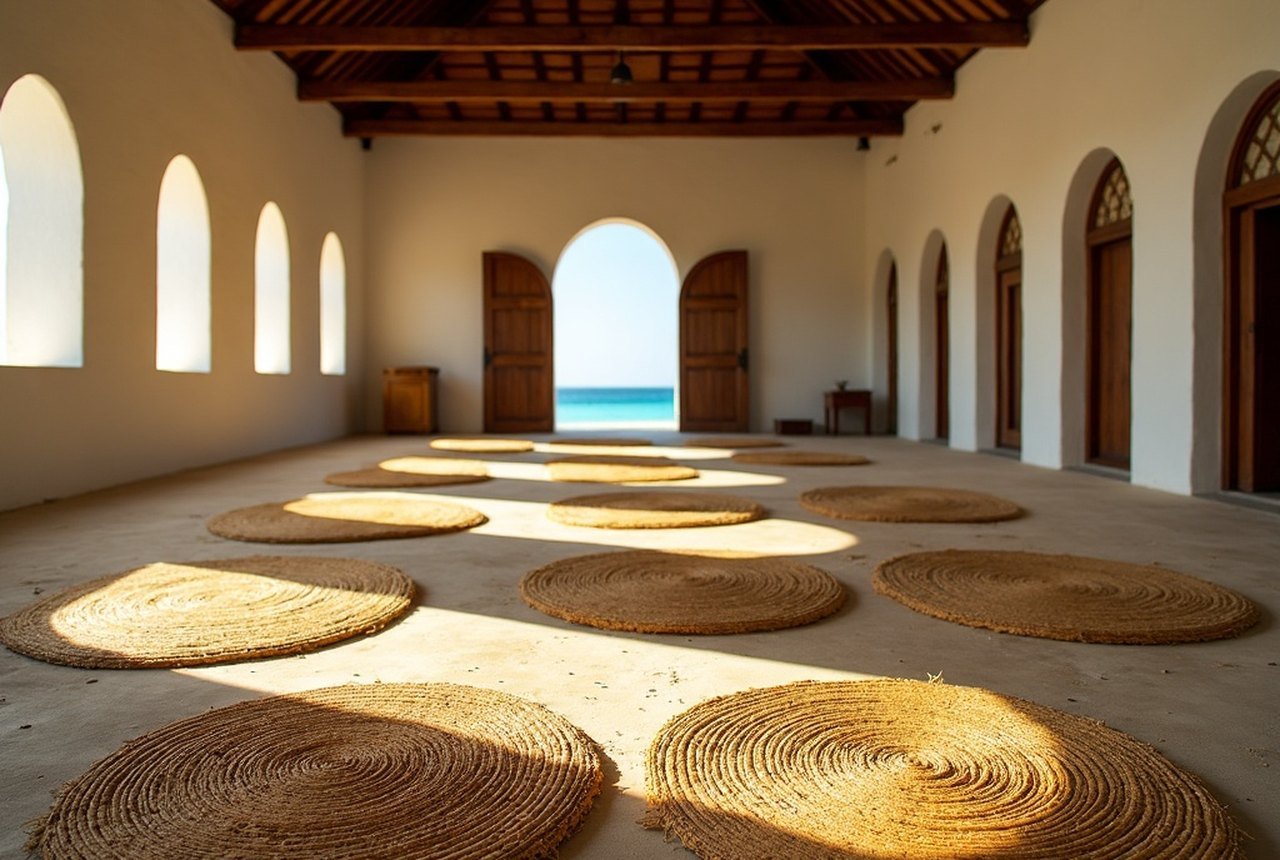
The floor is covered with woven mats rather than carpet — a practical choice in the humidity of the Indian Ocean, and one that keeps the interior feeling like itself rather than like a generalised Islamic prayer hall. Light enters through small carved openings, diffuse and gentle. The wooden ceiling, assembled without nails using traditional joinery techniques, has darkened over the centuries to a deep tobacco brown.
| Fact | Detail |
|---|---|
| Completed | 1658, under Sultan Ibrahim Iskandar |
| Material | Coral stone (reef limestone), carved and dressed by hand |
| Interior | Lacquerwork panels, carved minbar, nail-free timber ceiling |
| Status | Active Friday mosque; UNESCO tentative World Heritage list |
| Setting | Old Malé, beside the graveyard and munnaaru (minaret) |
Outside, the minaret rises at the southwestern corner. It is round, white-washed, and modest by the standards of great Islamic minarets, but it is the correct size for this building and this island. The muezzin's call from here carries only a short distance before it is swallowed by the streets of Malé — but those streets have been listening for more than three and a half centuries.
Reading the Graveyard
To understand Hukuru Miskiy fully, you need to spend time in its graveyard, which is as culturally rich as the mosque itself. The tombstones follow the classical Maldivian convention: rounded at the head for women, pointed for men. Many are incised with Thaana script — inscriptions recording names, dates, titles and, in some cases, verses from the Quran.
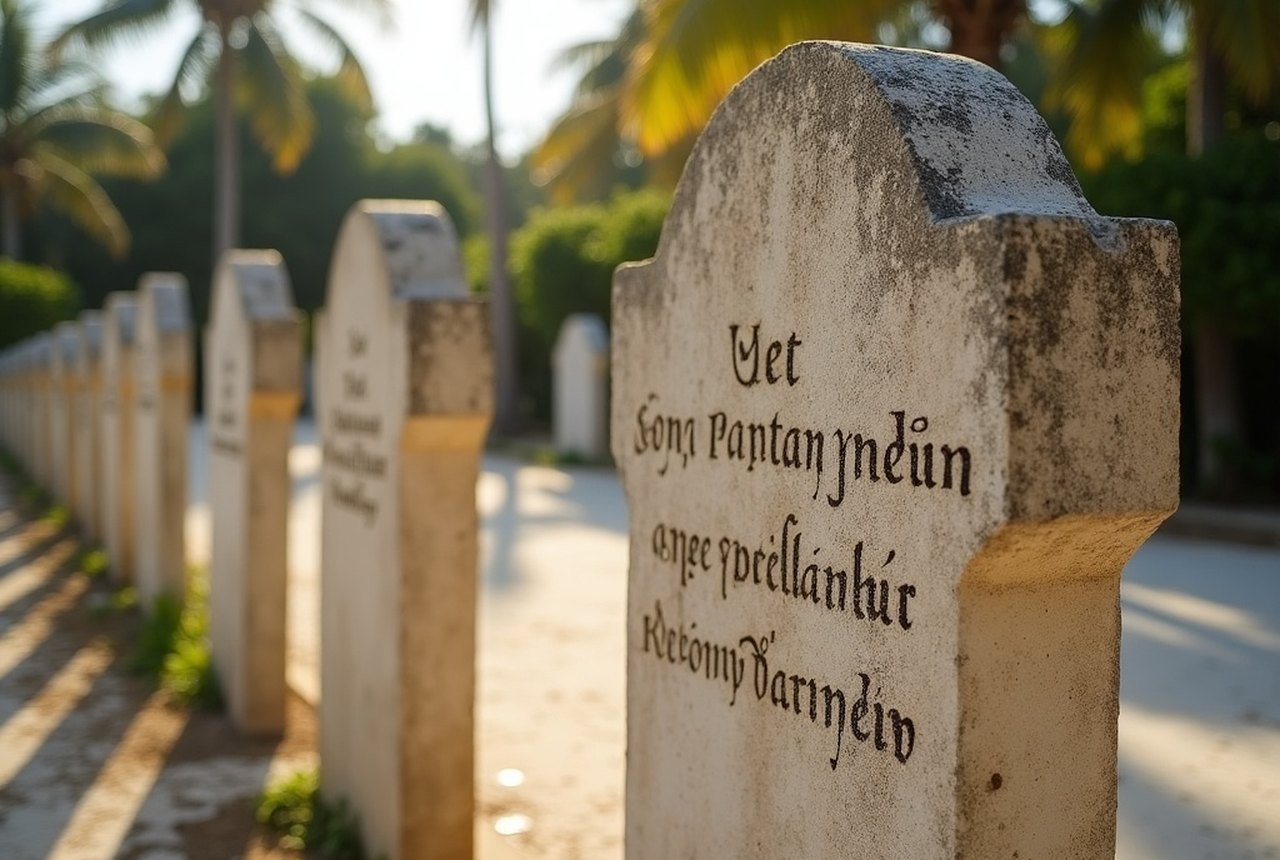
Thaana is the unique writing system of the Dhivehi language, written right to left like Arabic, and it developed at roughly the same historical moment as the mature Islamic period in the Maldives. Its letterforms draw from Arabic and Indic traditions, and its vowels are marked with small diacritics above and below the consonants rather than as independent letters. Reading a carved Thaana tombstone requires some effort even for a Dhivehi speaker, because the older inscriptions use archaic vocabulary and the stone has weathered unevenly. But the graveyard is, among other things, a monument to Dhivehi literacy — evidence that the ability to read and write was never restricted to the clerical class alone.
Several of the graves belong to notable figures from the sultanate period. One of the most visited is the tomb of Abu al-Barakat, the scholar credited with bringing Islam to the archipelago — or at least that is the tradition. Whether the tomb is genuinely his is, by now, impossible to verify; the attribution has accumulated over centuries of devotion. What is certain is that the site is treated with particular reverence, and that the connection between this specific place and the founding moment of Maldivian Islamic identity is kept alive through continued visitation.
Sultan Ibrahim Iskandar
Commissioned the mosque · r. 17th century
One of the sultanate's most consequential rulers; consolidated Islamic practice across the atolls and expressed it in coral stone rather than imported marble.
Abu al-Barakat
Credited with the 1153 conversion
The Moroccan scholar said to have defeated the sea demon Rannamaari with Quranic verse. His tomb beside the mosque remains a site of particular reverence.
The graveyard also contains royal tombs, and the proximity of mosque and royal burial ground is itself historically significant. In the Maldivian sultanate, as in many Islamic monarchies, the legitimacy of the ruler was bound up with the performance of correct Islamic observance. To be buried beside the Friday mosque was to be buried at the centre of public religious life. These graves are not incidental to Hukuru Miskiy — they are part of its meaning.
What Remains and What Is at Risk
Hukuru Miskiy is still an active place of Friday prayer. This matters more than any designation or restoration effort, because a living mosque is a different thing from a preserved monument. The building has a congregation, a function, a community to which it belongs. Tourists are welcome — but the mosque is not arranged for them. You are a visitor to someone else's sacred space, and that relationship should be held clearly in mind.
Visiting: modest dress is required and shoes are left at the entrance. Time your visit outside prayer hours, and ask before photographing anyone.
The coral-stone tradition that built Hukuru Miskiy is essentially over. Modern construction in the Maldives uses concrete and imported materials, both because reef quarrying is now prohibited to protect the living ecosystem and because the skills required to dress and lay coral stone in the classical manner have not been transmitted at scale.
| Coral stone, 1658 | Concrete, today | |
|---|---|---|
| Material | Living reef limestone, cut wet and carved as it hardened | Imported cement and aggregate |
| Craft | A mature carving tradition, transmitted hand to hand | Standardised construction, no carving tradition |
| Today | Reef quarrying prohibited; the skills no longer taught at scale | Universal — every new building in the country |
This is not a reason for despair, but it is a reason for attention. The Maldives is a country that tends to appear in photographs as an infinity pool touching an uncomplicated horizon. The reality is an archipelago with more than eight centuries of Islamic civilisation, a sophisticated literary and craft tradition, and a built heritage that is genuinely fragile — threatened by rising seas and by the simple passage of time. Hukuru Miskiy stands about two metres above sea level, like almost everything else in these islands.
- 1153 CETraditional date of the Maldivian conversion to Islam; Abu al-Barakat credited with defeating Rannamaari
- 1658Hukuru Miskiy built under Sultan Ibrahim Iskandar, superseding earlier mosques on the site
- PresentStill active for Friday prayer; on the UNESCO tentative World Heritage list
Standing in its graveyard in the late afternoon, when the light goes gold and the Thaana inscriptions on the older stones catch the angle of the sun, it is possible to feel the weight of what was built here and what it cost to build it. Coral cut from the reef, carried to shore, shaped by hand into something that was meant to last. In the Maldives, that kind of intention has always required faith.