From Sacred Kings to Sultans
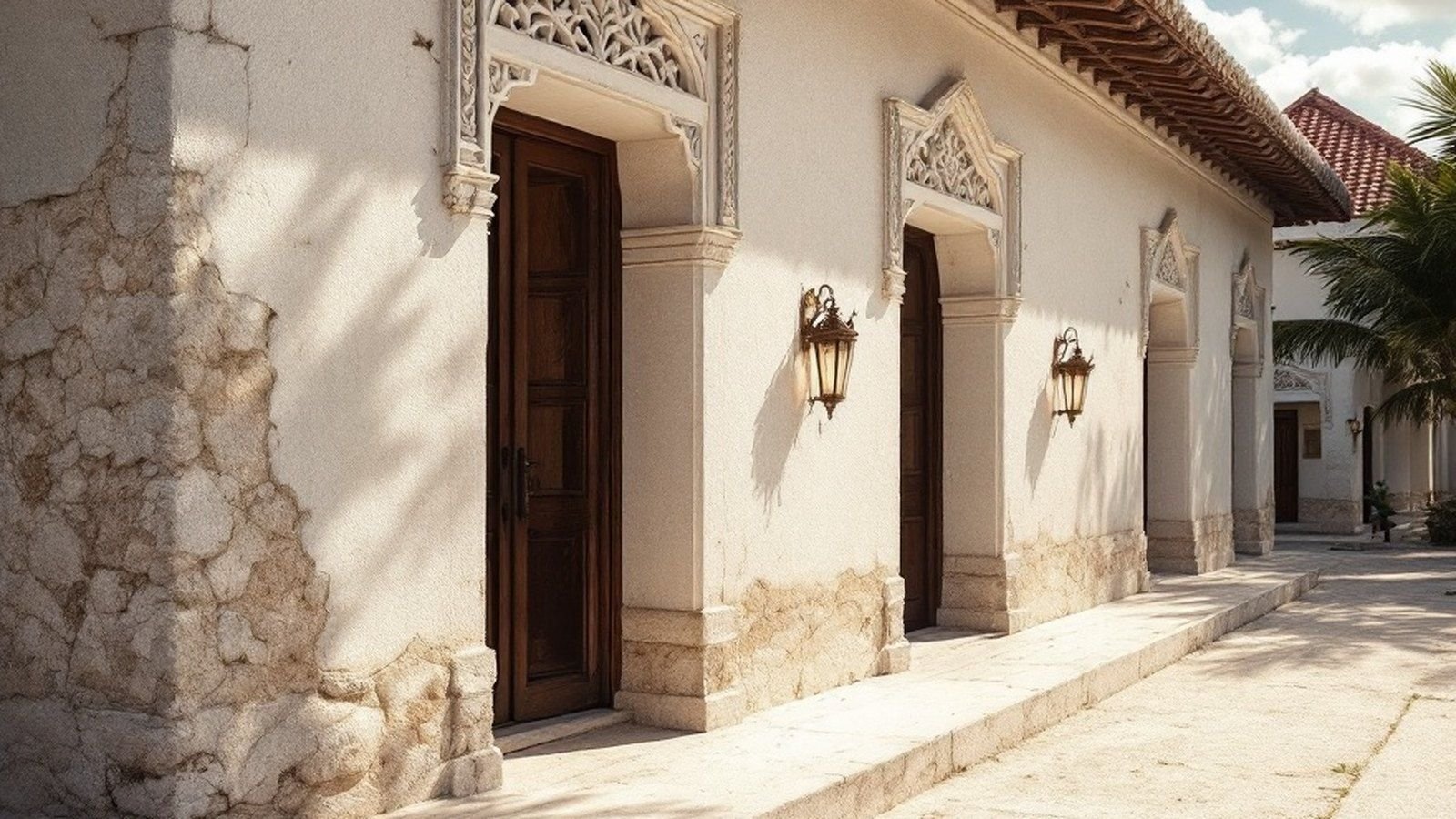
Before Islam, the Maldives had kings. The archipelago's earliest recorded rulers were Buddhist monarchs whose authority rested as much on sacred ritual as on political power, and the archaeological traces they left behind — stupas, carved coral, Sanskrit inscriptions — surface still on islands like Isdhoo in Laamu Atoll and Dhanbidhoo nearby. Ancient sources, including references filtered through later Dhivehi oral tradition, describe a line of rulers stretching back far enough that the island chain appears in the accounts of Indian Ocean traders centuries before a sultan ever claimed its throne.
The conversion to Islam in 1153 CE changed everything. The transformation is credited to Abu al-Barakat Yoosuf al-Barbari, a North African scholar whose arrival on the islands — and whose defeat of the sea demon Rannamaari, in the most celebrated version of the story — persuaded the reigning king, recorded in Maldivian tradition as King Dhovemi (also rendered as King Dovemi Kalaminja), to embrace the new faith. The account is almost certainly layered with legend, but the historical core is solid: the Maldives converted, and from that moment the ruling title shifted from king to sultan. Dhovemi, renamed Sultan Mohamed ibn Abdulla, became the first in what would become one of the longest lines of Islamic rulers the world has ever seen.
The sultanate would endure, with interruptions, until 1968 — more than eight hundred years. That longevity was not simply inertia. It reflected the practical genius of island sovereignty: a ruler at the centre of Indian Ocean trade routes, commanding a fleet of dhoni-built vessels and a people supremely skilled at reading wind and current, had real leverage. Ambergris, cowrie shells, dried tuna, coir rope — the Maldives produced or transshipped goods that the ancient world wanted, and the sultan sat at the toll gate.
Dynasty, Disruption and the Hero of Utheemu
The sultanate was not a single unbroken thread. Different dynasties rose, collided and fell across the centuries, and the islands suffered foreign occupation. The Portuguese seized Malé in 1558 and held it for fifteen years, installing a governor and attempting — with very limited success — to impose their rule on an archipelago that stretched over nine hundred kilometres of open ocean. Island populations that could fish, sail and retreat into labyrinthine reef systems were not easy to subjugate.
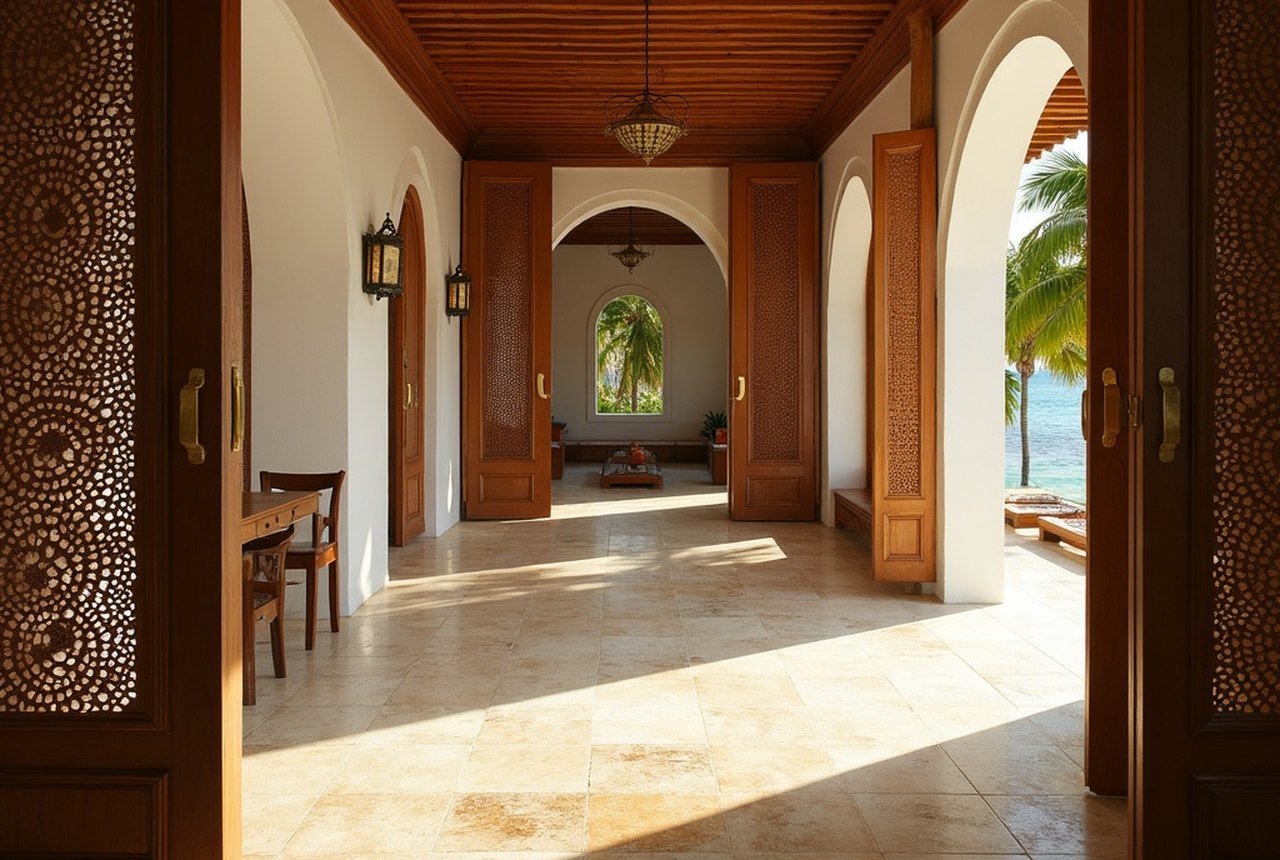
The liberation came from the north. Sultan Mohamed Thakurufaanu, born on Utheemu island in Haa Alif Atoll, organised a guerrilla campaign from the outer islands with his brothers and a small band of supporters, striking by night and then disappearing back into the atolls. After years of resistance — Maldivian tradition records the campaign lasting around fifteen years — Thakurufaanu's forces killed the Portuguese governor and reclaimed Malé in 1573. He became sultan and is remembered today as the greatest hero in Maldivian history. His ancestral home on Utheemu is one of the archipelago's most significant heritage sites: a wooden palace compound that has survived fire, storm and time, its carved timber screens and low sleeping platforms evoking a world before concrete and fluorescent light. A visit there, reached by speedboat from Hanimaadhoo, is about as close as you can get to living Maldivian history.
Thakurufaanu's dynasty did not last forever, either. The Maldivian sultans continued to face pressures from the Dutch and later the British, who established a protectorate over the islands in 1887. Under that arrangement — which persisted until 1965 — the British took responsibility for defence and foreign relations while the sultanate conducted internal affairs. It was a pragmatic arrangement that suited both parties: the British wanted a strategic outpost in the Indian Ocean; the sultan kept his throne and his people kept their laws. The British never stationed troops on the islands in any significant number and largely left Maldivian society to govern itself, which meant Islamic law, sultan's courts and the rhythms of atoll life continued largely undisturbed.
The Court, the Capital and the Architecture of Power
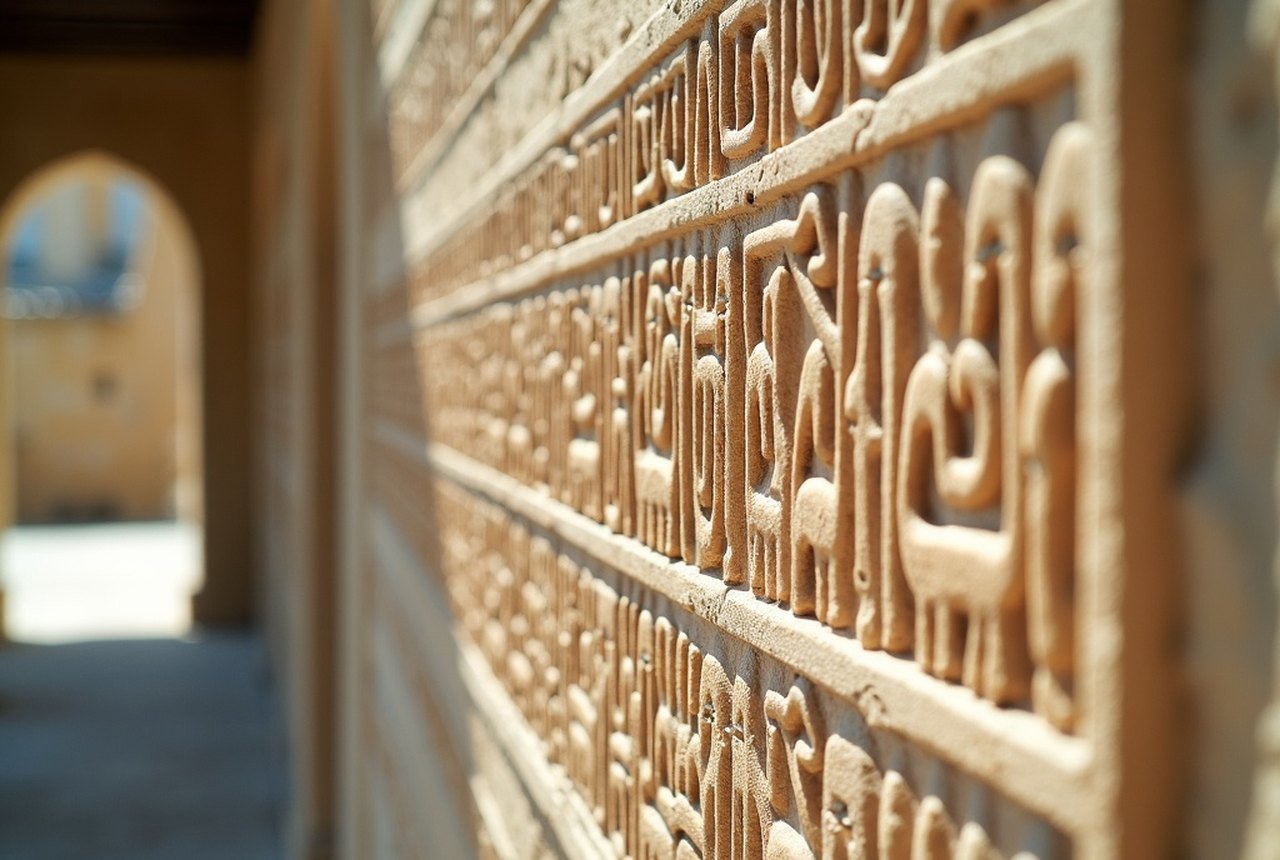
Malé was always the seat of sultans, and walking the older parts of the capital today means reading layers of that history underfoot. The Hukuru Miskiy — the Old Friday Mosque — was built in 1656 under Sultan Ibrahim Iskandar and remains the most eloquent expression of Maldivian Islamic architecture anywhere in the archipelago. Its walls are hewn coral stone carved with extraordinary precision: floral arabesques, Thaana inscriptions, geometric interlace that speaks to craftsmen who worked without electricity and produced something scholars now recognise as a distinct regional tradition. UNESCO has recognised the mosque's significance and it is one of the most important historic buildings in South Asia, full stop. The graveyard surrounding it holds the tombs of sultans, and the inscriptions on those tombs — in flowing Thaana script — are primary sources for early Maldivian dynastic history that historians are still working to fully interpret.
Across the street in Sultan's Park — laid out on the grounds of the old royal palace compound, much of which was demolished in the twentieth century — the National Museum of the Maldives holds what survived: royal regalia, thrones, ancient stone sculpture from the Buddhist period, and objects from the sultanate that give shape to eight centuries of court life. The coral-stone carvings on display show just how accomplished Maldivian craftsmen were, shaping a material that is simultaneously fragile and luminous.
Muleeaage, the building now serving as the President's official residence in Malé, was originally built in the early twentieth century as a palace for the sultan — a fact that captures the strange historical hinge the Maldives pivoted through in 1953, when the sultanate was briefly abolished and a republic declared, then reinstated in 1954, then abolished finally in 1968. That second, permanent abolition came after a referendum, with Ibrahim Nasir becoming the first president of the Second Republic. The sultanate did not fall to invasion or revolution; it was voted out by the islanders themselves.
Trade, Cowries and the Indian Ocean World
To understand why the sultanate lasted as long as it did, you have to understand the economics of the Indian Ocean before European ships changed everything. The Maldives sat at a maritime crossroads, equidistant from the trading ports of India and Sri Lanka, positioned to catch the monsoon winds heading north-east and south-west. Arab and Indian merchants called at Malé for centuries. Ibn Battuta, the great Moroccan traveller, visited in the fourteenth century, served briefly as a qadi (judge) under a ruling queen, and wrote a detailed account of Maldivian society that remains an indispensable historical source.
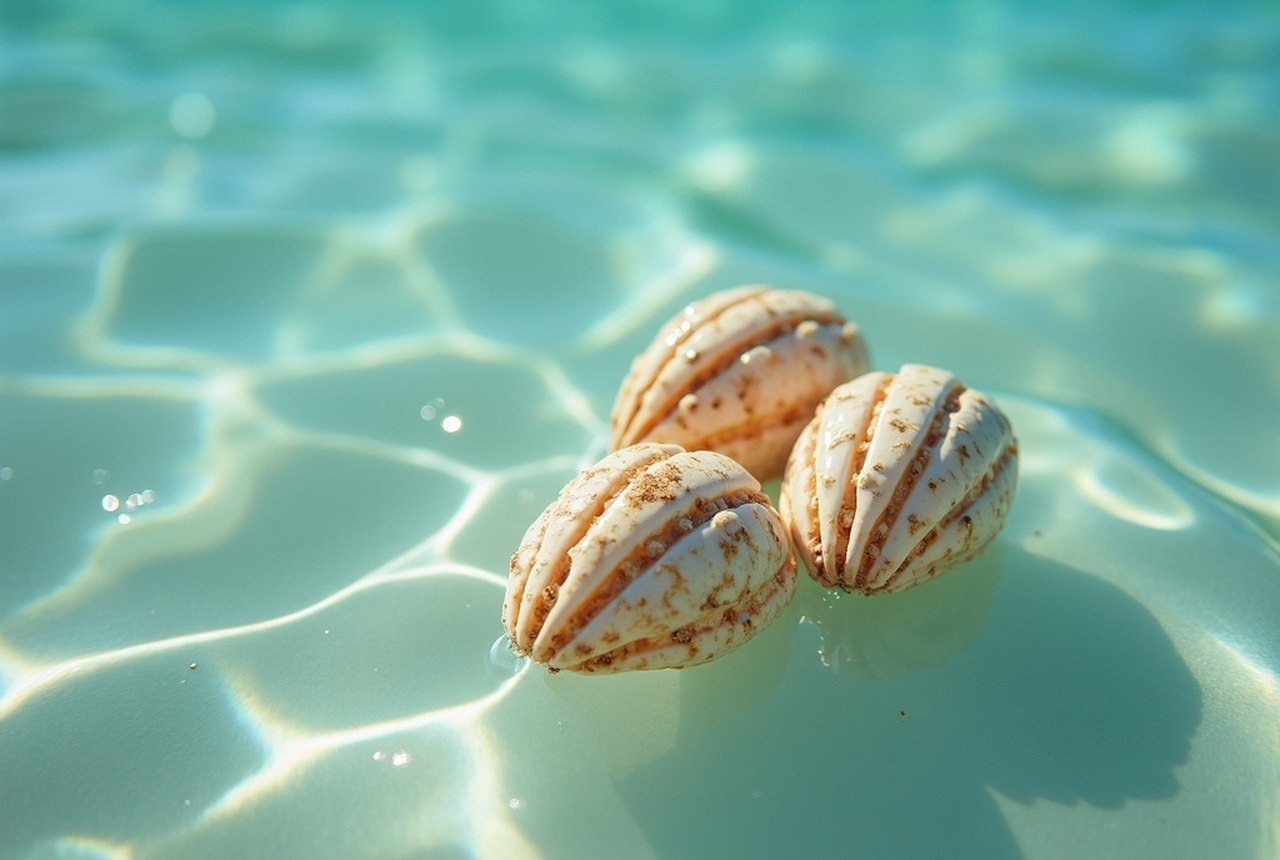
The cowrie shell — Cypraea moneta — deserves special mention. Gathered in the Maldivian lagoons and exported by the shipload, Maldivian cowries served as currency across a vast arc from West Africa to Bengal. The sultan who controlled the cowrie harvest controlled a supply chain that reached far beyond the horizon. This was soft power of a genuinely oceanic kind, and it gave even a small sultanate of scattered coral islands a presence in the medieval world economy that its land mass alone would never have justified.
Coir rope — twisted from coconut husk fibre — was another export of enormous practical importance: Arab dhow builders stitched their hulls with it, preferring the flexibility of coir to iron nails in a seagoing vessel. Hikimas, the cured and smoked tuna still used in Maldivian cooking today, travelled the same trade routes. The sultanate's economy was built on what the reef and the coconut palm provided, and the sultans who managed that relationship well prospered.
- 1153Conversion to Islam; Sultan Mohamed ibn Abdulla becomes first sultan
- 1558Portuguese seize Malé
- 1573Mohamed Thakurufaanu defeats Portuguese; reclaims Malé
- 1887Maldives becomes a British protectorate
- 1953Sultanate briefly abolished; First Republic declared
- 1954Sultanate reinstated
- 1965Maldives gains independence from Britain
- 1968Second Republic declared; sultanate permanently abolished by referendum
An Eight-Hundred-Year Legacy
The sultanate's end in 1968 was quiet by the standards of world history — no war, no exile, a referendum and a handover. But its legacy is threaded through everything that makes the Maldives distinct: the Thaana script developed partly to serve court and religious administration; the coral-stone mosques standing in almost every inhabited island; the oral traditions that carry the names of sultans into living memory; and the profound attachment to Islamic practice that the conversion of 1153 began and eight centuries of sultanate rule confirmed.
For the culturally minded traveller, the sultanate is not ancient history behind glass. It is present in the carved mihrab of the Hukuru Miskiy, in the lacquerwork boxes that once graced royal chambers, in the bodu beru rhythms that accompanied royal ceremonies. The sea made the sultans, and the sultans made the Maldives — and then the Maldives, in its own considered way, decided it was ready to move on.