What He Found
Ibn Battuta arrived in the Maldives around 1343, mid-way through his extraordinary three-decade journey across the Islamic world. He came, he later wrote, by choice — after his plans on the Malabar Coast collapsed, he sailed for the islands deliberately, landing first on an outlying atoll before making his way to Malé. He stayed for roughly eighteen months, served as a qadi (Islamic judge), married into local society, and recorded everything. The result, preserved in his Rihla (the account of his travels), is an irreplaceable window into Maldivian life at a moment otherwise almost invisible to the historical record.
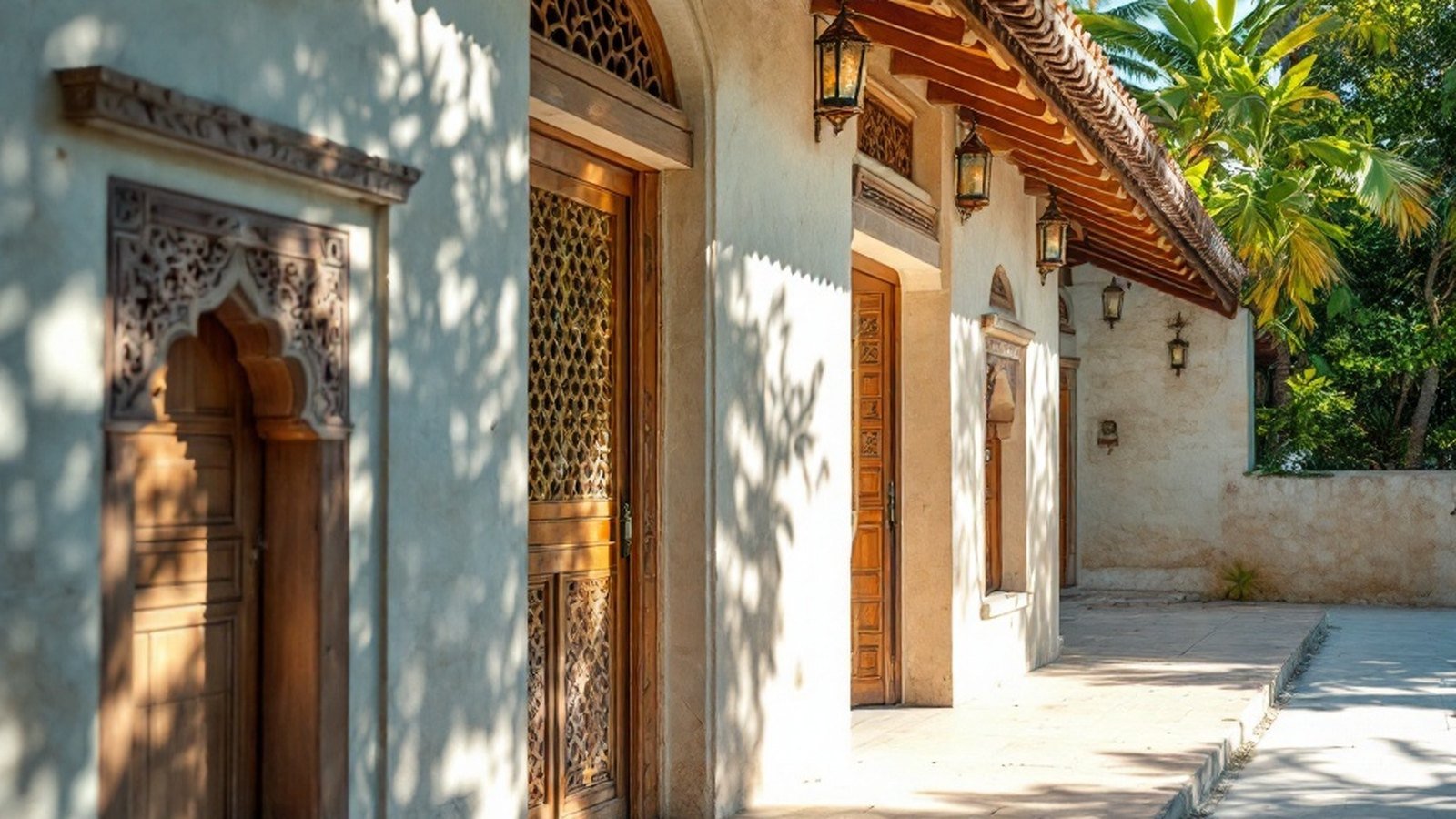
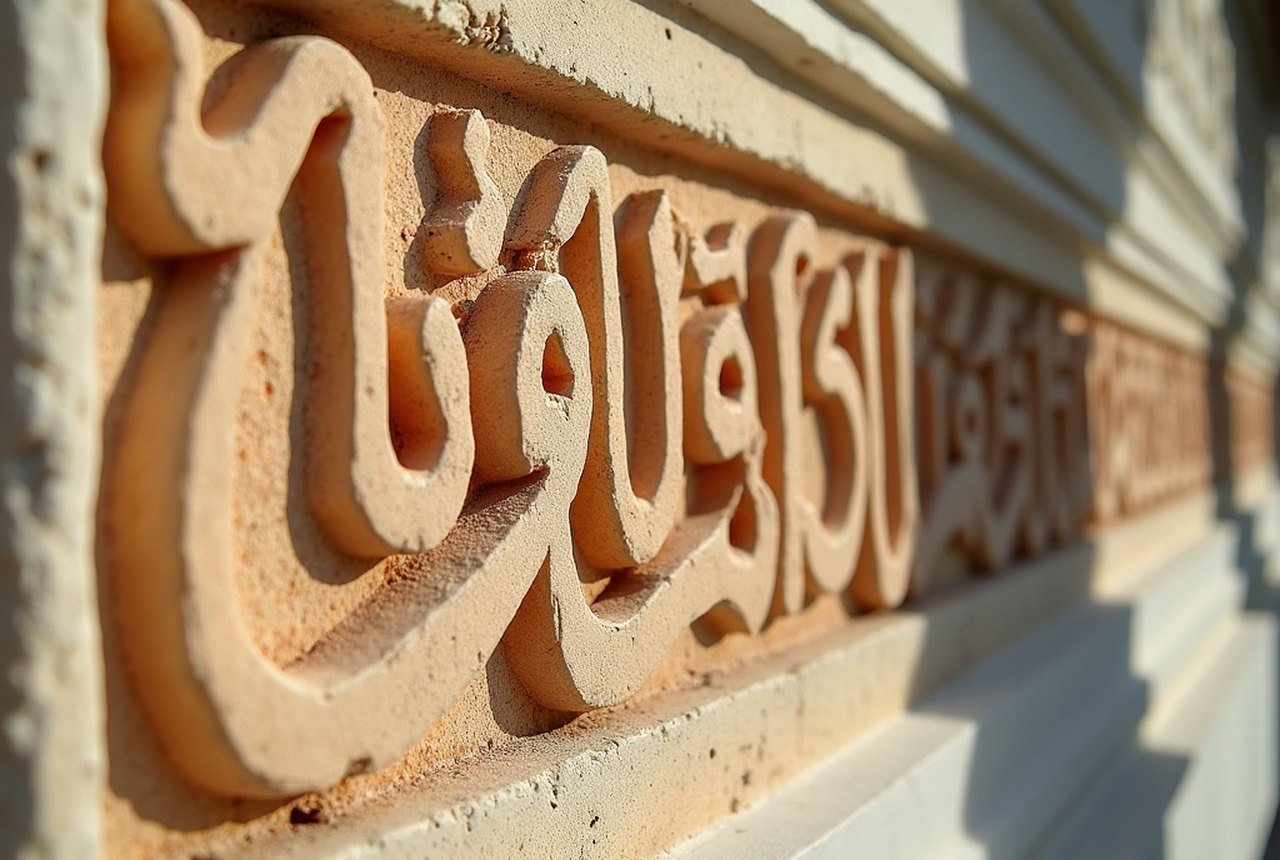
What struck him first was the density of the mosques. He counted mosque after mosque on Malé alone — coral-stone structures, low and cool, packed into an island he described as barely large enough to hold them. He was not exaggerating by much. Maldivian Islam, which had taken root nearly two centuries earlier following the conversion credited to the Moroccan scholar Abu al-Barakat, had already shaped the built environment completely. The coral-stone mosque was not a transplant from elsewhere; it was already a distinctly Maldivian form, its walls cut from reef limestone and its interiors carved with Arabic calligraphy and geometric ornament that blended Islamic convention with local craft.
Ibn Battuta also recorded the political order. The islands were then governed by a sultanate, and he noted with apparent approval that women occupied positions of real authority — the ruler at the time of part of his stay was a queen, Khadija, one of several female sultans in Maldivian history. He observed that Maldivian women did not veil their faces, a detail that surprised him and he disapproved of, trying without much success to make women cover themselves.
- c. 1153 CEMaldives converts to Islam; conversion credited to Abu al-Barakat
- c. 1343Ibn Battuta arrives, serves as qadi, records island life in detail
- 14th centuryRihla compiled; becomes primary outside account of medieval Maldives
What It Still Reveals
Reading the Rihla today alongside what archaeologists and historians have since established, several things stand out. Ibn Battuta describes a prosperous trade economy built around dried tuna and cowrie shells — the latter used as currency across much of the Indian Ocean world and as far inland as West Africa. Skipjack tuna, still the backbone of Maldivian cuisine and economy, was already being cured and smoked into the form we now call hikimas, pressed into export bundles and loaded onto the same kind of wooden dhonis that local builders were constructing without blueprints, by inherited knowledge of the sea.
He also recorded something subtler: the persistence of folk belief beneath the surface of formal religion. He encountered what he clearly regarded as sorcery — fandita practices, protective charms, and the residue of older spiritual life that Islam had overlaid but not fully erased. His discomfort with this is evident in the text, which makes his account all the more useful as evidence. The tension he observed between orthodox Islamic practice and older island belief systems was not unique to the fourteenth century; it is a thread that runs through Maldivian cultural history to the present day.
His account of food is characteristically precise. He notes the reliance on fish and coconut — the kurumba palm is everywhere in his descriptions, its milk thickening stews, its flesh grated and pressed, its leaves used for thatch. What he describes is recognisably the dietary foundation of Maldivian cooking: the mas riha logic of fish simmered in coconut and spice, the flatbreads that would become roshi, the absence of meat from most tables simply because cattle cannot be kept on coral islands.
The historian's frustration with Ibn Battuta is also familiar: he exaggerates, sometimes misremembers, and occasionally blurs islands together. But his account of the Maldives is held to be among his more reliable stretches, perhaps because he lived there long enough to observe rather than merely pass through. He quarrelled with local officials, struggled with the heat and the isolation, attempted to enforce legal standards that islanders resisted, and eventually left — somewhat abruptly — for the Coromandel Coast.
He left behind, without quite intending to, the closest thing we have to a medieval portrait of the islands: faithful enough to recognise, strange enough to remind us how much has changed.