Earth That Remembers
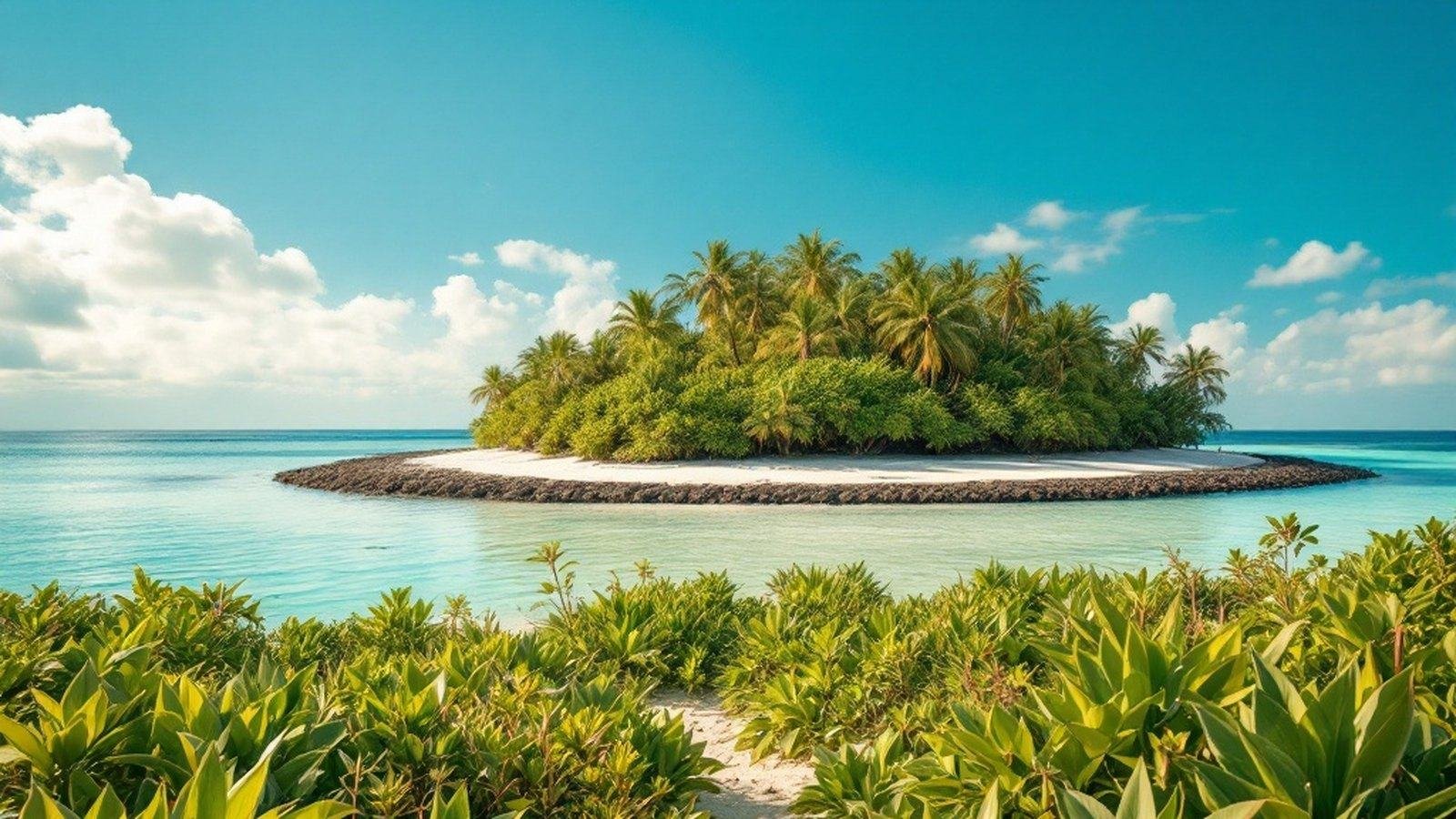
They do not announce themselves. Across the Maldivian archipelago, low earthen mounds rise from otherwise flat coral islands, half-swallowed by scrub and coconut palms, easy to mistake for a natural ridge of the land. Locals call them havitta — the word itself a quiet survival from a world the islands officially left behind when they converted to Islam in the twelfth century. Beneath those mounds lie the remnants of Buddhist stupas, temple platforms and monastic structures, the physical memory of a civilisation that flourished here for perhaps a thousand years before the faith that now defines Maldivian identity arrived.
The historical record for this pre-Islamic era is fragmentary. The great Moroccan traveller Ibn Battuta visited the islands in the fourteenth century and found a society thoroughly Islamised, the older traditions already layers deep. Medieval Maldivian royal chronicles, the taarikh, refer to a line of Buddhist kings, and the legendary King Dhovemi — also rendered as King Dovemi Kalaminja — appears in oral tradition as the ruler who received the missionary Abu al-Barakat Yusuf al-Barbari around 1153 CE and subsequently embraced Islam, initiating the conversion of the entire sultanate. What came before that moment is not silence exactly, but it is spoken in stone and earth rather than text.
What the Mounds Contain
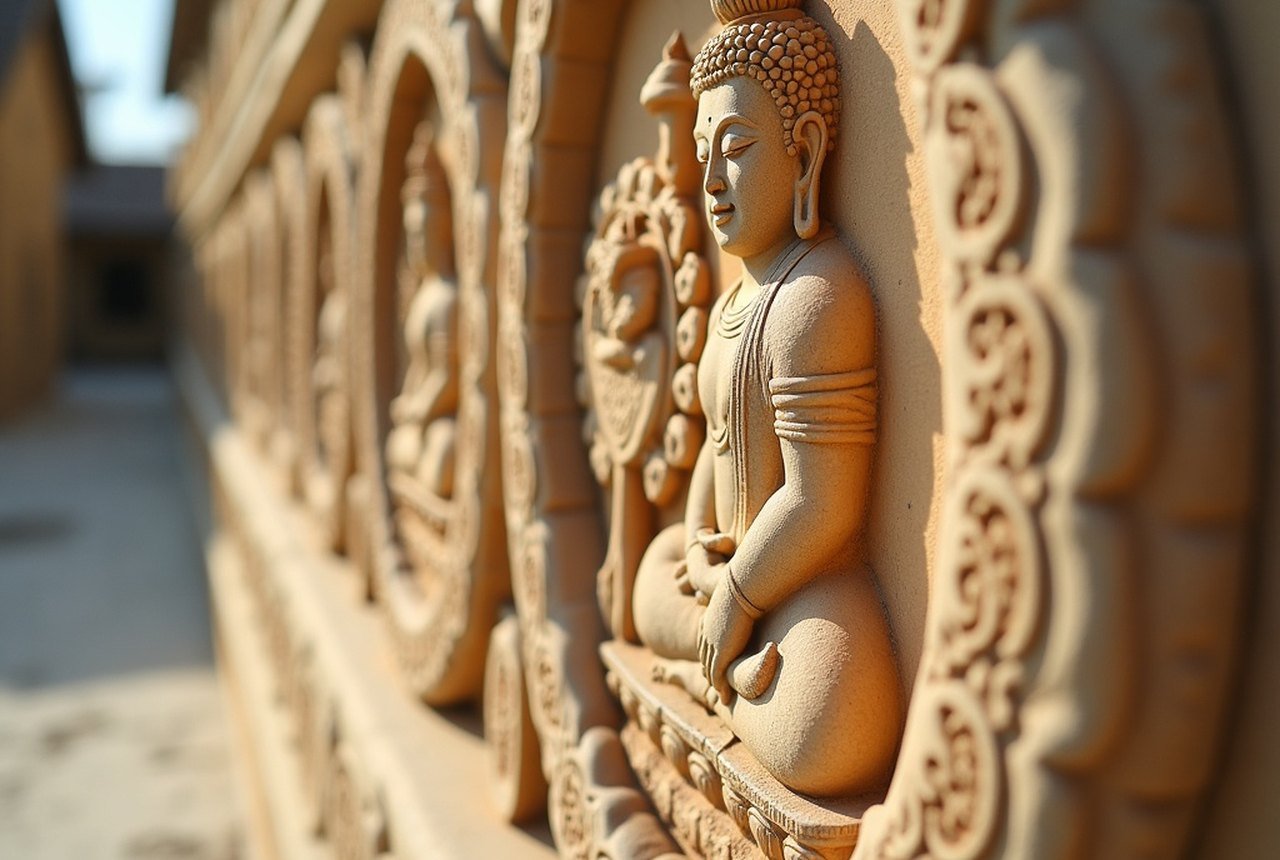
Archaeological investigation of havitta sites has revealed carved coral-stone panels, intricate lattice-work, and Buddhist iconography — fragments of a material culture of considerable sophistication. The site at Isdhoo, on Laamu Atoll, is among the most significant: it preserves what is understood to be one of the largest ancient stupa bases in the archipelago, along with finely worked coral carvings that show clear stylistic links to South Asian Buddhist traditions. Dhanbidhoo, also in Laamu Atoll, has yielded comparable finds, and together these sites suggest that the southern atolls may have been particularly active centres of Buddhist life.
The connections to the wider Buddhist world are not incidental. The Maldives sat squarely on maritime trade routes threading between South Asia, the Arabian Sea and Southeast Asia. Merchants, monks and ideas moved through these islands. The stylistic vocabulary visible in havitta carvings echoes forms found in Sri Lanka and southern India — hardly surprising given the prevailing scholarly view that the archipelago's earliest settlers were Aryan peoples from the Indian subcontinent. Some researchers have connected the islands to the reach of the Mauryan emperor Asoka's missionary networks, though direct epigraphic evidence remains elusive.
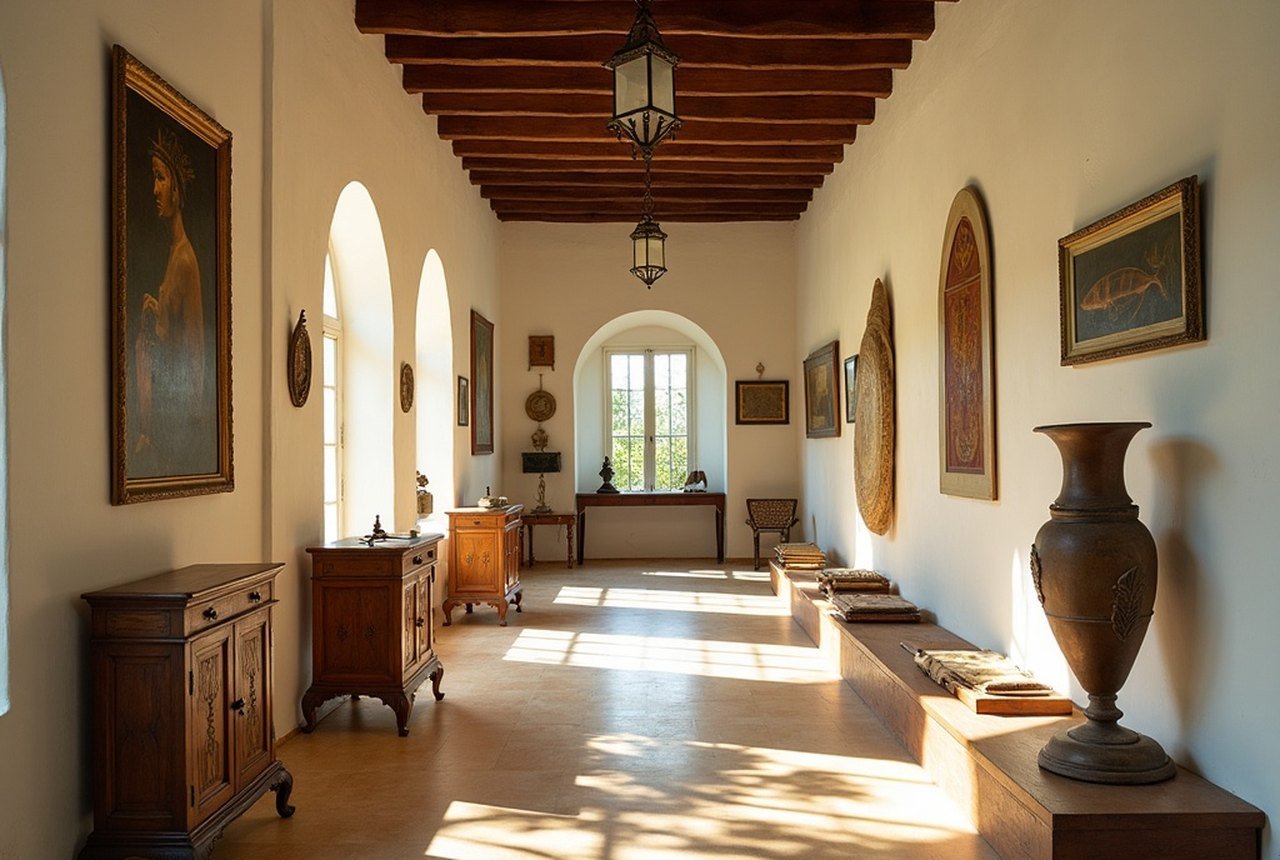
What survives above ground is, inevitably, the tip of a much larger story. Centuries of subsequent settlement, the quarrying of old coral-stone for new construction, and the simple erosion of low-lying islands have erased much. The National Museum in Malé holds a collection of pre-Islamic artefacts — carved panels, coral sculpture — that gives a sense of the aesthetic world these structures once inhabited, though the pieces exist now in exile from their original context.
- Pre-12th centuryBuddhist civilisation flourishes across the atolls; havitta structures built
- c. 1153 CEAbu al-Barakat arrives; King Dhovemi converts; Islamic sultanate established
- 14th centuryIbn Battuta visits a fully Islamised Maldives; Buddhist era already distant history
A Layered Identity
The havitta are not ruins in a country that has forgotten them. They are ruins in a country that carries a complex relationship with what they represent. Maldivian identity is today inseparable from Sunni Islam — the faith organises daily life, architecture, law and the calendar — and yet folk belief and oral tradition preserve threads of a much older fabric. The word fandita, denoting traditional Maldivian sorcery and magic practice, hints at pre-Islamic ritual knowledge that persisted, transformed, beneath the surface of official religion.
Visiting a havitta asks something of you. There is rarely signage, often no path. At Isdhoo or Dhanbidhoo you stand in the open air of an inhabited island where daily life continues around you, and the mound is simply there — present, unremarked upon by the fisherman walking past, noticed acutely by anyone who knows what to look for. That ordinariness is itself meaningful. The Buddhist centuries did not vanish; they became the ground the islands are built on, literally and otherwise. The mounds push through the sand because the past in the Maldives, as everywhere, insists on its own presence.