Reef as Raw Material
Before concrete arrived in the twentieth century, Maldivian builders worked almost exclusively with what the archipelago provided: coral limestone, cut from the shallow reef flats surrounding each island. The material is known locally as coral stone, and its properties made it perfectly suited to construction in a saltwater environment — porous enough to breathe in the tropical humidity, dense enough to bear the weight of a minaret, and soft enough when freshly cut to be carved with extraordinary precision.
The process began underwater. Reef blocks were harvested in large slabs, hauled ashore, and left to cure in the open air. As they dried, they hardened considerably. Builders then shaped and fitted them using a joinery tradition that relied on careful cutting rather than mortar or adhesive — the blocks interlocking through their own geometry. The results have outlasted generations of tropical storms and tidal surges.
The Old Friday Mosque as Teacher
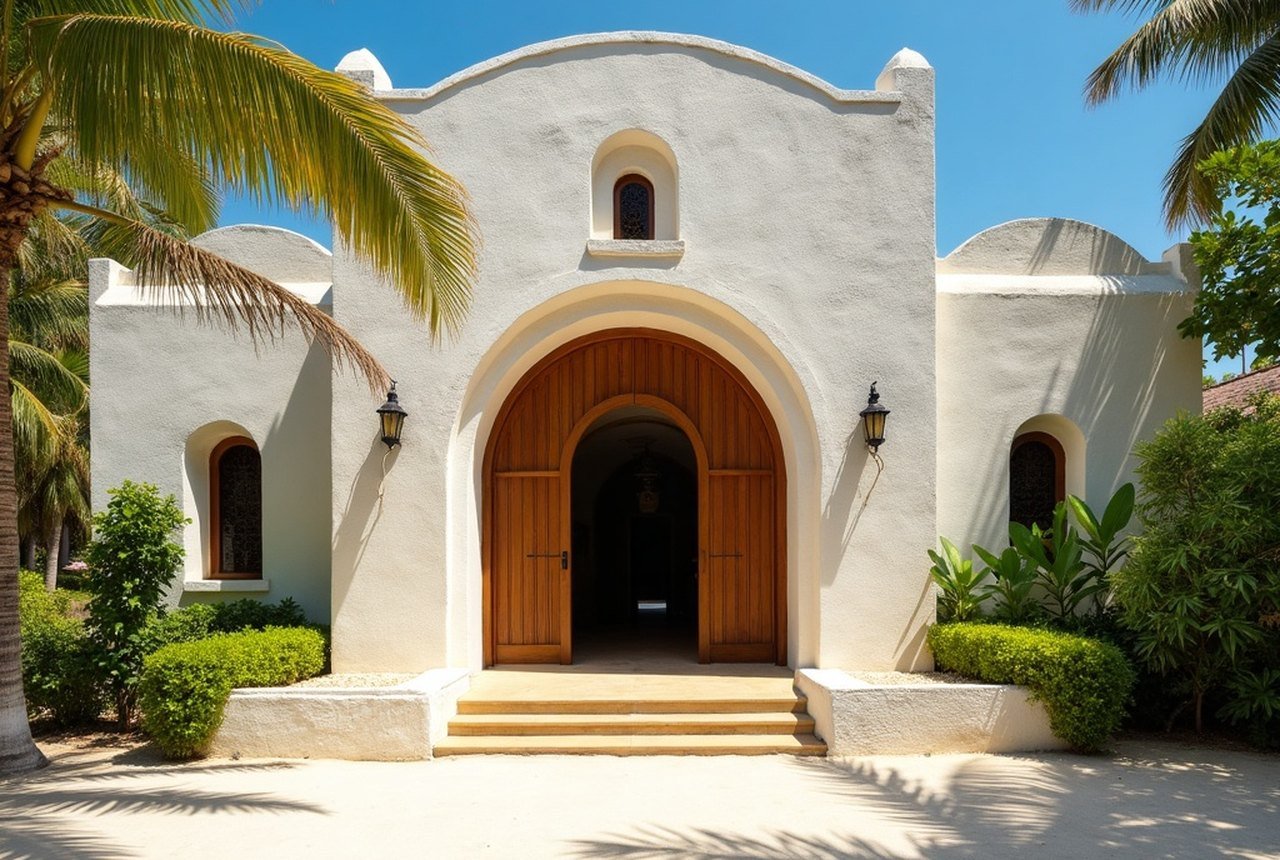
No building demonstrates the tradition better than Hukuru Miskiy — the Old Friday Mosque in Malé, completed in 1658 during the reign of Sultan Ibrahim Iskandar. It is the oldest intact mosque in the Maldives, and standing inside it is something close to studying a master class in coral-stone craft.
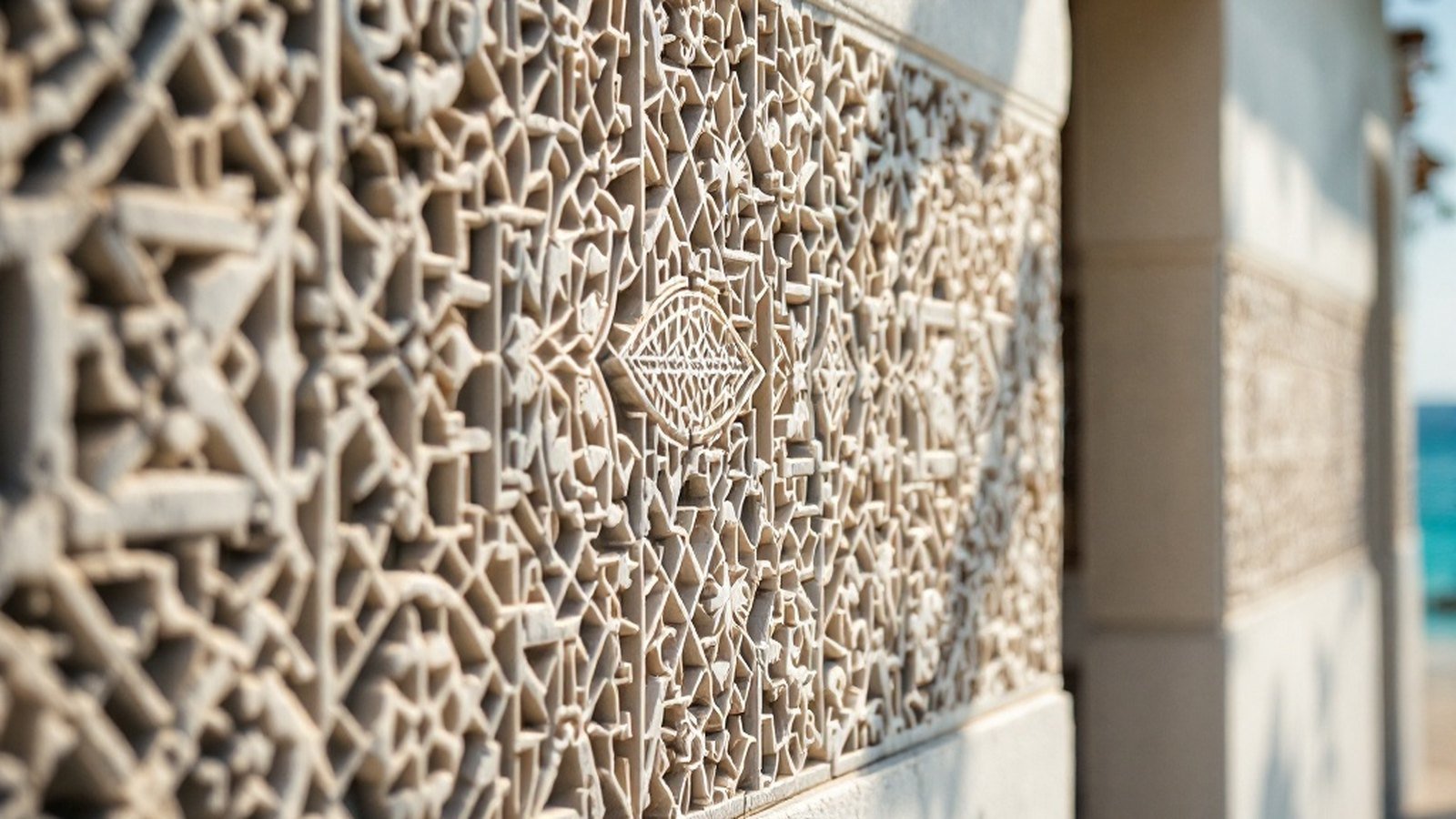
The exterior walls are faced with finely cut coral blocks, their surfaces etched with interlocking geometric patterns and bands of Arabic calligraphy. This is coral-stone carving at its most disciplined: no freehand ornament, no deviation from the grid. The carvers worked within an aesthetic logic inherited from the broader Islamic world but executed through entirely local materials and hands.
Inside, the ceiling panels are lacquerwork — Maldivian laajehun — painted in the deep reds, yellows and blacks traditional to the craft. The mosque's wooden elements, including carved doors and interior screens, show a parallel mastery of timber joinery. The building is a composite of the island's finest traditional skills, assembled in service of the Friday congregation. The site has been proposed for UNESCO World Heritage status, and it remains an active place of worship.
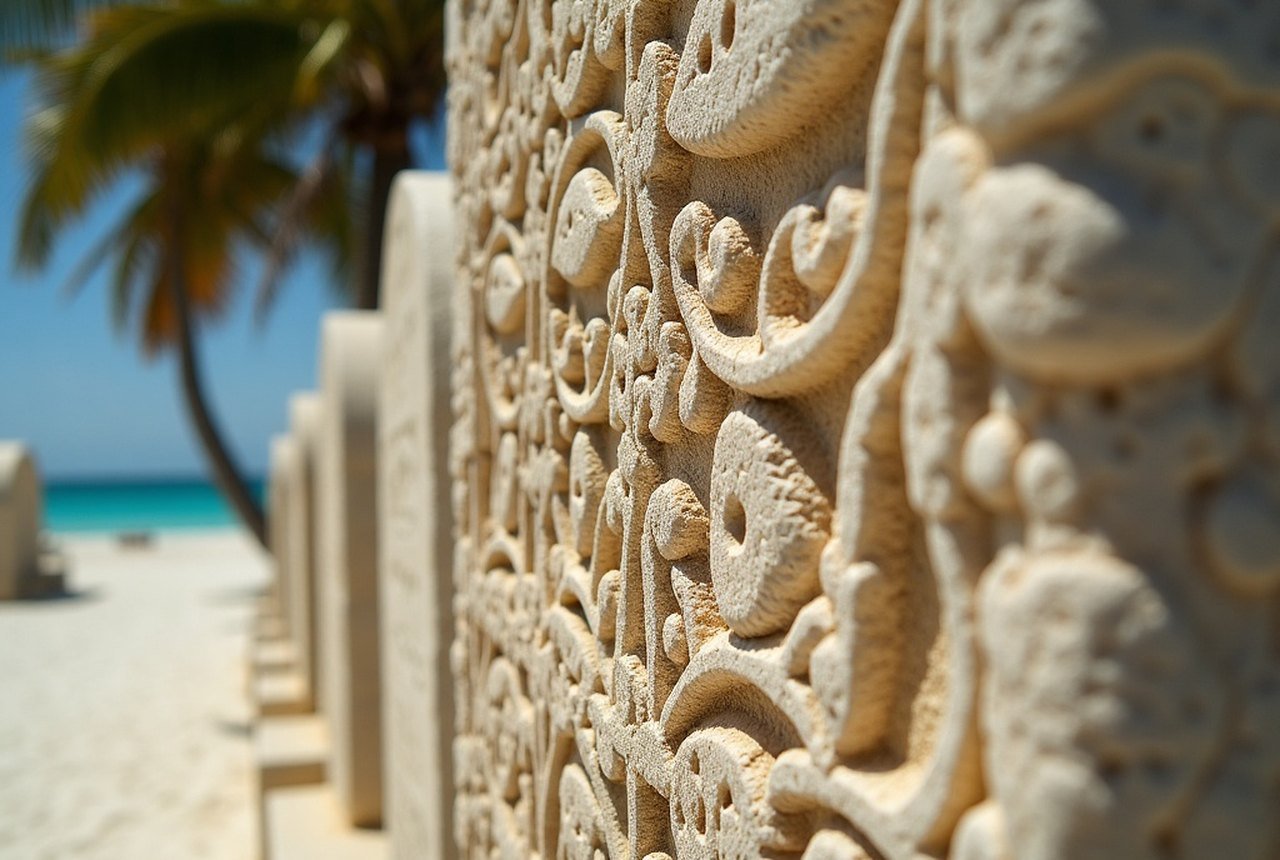
Beyond Malé, coral-stone mosques dot the atolls in varying states of preservation. On Isdhoo in Laamu Atoll and at sites in Dhanbidhoo, older structures and associated graveyards carry inscriptions and carved tombstones that archaeologists and historians continue to study. The carved grave markers follow conventions similar to the mosque walls: geometric borders, Arabic text, and occasionally floral motifs worked into the coral face with a chisel no larger than a finger.
What the Style Tells Us
The architectural grammar of a Maldivian coral mosque is modest by comparison with the great stone mosques of Arabia or Persia — low-slung, horizontal, made for an island landscape rather than a continental skyline. Minarets, where they exist, are squat and functional. Pitched roofs of corrugated metal replaced older thatch on many buildings during the twentieth century, a pragmatic concession to maintenance rather than a statement of style.
But look closely at a wall, and the ambition becomes clear. The geometric precision of the carving required both patience and a deep understanding of the material — where the coral would yield cleanly under a chisel, and where it would fracture. Builders learned this through apprenticeship, passing techniques from hand to hand rather than through written manuals. The oral tradition of craft knowledge was as essential as any tool.
The spread of Sunni Islam through the Maldives — traditionally dated to 1153 CE, associated with the missionary Abu al-Barakat — gave the coral-stone tradition its purpose and its longevity. For some eight centuries, communities across the atolls built their central gathering spaces from the reef beneath their feet. The mosque was the heart of island life: the place of Friday prayers, of community assembly, of the education of children. That it was carved from the sea itself — the same sea that fed the islands and threatened them — feels entirely right.
Concrete has largely replaced coral stone in new construction, and the harvesting of live reef for building material is now prohibited. What survives is a finite, irreplaceable record of an architecture shaped by faith, ocean, and the particular genius of island builders.