Between Sunrise and Sunset
There is a stillness to a Maldivian island at midday during Ramadan that has almost no equivalent at any other time of year. The tea houses go quiet. The catch from the morning's fishing sits uncleaned a little longer than usual. Even the children seem to move more gently through the heat. From before fajr, the pre-dawn prayer, until the cannon or loudspeaker signals maghrib at dusk, the community holds itself in a kind of collective discipline — and it is impossible not to feel the weight and the tenderness of it.
Dhivehi-speaking communities have observed Ramadan since the archipelago's conversion to Islam in the twelfth century, traditionally dated to 1153 CE and attributed to the Moroccan scholar Abu al-Barakat. That is a long inheritance. The rituals of the month are woven into social life so thoroughly that even the rhythm of work bends to accommodate them: government offices shorten their hours, fishing boats return earlier, and the pace of commerce relaxes into something closer to contemplation.
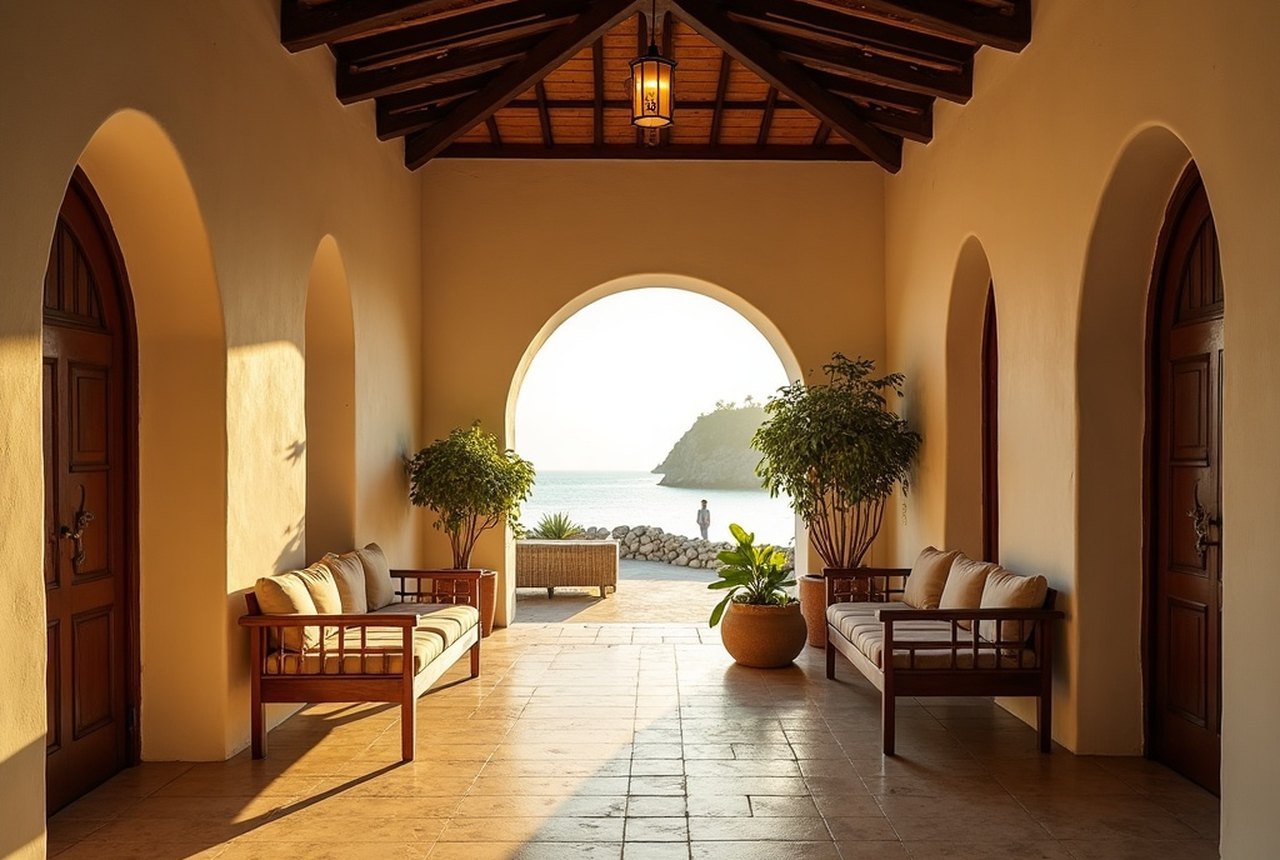
The call to prayer from the coral-stone mosques carries further at this time of year, or perhaps people simply listen for it more carefully. At Hukuru Miskiy in Malé — the Old Friday Mosque built in the seventeenth century from intricate coral-stone blocks — the tarawih prayers held each night after iftar draw worshippers who might not attend so regularly at other times. On smaller inhabited islands, the mosque becomes the social as well as the spiritual centre of the month, its courtyard filling with neighbours after the evening prayers in a way that has its own unhurried warmth.
The Iftar Table
If the days are quiet, the evenings are generous. Iftar — the meal that breaks the fast at sunset — is rarely a solitary affair. Families prepare far more than they need, sending plates of food to neighbours, and it would be unusual for anyone within a close-knit island community to break their fast alone.
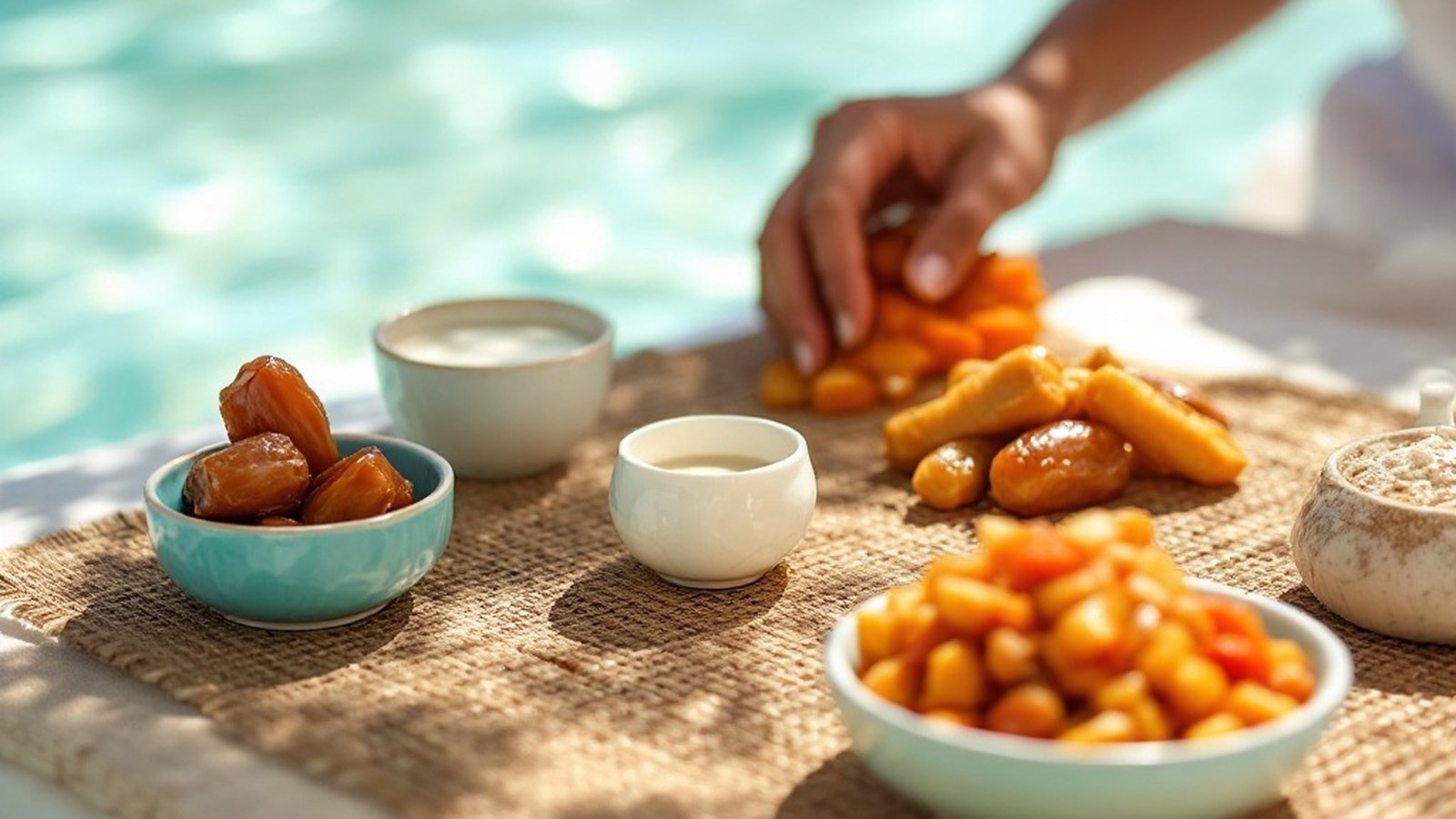
The table is unmistakably Maldivian. Dates come first, following prophetic tradition, then short-eats: deep-fried gulha (fish balls), bajiya (pastries filled with smoked tuna and coconut), and keemia (fish rolls). The flavours are built on the staples of Dhivehi cooking — skipjack tuna, freshly grated coconut, and dried hikimas — and they arrive in quantity. Mas riha, the classic tuna curry simmered in coconut milk with curry leaves and spices, appears at the larger meal later in the evening, alongside roshi, the thin flatbread that serves as both utensil and accompaniment.
Sweetened drinks are poured without pause: sarbat — a cold cordial in jewel-bright colours — is everywhere, alongside fresh coconut water and strong, sweet tea. The iftar table is one of the finest expressions of Maldivian culinary heritage, precisely because it is motivated entirely by hospitality rather than performance.
After Dark
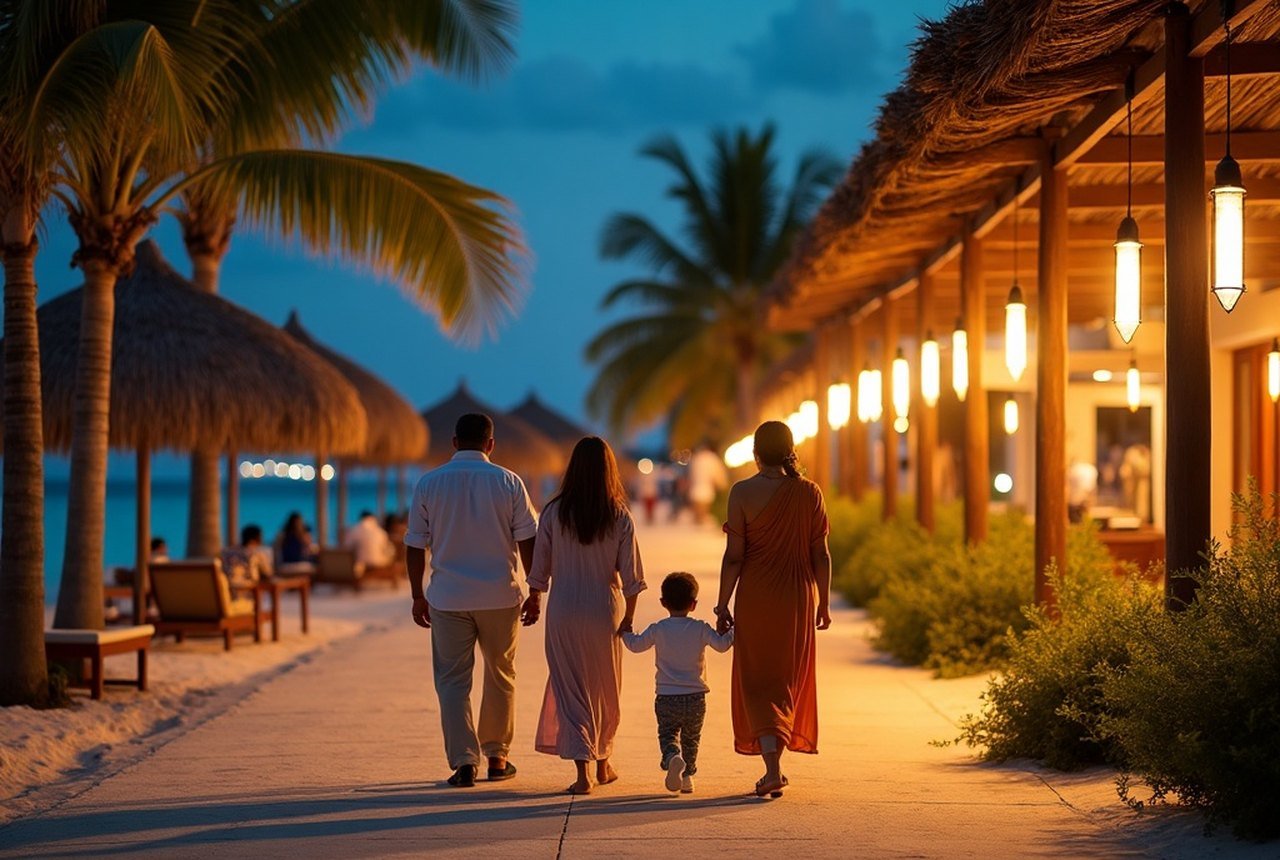
After iftar, the islands change character entirely. Malé's streets fill with families strolling toward the Artificial Beach waterfront; on outer islands, the clusters shift to the harbour or the mosque courtyard. Shops that have been shuttered all afternoon open again and stay lit late into the night. Children who have spent the day indoors emerge into the cooler air with visible relief.
The nightly tarawih prayers extend the evening further, and it is common for households to stay awake until well past midnight — eating again before the suhoor, the pre-dawn meal that precedes the next day's fast. There is a gentle inversion of ordinary time: the night is sociable and lit, the day quiet and inward.
Towards the end of the month, anticipation builds for Eid al-Fitr. New clothes are prepared, houses are cleaned from ceiling to floor, and the tempo of cooking rises. The celebration, when it comes, feels genuinely earned — not just by the discipline of fasting, but by the daily accumulation of shared meals, whispered prayers, and the particular closeness that Ramadan, on an island where everyone knows everyone, makes almost inevitable.