The Demon at the Reef's Edge
Before the mosques, before the call to prayer carried across the lagoons, before the first syllable of Arabic was written in Thaana ink, the Maldives was ruled by something older and far less forgiving. His name was Rannamaari — the sea demon — and according to the most enduring story the islands possess, it was his appetite that determined the fate of a nation.
The legend, passed down through oral tradition across generations of Maldivian islanders, goes roughly like this. Rannamaari rose each month from the sea to claim a human sacrifice: a young woman left alone in the coral-stone temple on the island of Malé, the capital. By morning she would be found dead, drained of life, her fate sealed before sunrise. The offering rotated among the families of the island — no household, however grand, was exempt. The island's Buddhist rulers had no answer for it. The priests had no remedy. The island simply endured, and each month another family kept its terrible vigil.
The story has the structure of a nightmare that refuses to end, which is precisely what makes it so powerful. No warrior defeats Rannamaari by strength alone. The demon is not the kind of monster you can outswim or outstab. What ends his reign is something more uncanny: scripture, recited through the night by a stranger.

The Night a Stranger Stayed
The stranger was a North African scholar named Abu al-Barakat, a Berber from the Maghreb travelling the sea routes of the Indian Ocean. He arrived in the Maldives — the precise atoll is unspecified in most tellings — at a moment when the monthly sacrifice was approaching. The account of what followed was recorded centuries later, most famously in the writings of the Moroccan explorer Ibn Battuta, who visited the Maldives in the fourteenth century and committed the conversion narrative to his celebrated travel memoir, the Rihla. Ibn Battuta's version is not eyewitness testimony; he heard it from Maldivians themselves, some two centuries after the events it describes. But it is the oldest written account we have, and it sits at the heart of how Maldivians understand their own past.
According to the story, Abu al-Barakat volunteered — or was persuaded — to take the place of the designated victim for the night. He was left alone in the temple as the moon rose. Rather than waiting in terror, he spent the hours reciting the Quran. Rannamaari came, as he always came, rising from the sea. But when he encountered the sound of holy scripture, he could not enter. He circled the temple. He retreated. By morning he was gone, and the scholar was alive.
The following month Abu al-Barakat stayed again. And the next. Rannamaari never returned. The sea demon, confronted with something he could not overwhelm, simply vanished into the water from which he had come.
Word spread with the speed that only extraordinary things travel on small islands. The king — identified in Maldivian historical tradition as King Dhovemi — witnessed what had happened. He converted to Islam. His court followed. And in 1153 CE, by the Maldivian historical record, the islands formally accepted Islam. The Buddhist temples were adapted or dismantled. The idols were removed. The country that had once offered human lives to a sea demon became, almost overnight, a sultanate — and has remained one of the most uniformly Muslim nations on earth ever since.
What the Story Carries
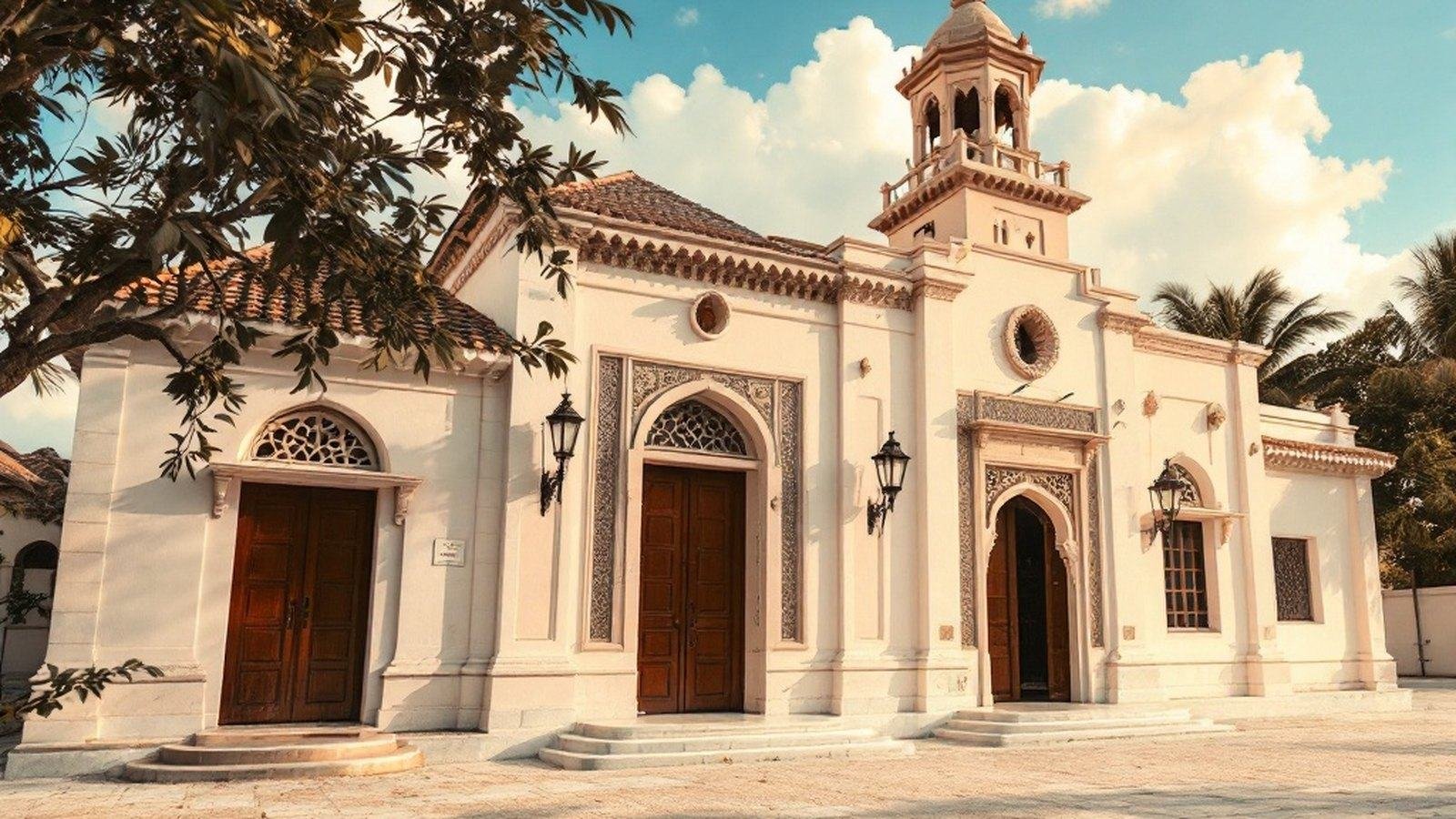
It would be easy, and a mistake, to read Rannamaari simply as a fairy tale — colourful mythology attached to a real historical event for narrative convenience. The conversion to Islam in the twelfth century is historical fact, and Abu al-Barakat is honoured as a real figure: a mosque in Malé, as well as traditions of memory and reverence, commemorate him. The Hukuru Miskiy — the Old Friday Mosque in Malé, built in the seventeenth century from finely carved coral stone — stands on what tradition holds was the site of the original Buddhist temple where those monthly vigils took place. It is one of the most important religious sites in the country, and the continuity of sacred geography it represents is not accidental. The ground beneath it carries the weight of the whole story.
What the Rannamaari legend does, as good folklore always does, is carry several things at once. At its most immediate, it is an explanation: how did an archipelago of Buddhist islanders come to adopt Islam so completely, so quickly, and with such lasting devotion? The answer the story offers is that the change was not imposed by conquest — there were no invading armies, no forced conversions at sword-point. It came through demonstration. One man, alone in a dark building by the sea, recited scripture until a demon retreated. The moral architecture of that image is precise: Islam did not overpower the Maldives; it protected it from something older and darker that had already taken root.
At another level, the legend is a map of anxiety. The idea of Rannamaari — a creature who demands a young woman each month, who cannot be fought or bargained with, who exploits the helplessness of a community — speaks to the particular vulnerability of small island life. The sea is not merely a backdrop in Maldivian culture; it is the condition of existence. Fishing, travel, survival, the rhythm of tides — all of it governed by water. A demon who rises from the sea and cannot be stopped by human effort alone captures something genuine about that relationship: the ocean gives, and the ocean takes, and sometimes there is nothing to be done but endure.
The fandita tradition — Maldivian sorcery and protective magic, still practised in various forms on inhabited islands today — exists precisely in this space. Before Islam, and persisting beneath it in folk belief even now, there were practitioners whose purpose was to negotiate with forces that lay beyond ordinary understanding. Rannamaari belongs to the same world those practitioners inhabited. His defeat by Quranic recitation is, among other things, a story about which kind of power prevails.

- pre-1153Maldives practices Buddhism; Rannamaari legend set in this era
- 1153 CEKing Dhovemi converts; islands formally adopt Islam; sultanate established
- 14th centuryIbn Battuta visits Maldives; records Rannamaari/Abu al-Barakat account in the Rihla
- 17th centuryHukuru Miskiy built on the traditional site of the original Buddhist temple
Memory, Monument and the Living Tradition
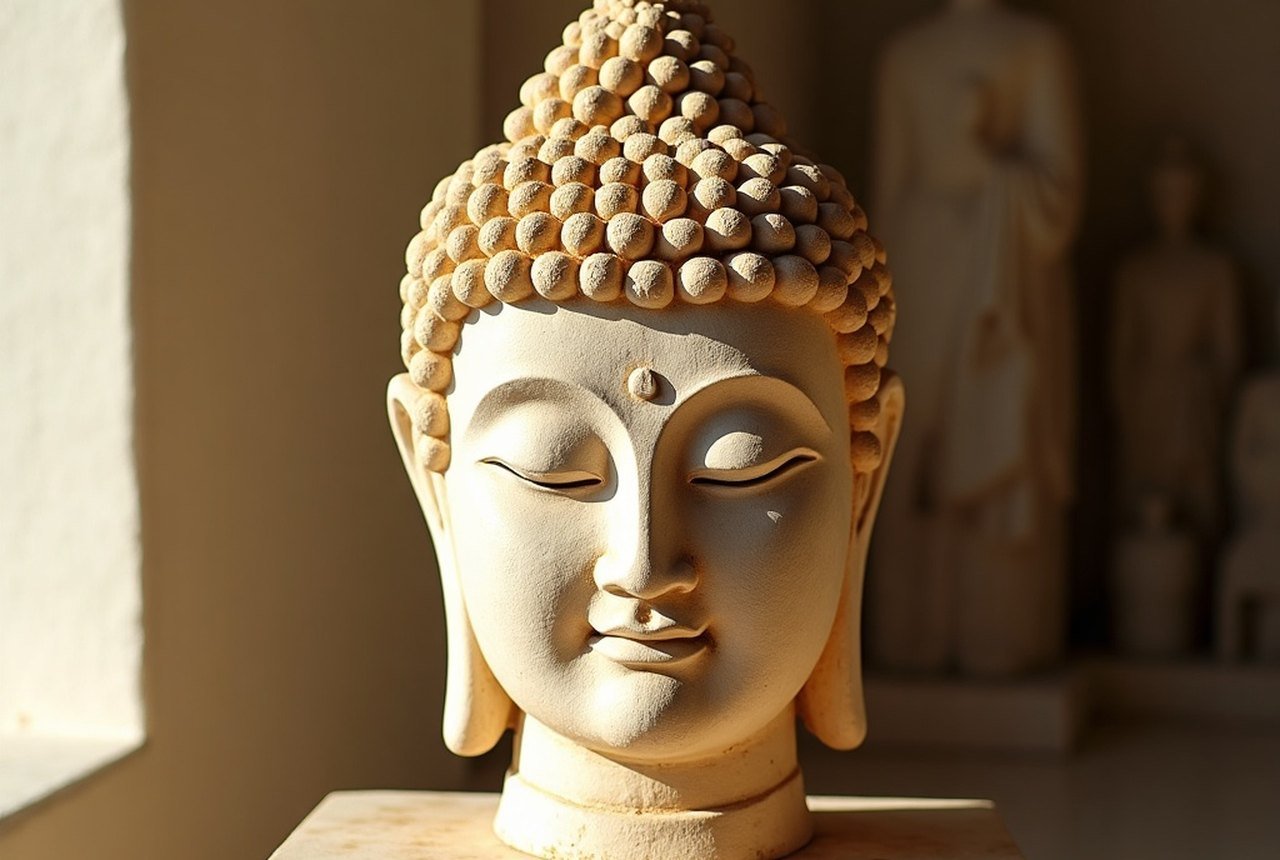
The Rannamaari legend has never settled into mere history. It lives. Visitors to the National Museum of the Maldives in Malé — housed in what was once the royal palace compound adjacent to Sultan's Park — encounter the pre-Islamic past through its artefacts: coral-stone Buddha heads, ancient royal regalia, objects from a world that existed before 1153. The museum holds these things with care precisely because the conversion was so complete that physical evidence of what came before is rare. Rannamaari, in a sense, haunts that silence.
On the inhabited islands, away from the resort strips, the story remains part of a living oral tradition. Children still hear it. It explains the shape of their country's faith in terms that no theological argument could quite match — not because it is more accurate than history, but because it is more immediate. The demon at the reef's edge, the stranger with his book, the king who watched and understood: these are not abstractions. They map onto the landscape people can see from their doorsteps.
Abu al-Barakat himself is remembered with the title given to those who bring a people to Islam: he is credited as the one who showed the Maldives the way. Whether he was precisely who the story says, whether 1153 is the precise year or a symbolic anchor, whether King Dhovemi converted in a single dramatic moment or over a longer process of persuasion — these are questions historians properly ask. But Maldivian cultural memory has never needed the legend to be a documentary record. It needs it to be true in the way that origin stories are true: as a shape placed over experience that makes the present legible.
Rannamaari did not simply disappear into the sea when Abu al-Barakat finished his recitation. He became something the islands could carry — a measure of what had been endured, and what had changed, and why the muezzin's call still rings out from coral-stone minarets across an ocean that once demanded something far darker in return.