A Script from Two Counting Systems
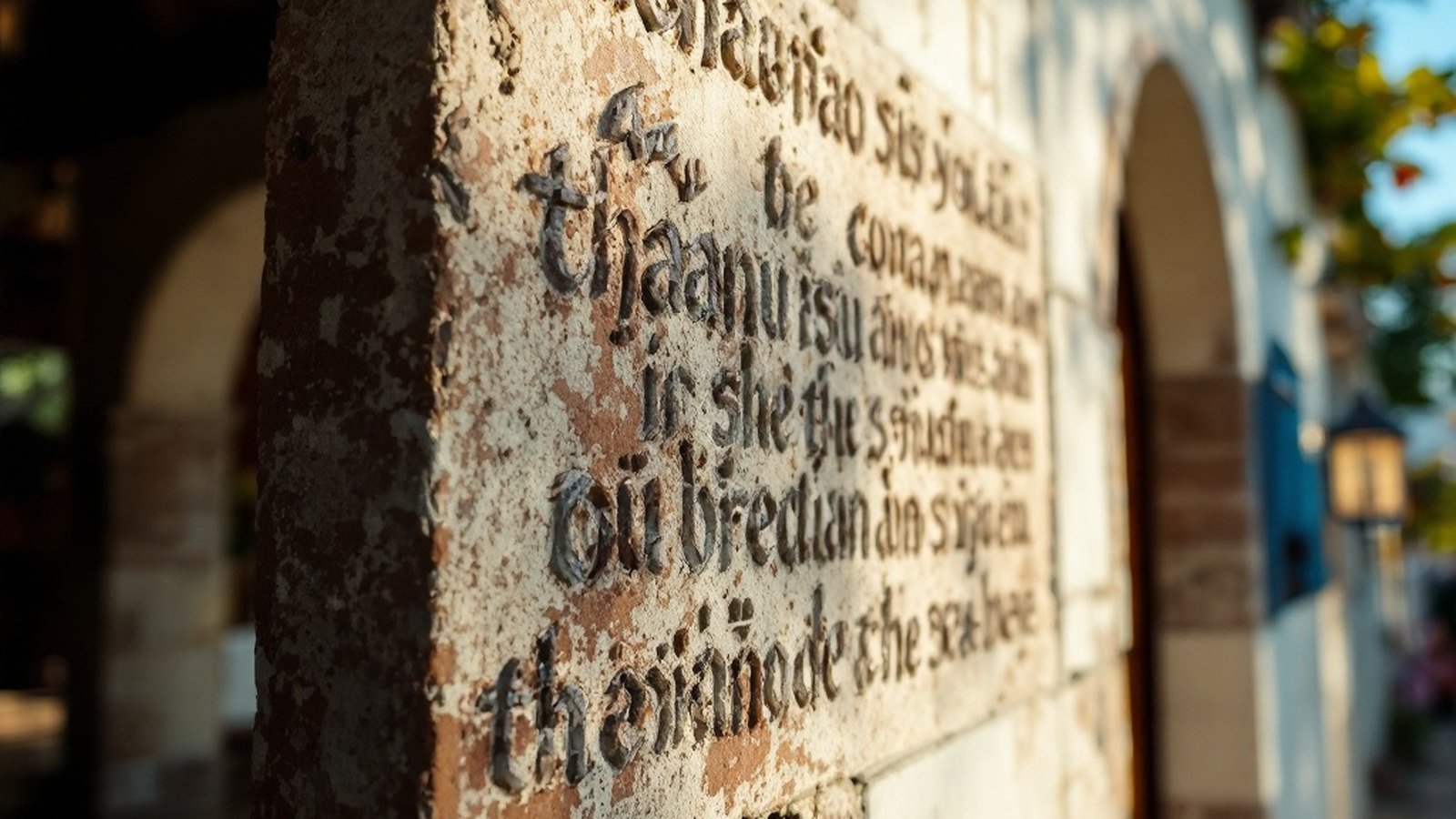
Walk into any government office in Malé, pick up a newspaper from a street stall, or read the carved inscription above the doorway of the Hukuru Miskiy, and you will encounter Thaana — the script used to write Dhivehi, the language of the Maldivian people. It looks, at first glance, like Arabic: letters flow right to left across the page, and small diacritical marks flutter above and below the consonants to signal vowel sounds. But Thaana is not Arabic. It is not related to any neighbouring writing tradition in the way that, say, Sinhala is related to other Indic scripts. It is genuinely its own thing, and its origin is one of the more remarkable stories in the history of writing.
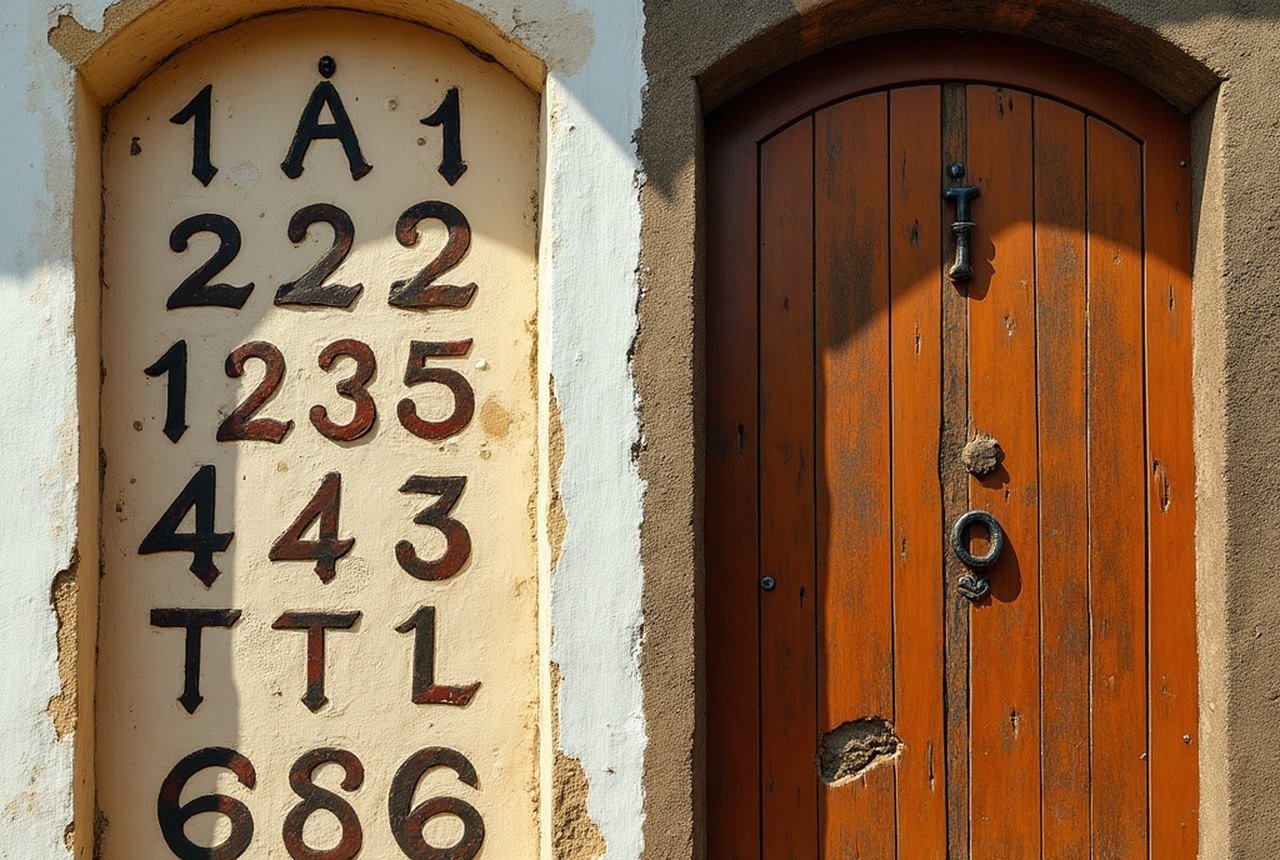
The letters of Thaana were derived from numerals — specifically from a fusion of Arabic-Hindu numerals and the older Indic numeral forms that had long circulated through the Indian Ocean trade world. The first nine letters of the alphabet, beginning with haa, were shaped from Arabic numeral forms. The next nine, starting with meemu, were drawn from Indic numeral shapes. Later additions filled out the script's full range of sounds. The result is an alphabet whose every character carries the ghost of a number inside it: look carefully at the letter haa and you can still see the curve of the Arabic zero; find the numeral ancestry in noonu if you know where to look.
Why numerals? The most widely accepted explanation connects Thaana's emergence to the cowrie shell trade and the networks of commerce that made the Maldives a crossroads of the Arabian Sea for centuries. Merchants and officials needed a practical, private notation — something that literate outsiders, who could already read Arabic or Indic scripts, could not immediately decode. Building a writing system from counting symbols was a clever solution: familiar enough for those in the know, opaque enough to everyone else.
A Script Shaped by Islam
The timing of Thaana's development matters. The Maldives converted to Sunni Islam in 1153 CE, and the gradual displacement of earlier scripts — particularly the Dhives Akuru script that preceded Thaana — took place over subsequent centuries. By the time Thaana was formalised and in common use, Islam was the complete framework of Maldivian public life. The script absorbed that framework structurally: it runs right to left, like Arabic, and its vowel diacritics sit above and below consonants in a manner that closely mirrors the Arabic system of short-vowel marks. A Maldivian schoolchild learning to read Thaana and an Egyptian student learning Quranic pronunciation are, in a mechanical sense, doing a similar thing.
Yet Thaana encodes sounds that Arabic never needed to write. The Dhivehi language has phonemes drawn from its ancient Indic substrate — sounds inherited from the Aryan settlers who first reached the archipelago — and Thaana accommodates them. The script is, in this sense, a cultural portrait in miniature: Arabic in its direction and diacritics, Indic in a portion of its letterforms and some of the sounds it serves.
- Pre-Thaana eraDhives Akuru script in use across the Maldives
- 1153 CEMaldivian conversion to Islam; Arabic script influences begin to dominate formal writing
- Post-1153Thaana gradually formalised, absorbing Arabic direction and diacritic system
- PresentThaana used in all official, literary, and broadcast contexts
Reading Thaana Today
Thaana has twenty-four consonants and is written entirely without capital letters — there is no distinction between upper and lower case. Every consonant requires a vowel diacritic to be pronounced; a special marker indicates when a consonant carries no vowel at all. The system is consistent and largely phonetic, which makes it learnable at speed once the letterforms click into place.
Romanisation of Dhivehi is common on road signs and in informal writing, and younger Maldivians often switch fluidly between the two systems when texting. But Thaana remains the script of official documents, literature, broadcasting and education. Learning even its basic shapes rewards the traveller: the carved inscription on an old mosque wall, the handwritten menu at a local café, the headline on a Malé news-stand — all of them open up differently when the letters are no longer just decoration.
A script born from numbers, shaped by trade, disciplined by faith. Thaana is the Maldives written down.