The Craft That Carries Memory
The Maldives is an archipelago of more than 1,100 islands, and each one carries its own thread of cultural memory. What binds them is not simply the Dhivehi language, or the call to prayer, or shared dependence on the ocean — it is craft. Skills passed quietly from parent to child, long before anyone thought to write them down, and long before heritage became a word that appeared on government forms.
That tradition runs deeper than aesthetics. When an artisan shapes a dhoni by eye, or layers lacquer onto spinning wood, or cuts geometric script into coral limestone, they are not decorating; they are transmitting. The object that emerges is a document — one that any official archive would struggle to replicate.
Laajehun: the Geometry of Continuity
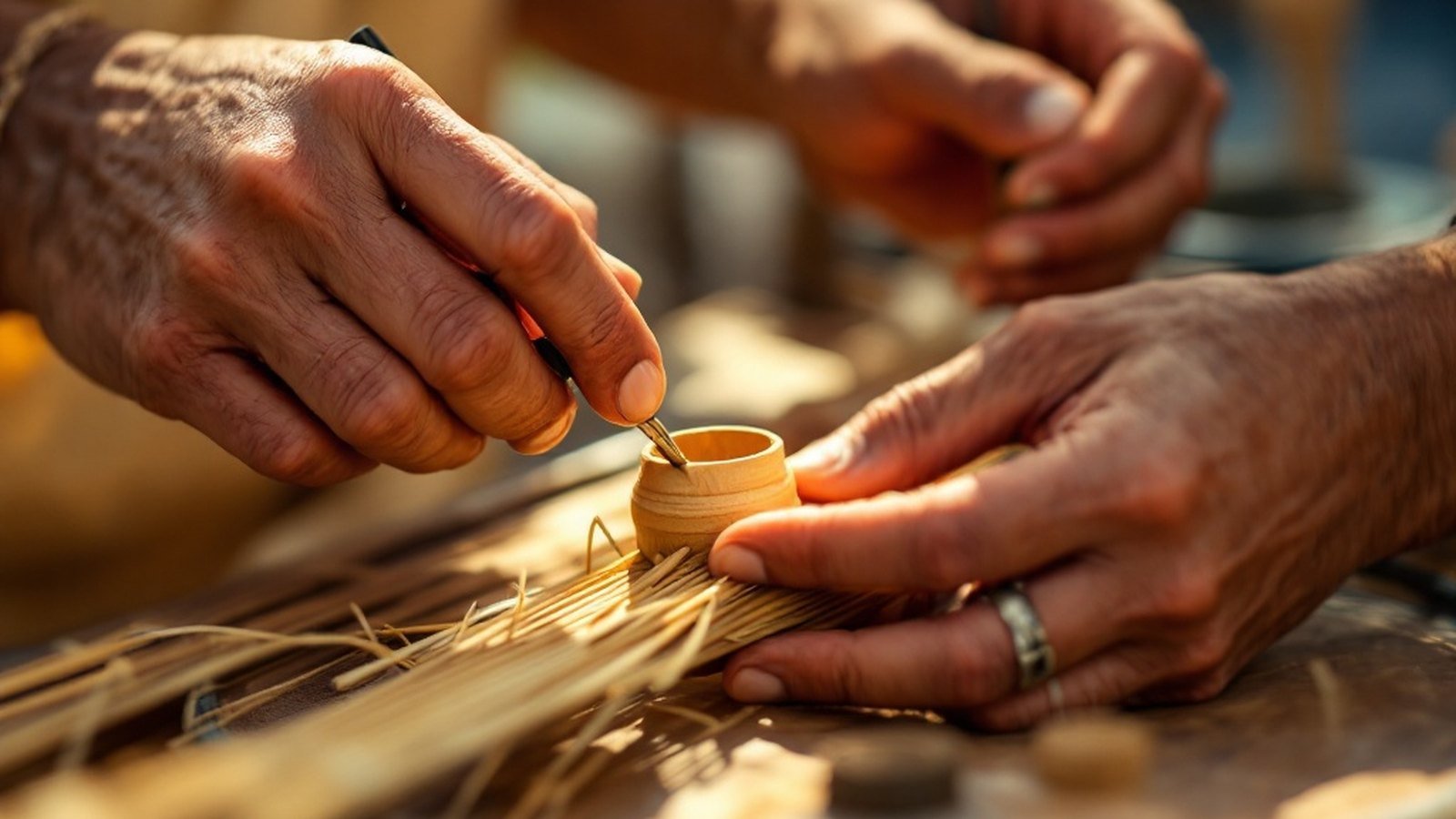
Laajehun — wooden lacquerware — is among the most immediately recognisable expressions of Maldivian craft. Artisans hollow out local timber and shape it into bowls, boxes, and vases, then hand-apply lacquer in deep reds, blacks, and yellows. The geometry draws on influences from South Asia, yet the finished object is distinctly Maldivian: tighter, more restrained, carrying a formality that speaks to the archipelago's long engagement with Indian Ocean trade routes.
Fine pieces are sought by collectors worldwide, but that was never their original purpose. Laajehun objects were functional first — gifts for weddings, vessels for the home, containers for the kind of daily ceremony that binds a household to its past. The craft takes years to master. Lacquer is applied while the wood spins on a lathe, demanding a steady hand and a judgment about pressure, angle, and timing that no manual has ever adequately captured. The only way to learn it is to stand beside someone who already knows.
That dependency — teacher and student, hand and eye — is precisely what makes the craft a form of living memory rather than a museum piece. As long as that chain of transmission holds, the knowledge survives.
The Dhoni: No Blueprint, No Archive
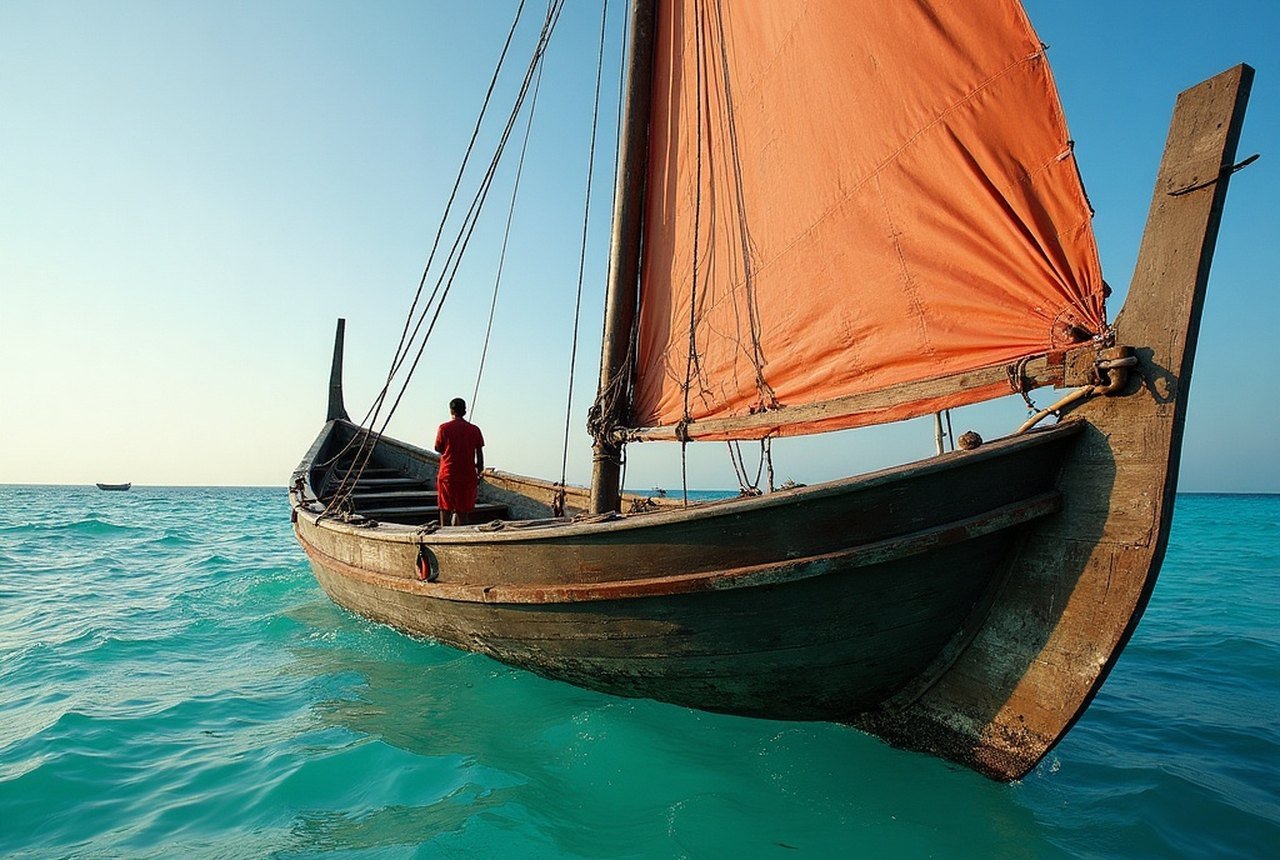
If laajehun is the most visible craft tradition, the dhoni may be the most philosophically striking. Traditional Maldivian boat-builders construct their vessels without formal drawings. There is no blueprint pinned to a wall, no annotated schematic passed between generations. The builder reads the grain and weight of each plank, assesses the curve a timber wants to take, and makes decisions in real time, guided entirely by accumulated knowledge stored in the hands and eyes.
The result — the curved prow, the careful joinery, the proportions that make a dhoni instantly identifiable against any other wooden boat in the Indian Ocean — emerges not from a plan but from a living tradition. Generations of builders have made the same judgments, refined through failure and repetition, until the right choices became instinct.
These boats are not ceremonial objects. They are still launched for the same reasons they were launched centuries ago: fishing, inter-island transport, the ordinary movement of people across a scattered nation. That continuity matters. A craft kept alive only in festivals or demonstrations is already halfway to becoming folklore; one that remains genuinely useful is still history in motion.
Coral Stone and Thaana: the Broader Picture
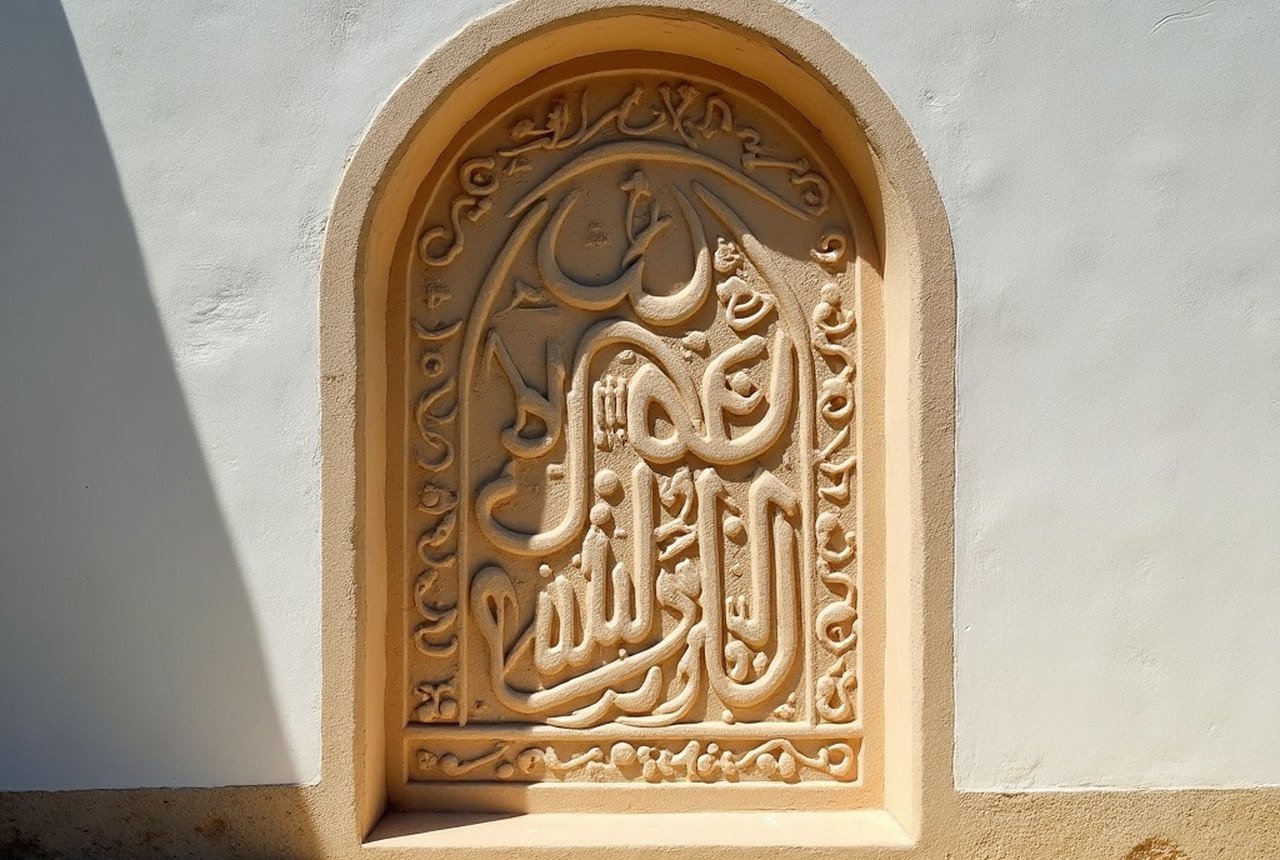
Laajehun and the dhoni are the most celebrated examples, but the impulse to preserve through making runs across Maldivian culture. The coral-stone carving tradition — visible in the mihrabs and tomb panels of historic mosques such as Hukuru Miskiy in Malé — encodes Islamic geometry and early Dhivehi script into the very walls of the island's religious life. Thaana, the Maldives' unique right-to-left script, was itself partly shaped by practical necessity: merchants and scholars adapting Arabic letterforms and Indic numerals into a system suited to Dhivehi sounds.
Each of these traditions answers the same question differently: how does a small, dispersed island culture hold onto what it knows, when the sea makes everything fragile and the library might be an ocean away? The answer, consistently, has been the body. Skills lodged in muscle memory, passed through demonstration, refined in use — these are the archives that have outlasted stone palaces and paper records alike.
What endures in the Maldives endures because someone decided to teach it, and someone else chose to learn.