Origins and the Long Road to Islam
The Maldives — 1,192 coral islands across 26 natural atolls — sits at one of the Indian Ocean's great crossroads. Archaeological evidence places the earliest human habitation at around 1500 BCE. The first recorded wave of outside settlers arrived roughly a thousand years later, believed to be Aryan peoples from the subcontinent. A distinct, better-documented wave followed around 300 BCE: descendants of Tamil communities from south-western India, credited with establishing the foundations of Malé.
What strikes anyone who studies this early period is how little physical evidence survives. The first inhabitants built in wood and organic materials that the humid, salt-laden air consumed long ago. The archipelago keeps its oldest secrets quietly.
Before Islam, the Maldives was a Buddhist kingdom — and that chapter was extraordinarily long. Buddhism is thought to have reached the islands during the third century BCE, around the era of Emperor Asoka, whose missionary influence carried the Dharma across maritime Asia. Excavated remains bear strong stylistic affinities with Buddhist art and architecture of that period. What often goes overlooked is how deeply Buddhist thought shaped Maldivian life before conversion: early institutional structures, architectural sensibilities, and the Dhivehi language itself — rooted in Sanskrit — all carry threads running back through that era. Islam did not arrive onto a blank slate.
The single most transformative moment in recorded Maldivian history is the conversion to Islam in 1153 CE. King Dovemi Kalaminja accepted the faith and declared the Maldives an Islamic country, a decision that would define every aspect of national life thereafter. Arab traders had been passing through the archipelago for generations, gradually preparing the ground for this shift. One aspect of pre-Islamic governance that genuinely surprises people is the prominence of women: before 1153 CE, the country was historically ruled predominantly by women. After conversion that pattern changed sharply — only four queens are recorded across the entire post-conversion period, and the last died in the sixteenth century.
That same century brought Portuguese forces to the islands for a fifteen-year occupation, ended when a Maldivian militia expelled them — a moment of resistance carried in collective memory ever since.
- c. 1500 BCEearliest archaeological evidence of human habitation
- c. 500 BCEfirst recorded outside settlers, believed to be Aryan peoples
- c. 300 BCETamil-descended settlers establish foundations of Malé
- 3rd century BCEBuddhism reaches the islands, linked to the era of Emperor Asoka
- 1153 CEKing Dovemi Kalaminja converts; Maldives becomes an Islamic sultanate
- 16th centuryPortuguese occupation; expelled by Maldivian forces after fifteen years
- 16th centurydeath of the last recorded queen
Craft, Music, and the Question of Dress
Maldivian culture is sometimes described as simply derivative of its neighbours — a characterisation that frustrates anyone who has looked closely. Yes, the language has Sanskrit roots. Yes, Sri Lanka and south India shaped the archipelago profoundly. But the result is not a copy; it is something entirely its own.
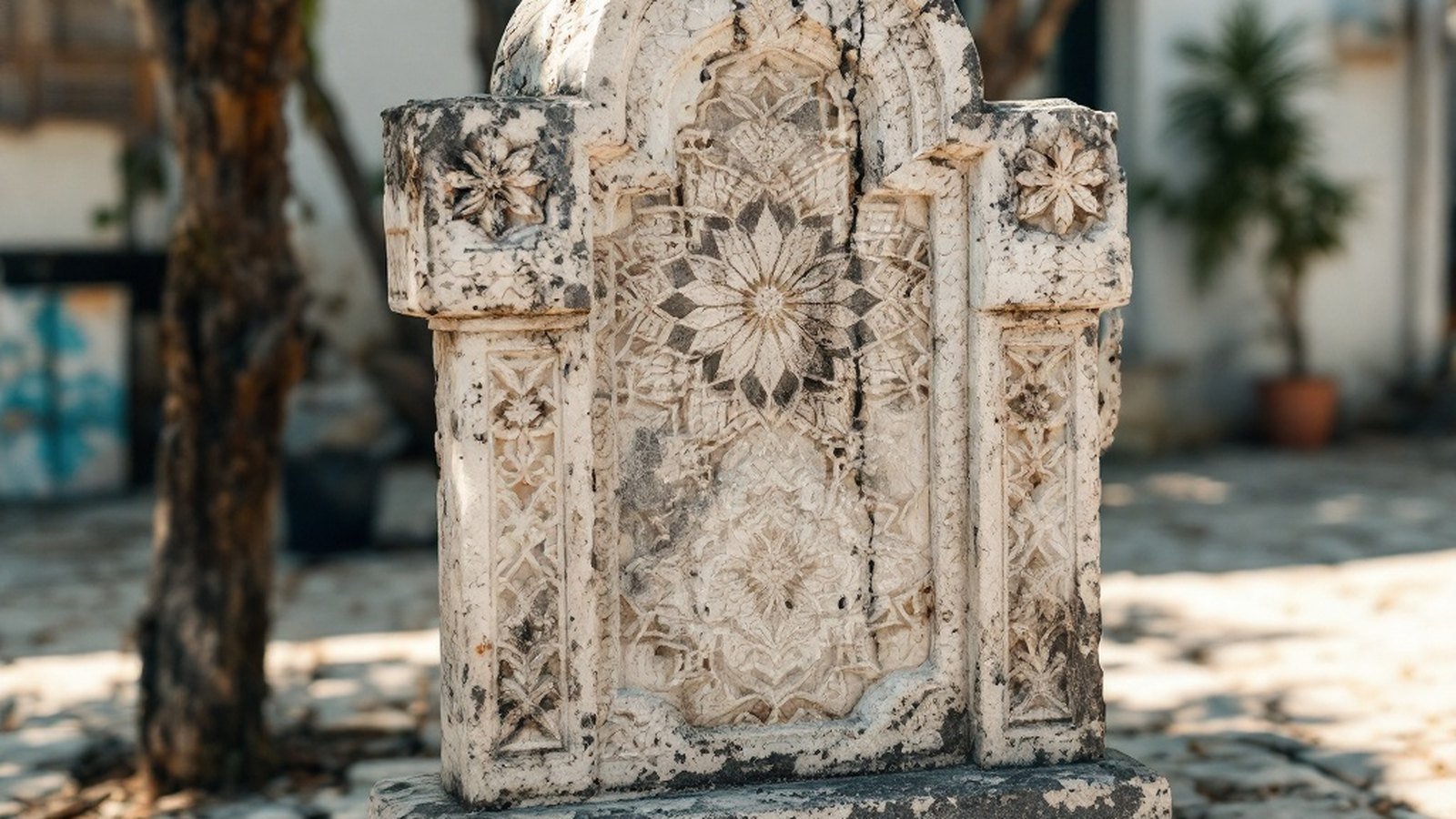
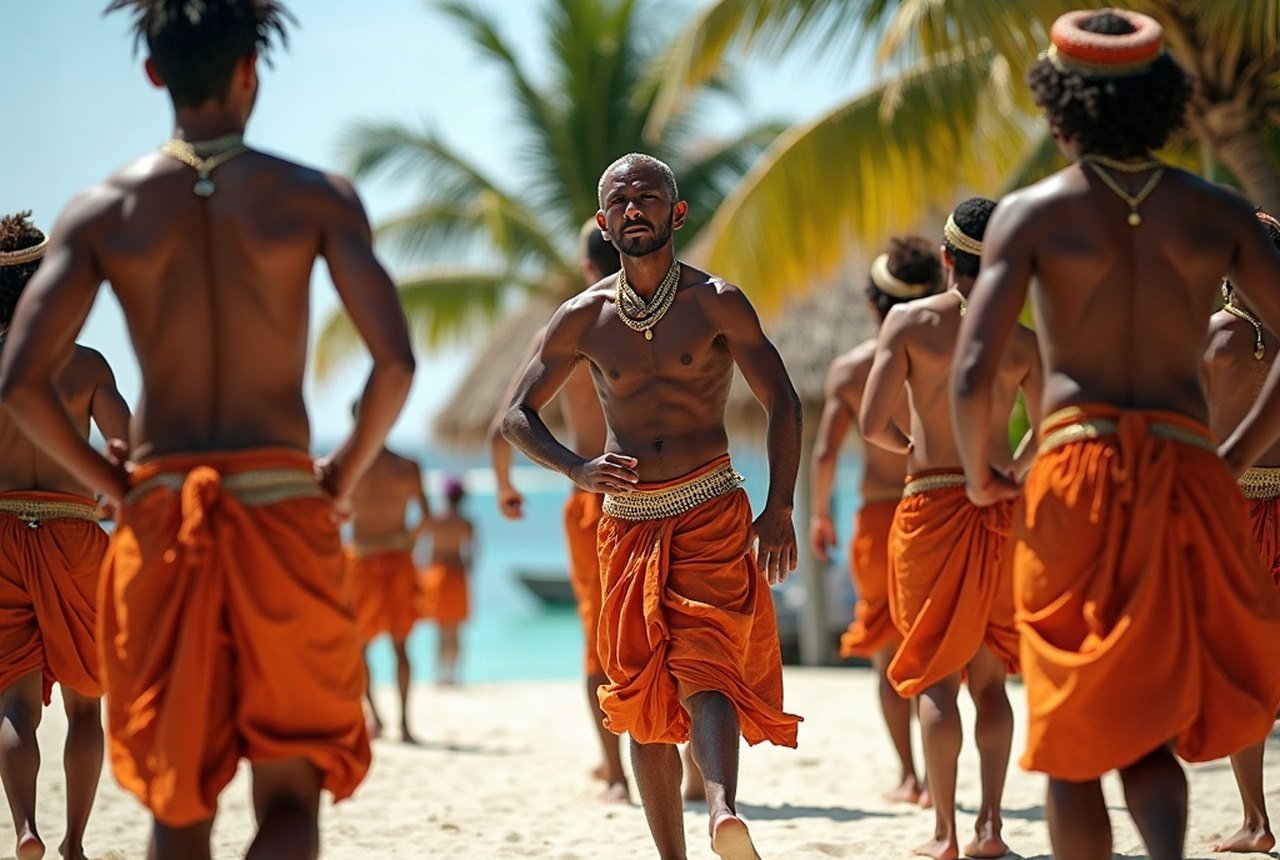
Walk through an old cemetery on any inhabited island and you will find coral-stone tombstones carved with geometric and floral patterns found nowhere else on earth. These are not Indian forms, not Sri Lankan forms. They emerged here, refined over generations by craftsmen working within a specific set of cultural and material conditions. The same applies to bodu beru — the powerful drum tradition central to Maldivian performance. Believed to carry African influences absorbed through Indian Ocean trade routes, bodu beru as it exists today is unmistakably Maldivian: each island, across a geographically scattered nation, developed its own musical identity over centuries.
On clothing, the honest answer is that we know relatively little. The same conditions that erased the wooden houses of the first settlers also erased their textiles. Organic cloth does not survive millennia in a tropical island environment. What can be said is that attire shifted with every layer of history: the Buddhist period, contact with Arab and Indian traders, the Islamic conversion, later the Portuguese and British presences. Each left its mark. Modest dress became the defining framework from 1153 CE onward, but the colours, textiles, and specific forms worn across the atolls retained distinctly local character — regional variations that, like the music, meant each community expressed something of its own identity through what it wore. The early attire of Maldivians remains one of the least-documented chapters of the archipelago's story.
What this whole arc reveals is that Maldivian culture has always been shaped by encounter — Tamil settlers, Buddhist centuries, Islamic conversion, African drum rhythms arriving on trade winds. But shaped by is not the same as defined by. The tombstone carvings exist nowhere else. Bodu beru sounds like nothing else. Dhivehi is spoken only here. That is not the profile of a culture without identity; it is the profile of a culture confident enough to take what the ocean brought and make it entirely its own.