
Origins in the Deep Water
There is a moment, somewhere in the middle of a bodu beru performance, when the rhythm stops being something you hear and becomes something you feel in your sternum. The tempo has been climbing for twenty minutes. The drummers are locked together, three or four of them, each reading the others the way sailors read weather. A dancer at the front has crossed some threshold between movement and trance. And the crowd, which started out watching politely, is now inside it.
This is bodu beru — literally "big drum" in Dhivehi — and it is the most physically and emotionally powerful music the Maldives has produced. It is also the most historically layered, carrying within it the memory of people and trade routes that most visitors to the archipelago never think about.
The origins of bodu beru point unmistakably toward East Africa. The drums themselves — deep, cylindrical, played horizontally across the lap or propped at an angle — are closely related to percussion traditions found along the Swahili coast. The call-and-response vocal structure, the deliberate escalation from slow ceremonial opening to frenzied climax, the possibility of the lead dancer entering a dissociative state: all of these have parallels in African musical traditions brought to the Indian Ocean world by centuries of maritime trade and, more painfully, by the slave trade that connected East Africa to the Arabian Peninsula, the Indian subcontinent and the islands scattered between them.
The Maldives sits at the centre of those old routes. Arab, Indian, East African and Southeast Asian vessels passed through these atolls for centuries, and some of the people aboard them stayed, by choice or otherwise. The African influence on Maldivian culture is most audible in bodu beru and most visible in the features of communities on certain islands — a history the Maldives is only beginning to discuss openly. The music is, among other things, a document of that history.
Anatomy of a Performance
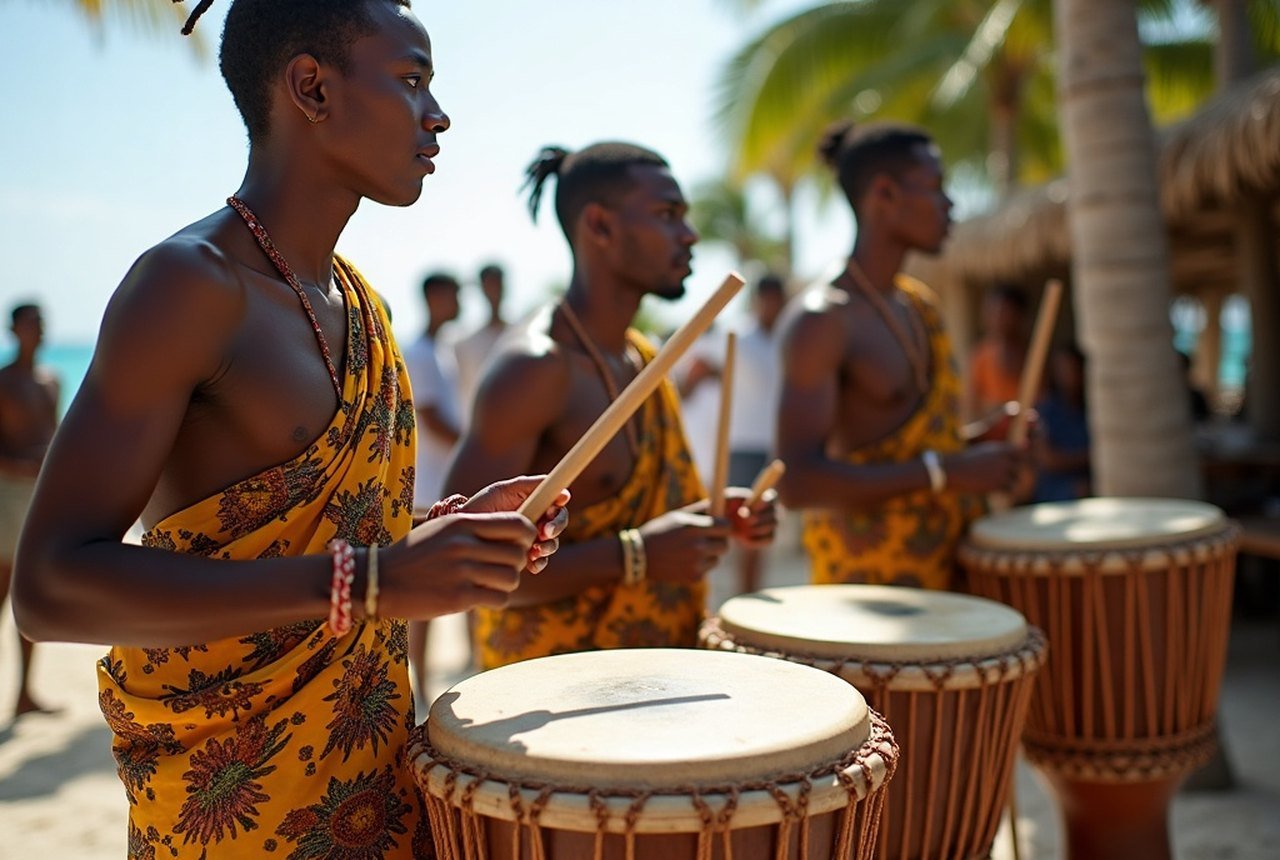
A traditional bodu beru ensemble has a specific architecture. At its core are the drums: each one made from a hollowed coconut-wood body with a skin — historically goat or ray skin — lashed tightly at both ends. Three or more drummers play together, with a lead drummer setting and varying the tempo while the others lock into the groove and amplify it. Alongside the drums, a pair of small cymbals called thaasaa provide metallic accent, and one or more singers lead the vocal lines, answered by the group.
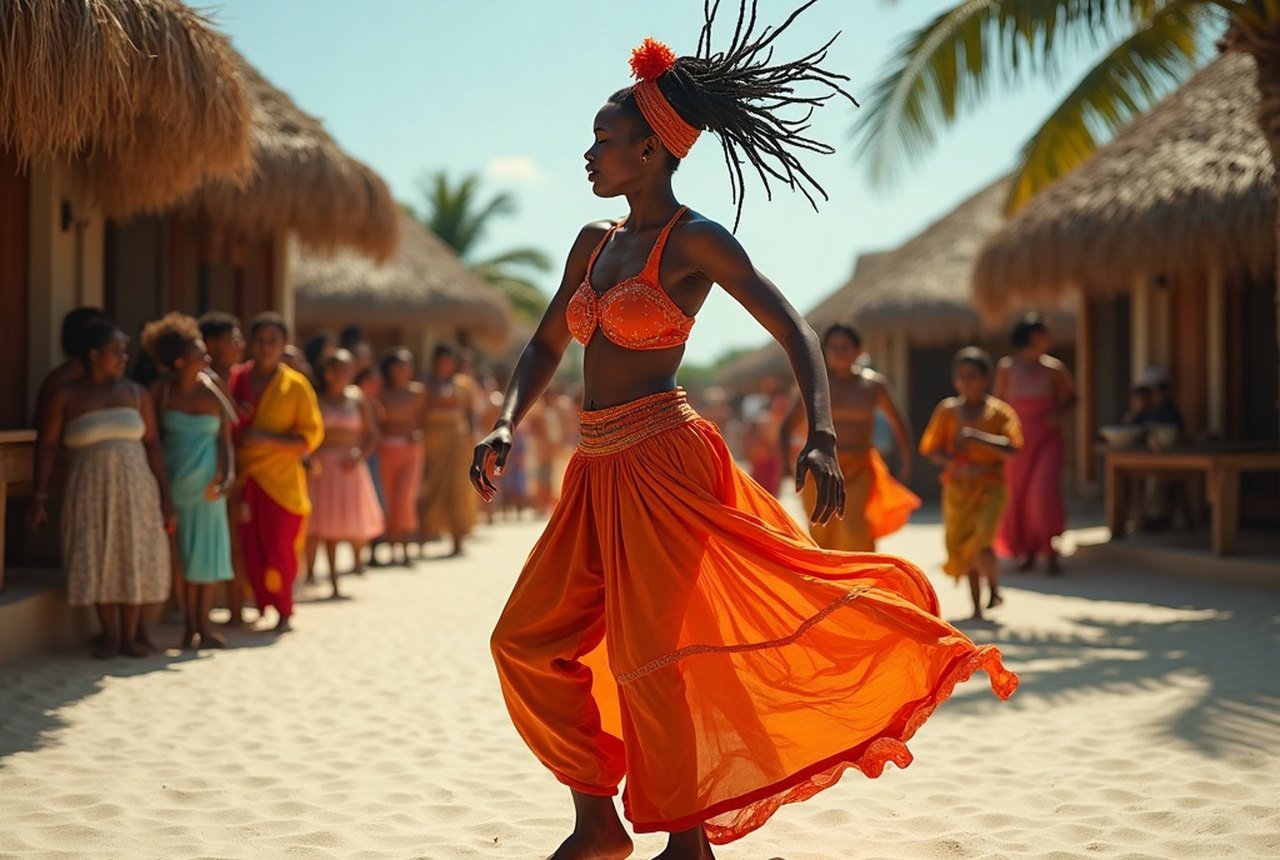
The structure of a performance is essentially a long, controlled escalation. It begins with a slow, almost solemn beat — measured, stately, the kind of rhythm that acknowledges the weight of what is being done. Gradually, almost imperceptibly at first, the tempo rises. The vocal lines become more urgent, the responses sharper. By the time the performance reaches its peak, the drumming has become a dense, driving wall of sound, and the lead dancer — almost always male in the classical tradition — may enter a state called kaashi in some descriptions: a condition of intense physical and psychological arousal in which ordinary inhibitions dissolve, tears may come, the body moves without apparent conscious direction. Elders would sometimes intervene to calm a dancer who had gone too deep.
This arc — slow ritual opening, gradual intensification, ecstatic release — is not incidental to bodu beru. It is the whole point. The music is structured to take you somewhere, and it has been doing so for generations.
The songs themselves cover a wide range of subjects: praise for sultans and heroes, the lives and labours of fishermen, romantic longing, the sea in all its moods. Some songs are specific to islands or atolls, local variants that mark geographical identity. Others are shared across the archipelago, part of a common repertoire that any ensemble from any atoll would know.
From Village Ground to National Stage
For most of its history, bodu beru was performed at community celebrations: weddings, the arrival of the new moon marking Eid, the return of a successful fishing season, events tied to the rhythms of island life. It was not court music — it belonged to ordinary people, to the beach and the communal gathering ground rather than to the palace.
That changed, in a complicated way, during the twentieth century. As the Maldives modernised and tourism began reshaping the economy, bodu beru shifted registers. Resort shows adopted it as a cultural centrepiece, a demonstration of authentic Maldivian tradition for visitors who had not grown up with it. This gave the music a new audience and new economic purpose, and performances became more theatrical — choreographed, compressed into a resort-friendly thirty-minute slot, lit for cameras.
The anxiety this produced is genuine and familiar from cultural traditions all over the world: is the music being preserved or hollowed out? The answer, as usual, is neither cleanly. The resort circuit gave younger musicians a livelihood and kept the instrumentation and basic forms alive. But it also flattened some of the spontaneity — the real escalation, the real possibility of kaashi — that makes bodu beru distinctive. A performance timed to end before the entrées arrive is structurally different from one that ends when it needs to end.
What has kept the tradition genuinely vital is the parallel life bodu beru still lives in inhabited islands away from the resort economy. On islands across Kaafu, Addu, Laamu and other atolls, bodu beru groups rehearse and perform for their own communities, not for tourists. Here the music retains its social function: it marks occasions, it binds neighbourhoods, it gives young men in particular a physical and emotional outlet that is entirely their own. Groups are competitive in the way village football teams are competitive — proud, loyal to their ensemble, convinced their island's style is best.
Isdhoo, the historic island in Laamu Atoll, has long been known for strong bodu beru traditions alongside its other cultural riches, including the largest lōmāfānu (copper-plate inscriptions) collection in the archipelago. Mahibadhoo in Alifu Dhaalu Atoll is another island where performance culture remains strong. These are not museum communities keeping something alive for posterity; they are places where the music is still doing its original job.
The Drum and What It Carries
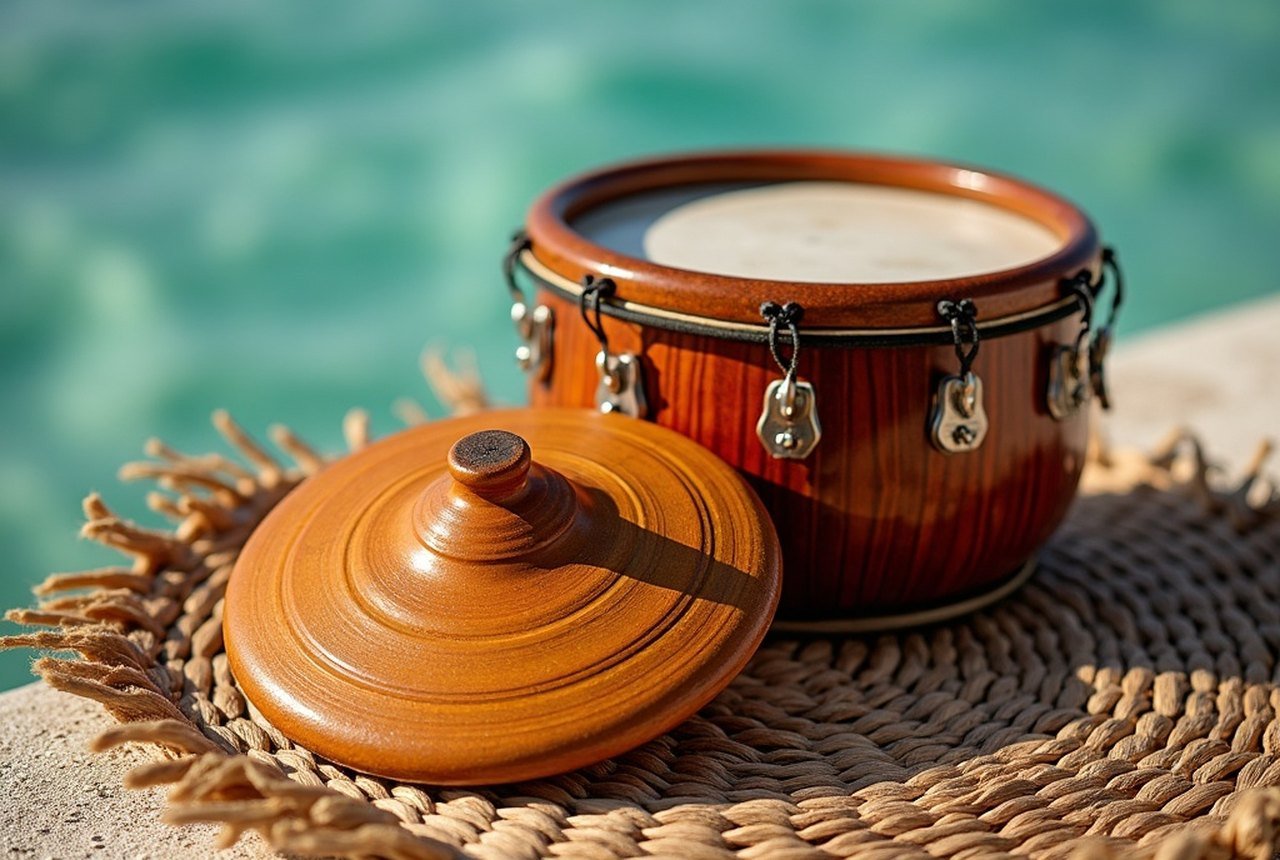
It would be a mistake to reduce bodu beru to entertainment, however magnificent. The music has always lived close to the border between the social and the spiritual. The possibility of trance, the ecstatic state that a full-length performance can produce, places bodu beru in a lineage of music-as-ritual that spans continents. Whether or not the Maldivian performers of earlier centuries would have described what they were doing in spiritual terms — and many were devout Muslims for whom such a framing would have been complicated — the physiological and communal effects of the music created spaces outside ordinary daily life. It altered consciousness, released emotion, created solidarity.
Fandita, the system of traditional Maldivian protective magic and sorcery, has historically had its own relationship to music and percussion, and the two traditions overlapped at the edges of community life in ways that formal religion frowned upon but never entirely extinguished. Bodu beru was not fandita, but both lived in the spaces where pre-Islamic folk belief continued to pulse beneath the surface of a Muslim society.
Today bodu beru is officially celebrated as national heritage. It features in school curricula, cultural festivals and government-sponsored events. UNESCO and regional cultural bodies have taken interest in preserving Indian Ocean intangible heritage of which bodu beru is a key part. The National Museum in Malé holds instruments and documentation. This official embrace is welcome and necessary — but the music's real preservation happens in the hands and bodies of the people who play it because they love it, not because it has been designated.
If you want to encounter bodu beru honestly, go to an inhabited island during Eid or a local wedding. Stand at the back and let the tempo build. Wait for the moment when the rhythm stops being something you hear. That is when you will understand what the big drum is actually for — not to show you something about the Maldives, but to take you somewhere inside it.