Cloth, coral, and coconut breeze
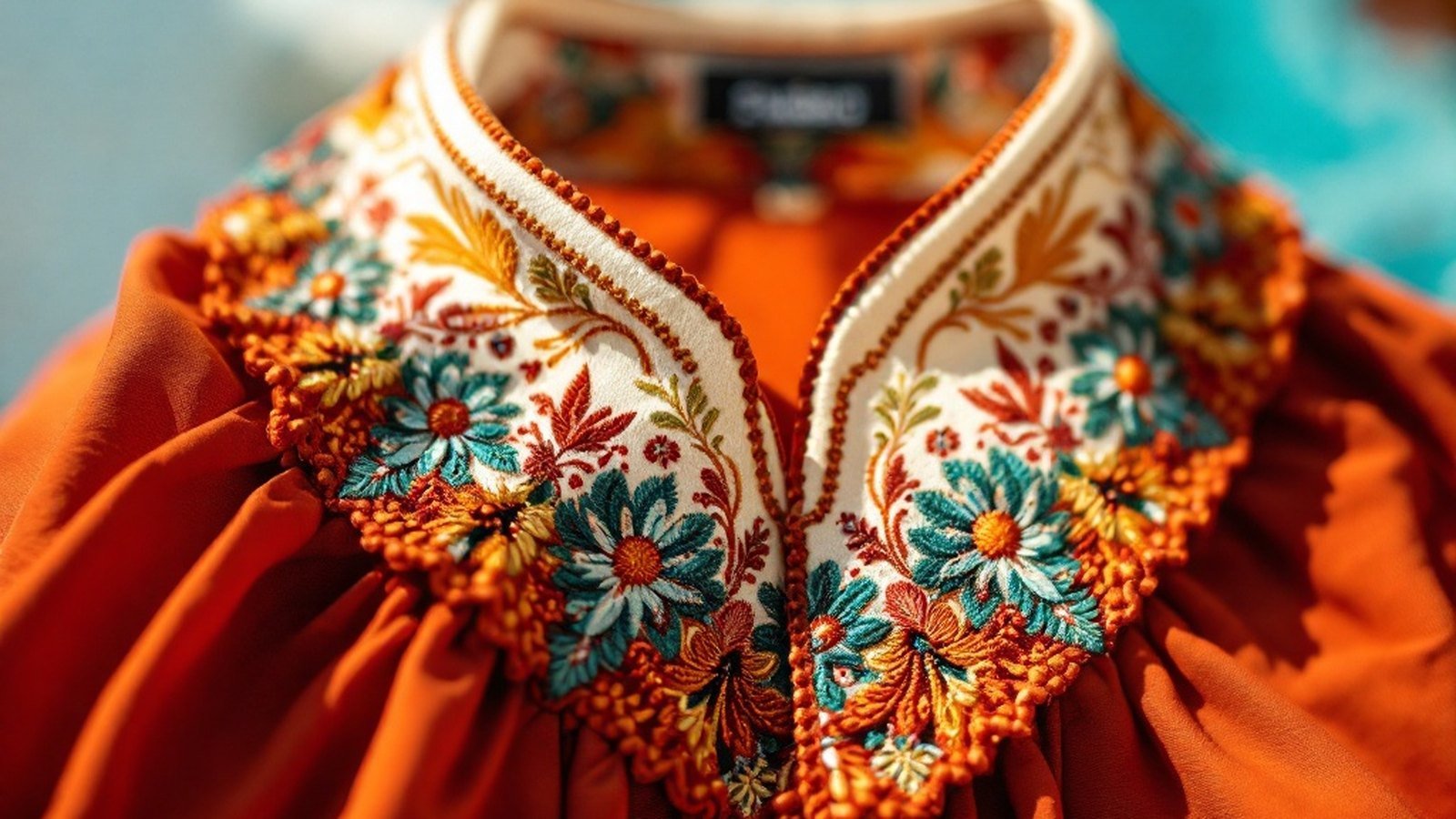
The everyday dress of Maldivian women has long centred on the libaas — a loose, long-sleeved gown typically sewn in fine cotton and distinguished by elaborate embroidery at the collar, cuffs and hem. That needlework, called kasabu, is where the craft truly lives: geometric patterns worked in gold or silver thread that speak to a tradition of painstaking, women-led artistry. On inhabited islands across the atolls, older women can still be seen wearing libaas in deep jewel tones — indigo, crimson, forest green — though younger women increasingly layer the form with contemporary cuts.
Alongside the libaas, Maldivian dress includes the feyli, a hand-woven sarong-style cloth with a striped border, worn wrapped around the waist. The feyli was — and in formal and ceremonial contexts still is — a defining garment of Maldivian dress. Weavers on islands such as Mahibadhoo in Alif Dhaal Atoll have historically produced some of the finest examples, weaving fine cotton or silk with narrow stripes in colours that vary subtly by island, a quiet regional grammar readable to those who know how to look.
Regional variation runs throughout Maldivian dress. In the northern atolls, embroidery motifs tend toward bold, angular forms; in the south, patterns grow more delicate and interlaced. The head covering worn by women — the burugaa in its more traditional form, a loosely draped fabric rather than the fitted styles that arrived later with stronger Gulf influence — also shifts in shade and manner of wearing from atoll to atoll.
These traditions have never fully retreated. National events, school ceremonies and cultural performances bring the libaas and feyli out as statements of identity. The Maldivian government and cultural organisations actively promote traditional dress on occasions of national significance. At bodu beru performances and island festivals, the clothing is inseparable from the occasion — not costume, but continuity.
What strikes visitors who venture beyond the resort islands is how naturally this dress coexists with the present. A woman in a beautifully embroidered libaas checking her phone on a Malé ferry is not performing heritage — she is simply dressed. That unselfconsciousness, more than any museum display, is the truest sign of a living tradition.