The Other Maldives
Fly south past the luxury atolls, or take the overnight ferry, and the Maldives shifts register entirely. On islands like Mahibadhoo in Alif Dhaal, or Isdhoo in Laamu — where an ancient Buddhist stupa still stands, its coral blocks older than the sultanate — the pace is set by the reef, the prayer call, and the communal rhythms that have governed island life for centuries.
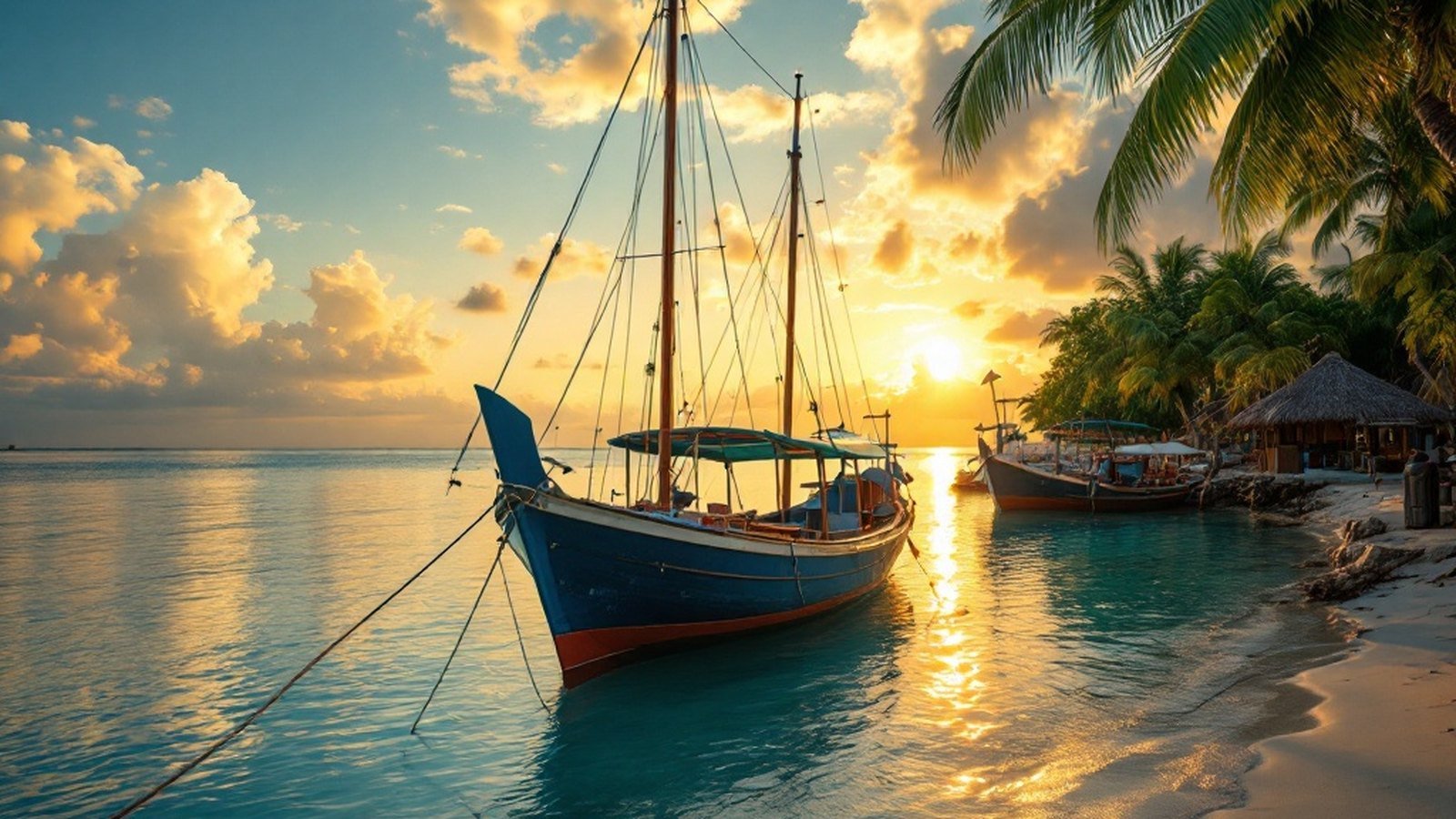
Fishing remains the spine of it. Before dawn, men push dhonis into the lagoon, and on the return the whole neighbourhood knows how it went before the boats have even tied up. The tradition of the fishing chant — vocal work songs that once coordinated the hauling of nets and lines — has thinned but not vanished. Ask around on the right island and someone's grandfather still knows the words.
Kitchens tell the same story. Mas riha — tuna simmered with coconut milk and a clutch of spices — is eaten at almost every midday table, scooped up with roshi flatbread. Hikimas, the dark cured tuna, adds its deep, smoky note to broths and relishes. The hunigondi, a low wooden seat with a serrated grating blade, still earns its corner of most kitchens: fresh coconut is too central to Dhivehi cooking to be replaced by a packet.
Folklore moves through the outer islands differently too, closer to the surface. The demon Rannamaari, said in the old stories to have terrorised island communities before the arrival of Islam, is spoken of here with a familiarity that Malé has largely set aside. Fandita — traditional sorcery — persists in private, woven into the edges of everyday life in ways visitors rarely see but locals quietly acknowledge.
What strikes a careful visitor most is not poverty or isolation but coherence: a community small enough that the mosque, the school, the tea shop and the harbour form a single social circuit. Friday prayers empty every shop. Evenings belong to bodu beru practice or conversation under the breadfruit trees.
Dhanbidhoo, Utheemu, Isdhoo — none of these names appear on a resort brochure. That is precisely the point. These islands are not waiting to be discovered; they are simply continuing, on their own terms, as they have for a very long time.