Life Beyond the Lagoon
Baa Atoll has a reputation built on wildlife. The aggregations of manta rays and whale sharks at Hanifaru Bay draw divers and snorkellers from every continent, and the atoll's designation as a UNESCO Biosphere Reserve in 2011 — the first in the Maldives — cemented its place on the natural-world map. But Baa is also home to around a dozen inhabited islands, each carrying its own weave of craft tradition, dialect variation and daily rhythm that has nothing to do with fins or reefs. Come for the marine life; stay for everything else.
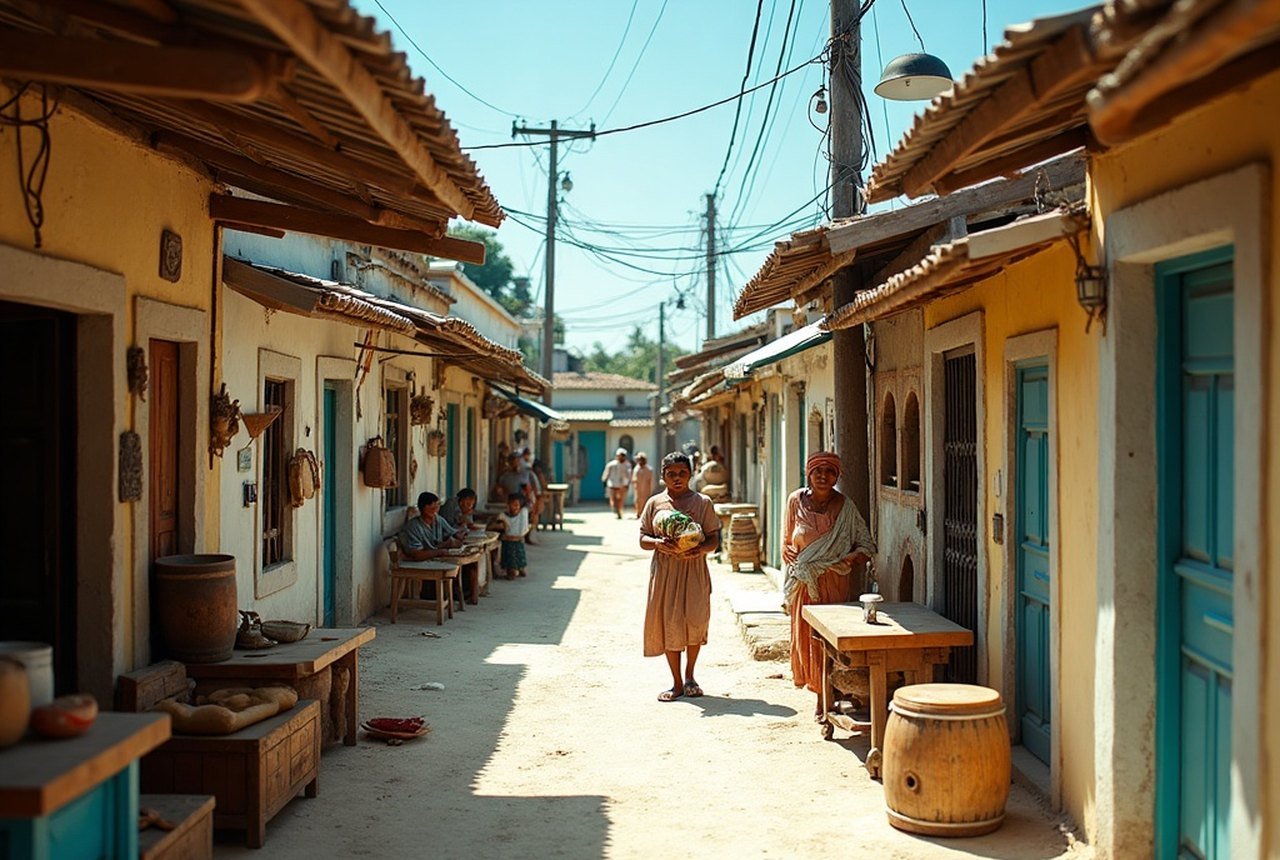
Eydhafushi is the atoll's administrative centre — a compact, busy island where the business of local government, the morning fish market and the afternoon tea shop all operate within easy walking distance of each other. Like most inhabited Maldivian islands, it has a density and sociability that resort islands deliberately lack: children cycling in packs, mosques marking the hours, and households where the smell of hikimas — cured, smoked tuna — drifts from kitchen doors into the lane. This is the Maldives that existed long before the first water villa was built, and it persists here with quiet confidence.
Craft Traditions of the Inhabited Islands
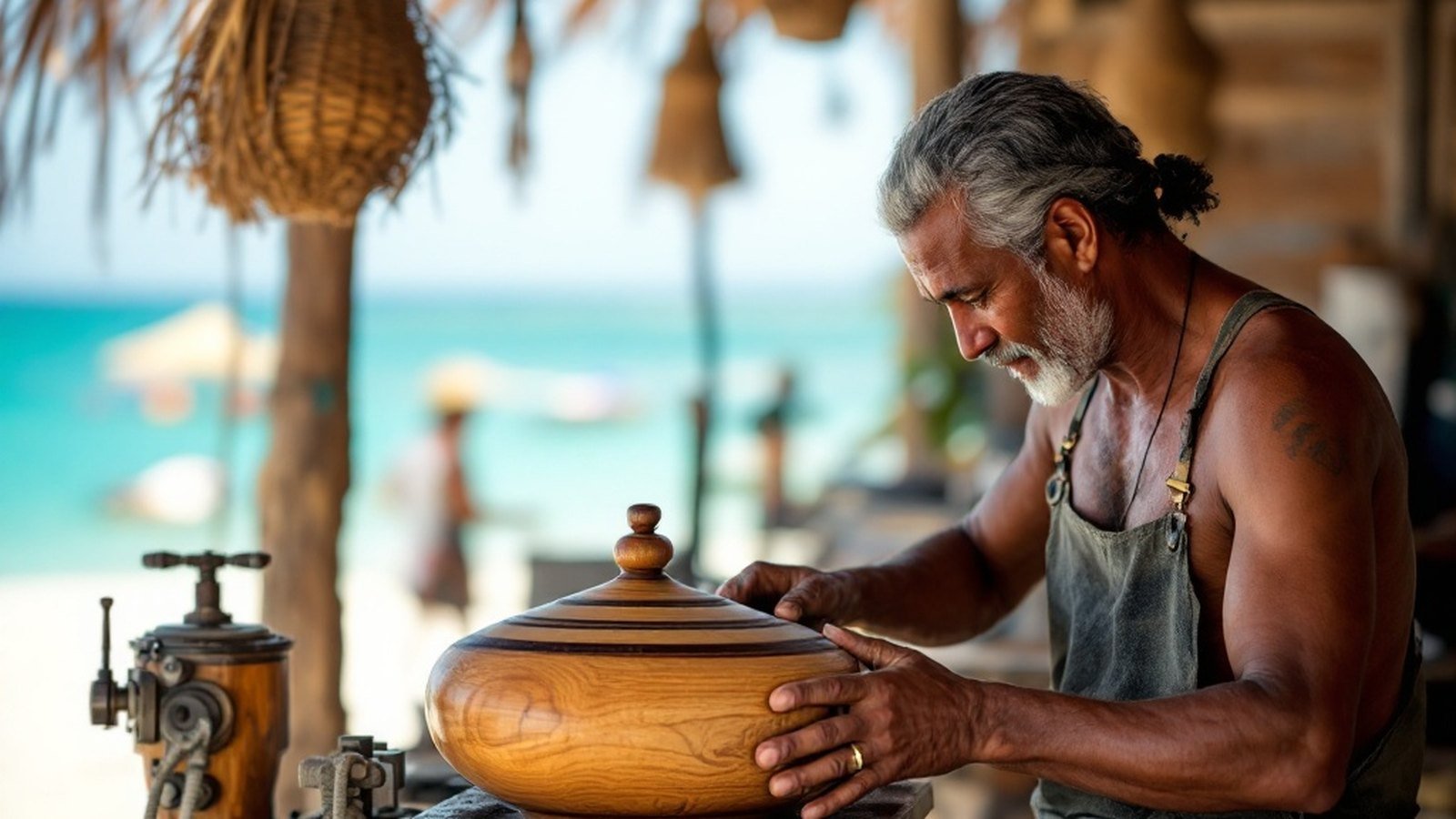
Baa is one of the atolls where lacquerwork — locally called laajehun — survives as a living practice rather than a museum exhibit. Artisans on islands like Thulhaadhoo still turn wooden vessels and boxes on foot-powered lathes, applying successive layers of coloured lacquer — traditionally red, black and yellow — in geometric bands. The work is unhurried and entirely hand-controlled; the pattern emerges from the maker's judgement rather than a template. Finished pieces — vases, lidded boxes, trays — were once central to royal gift-giving in the sultanate era, and today they remain among the most distinctive objects in Maldivian craft.
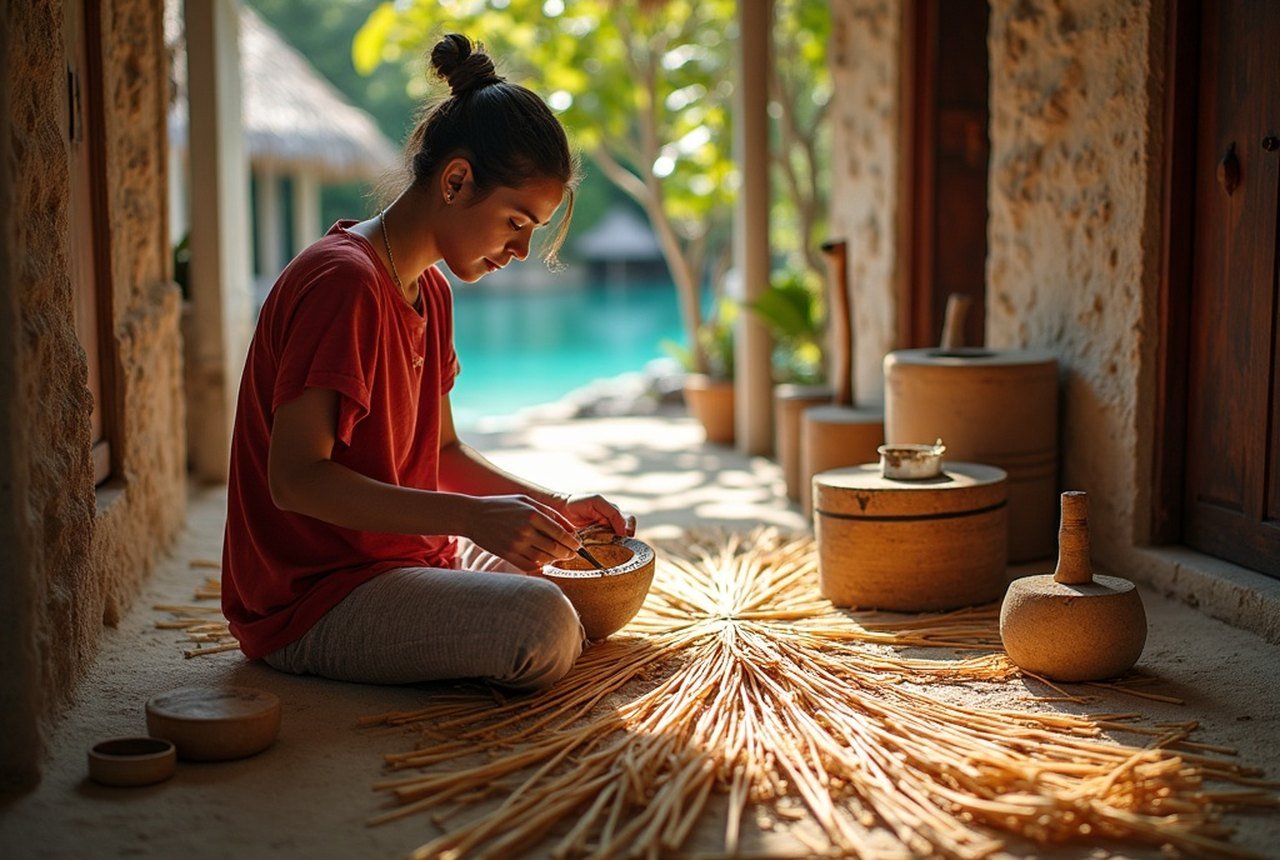
Thatch weaving is another skill distributed across the atoll. Coconut-palm fronds are split, dried and plaited into cadjan panels used for walls and roofing on smaller structures — a building technique that predates coral-stone construction and still appears on fishing islands where speed of repair matters more than permanence. Watching someone plait cadjan is a lesson in the economy of an island culture: nothing from the coconut palm goes to waste.
Bodu Beru and the Sound of the Atoll
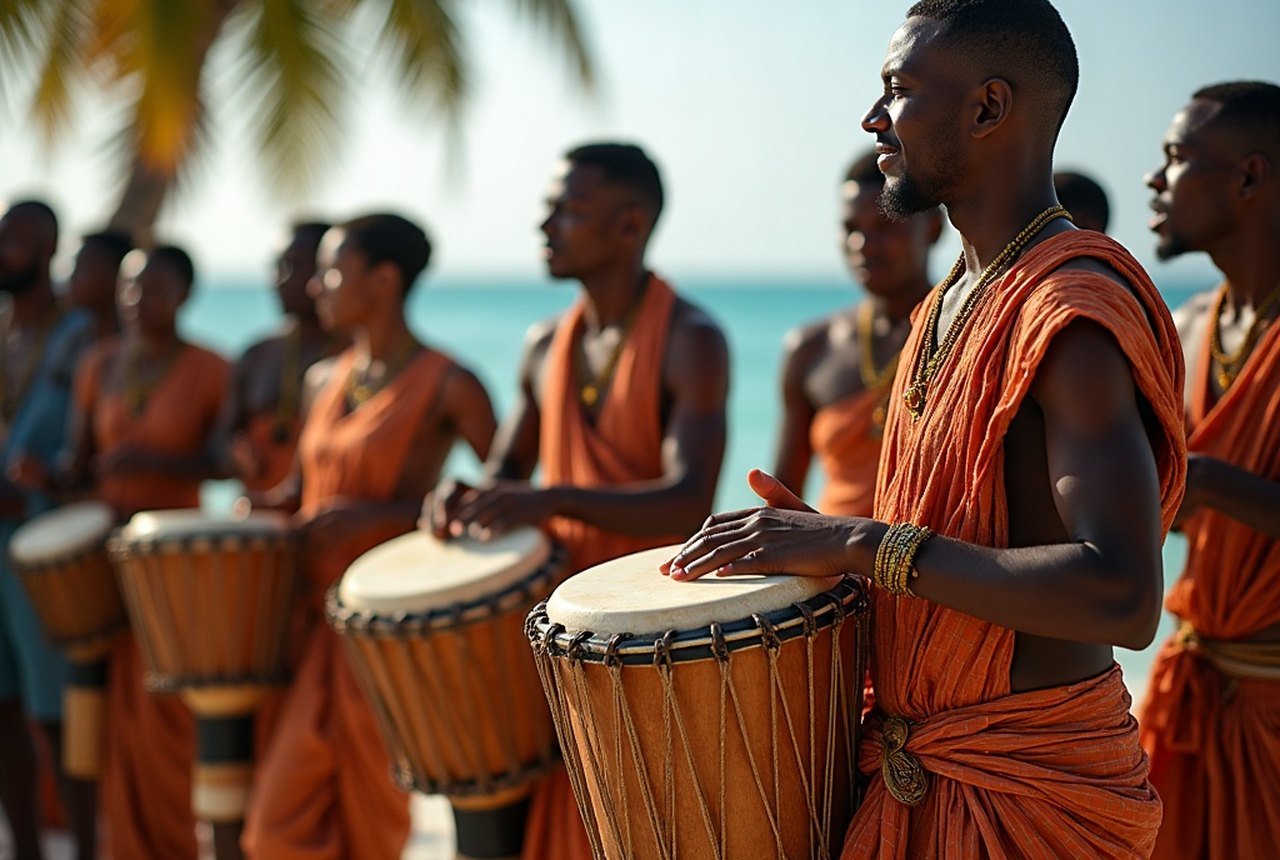
On most inhabited islands in Baa, bodu beru — the archipelago's principal drum tradition, with clear roots in East African musical exchange — is performed at community gatherings, weddings and national celebrations. The drumming begins slowly, with a lead voice setting a call-and-response pattern, and builds through multiple rhythmic layers until some performers enter a state of concentrated, trance-adjacent movement. It is participatory, communal and loud in the best sense: a sound that carries across water. In Baa's islands, as elsewhere in the Maldives, bodu beru is not a tourist performance staged for visitors — it is what people do when there is something worth celebrating.
The atoll also has its share of fandita lore — the older stratum of folk belief and sorcery practice that sits beneath formal Sunni Islam in the Maldivian cultural imagination. Stories of sea spirits and protective charms are part of the oral tradition here, passed in the way such things always travel: between neighbours, in the half-dark, without any claim to certainty.
How to Engage
The inhabited islands of Baa are accessible by speedboat from Malé, and several local guesthouses on Eydhafushi and Dharavandhoo have made independent travel genuinely practical. If you visit during a community event, you will almost certainly be welcomed rather than tolerated. Buy lacquerwork directly from the maker if you can find one working — the difference between a piece made with care and one churned out for a resort gift shop is visible within seconds. And go to Hanifaru Bay, of course — but understand that the manta rays are only one layer of what this atoll holds.