A Living Method
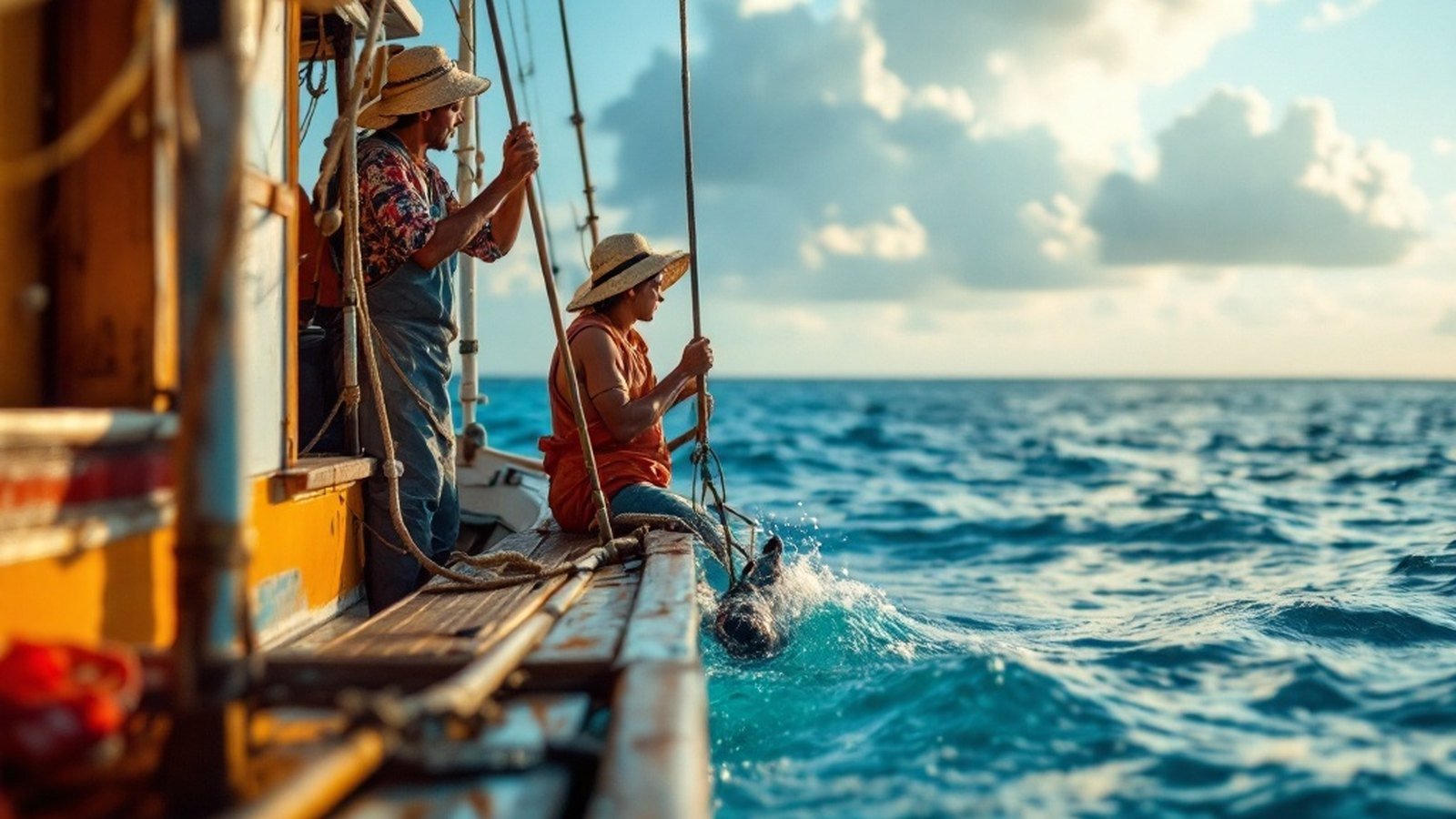
Long before the words "sustainable fishing" entered any international conversation, Maldivian fishermen were already practising it. Pole-and-line fishing — mas faiy jahaigen mas hifun in Dhivehi — is exactly what it sounds like: one fisherman, one line, one hook, one fish at a time. No nets dragged across the seafloor. No bycatch of dolphins, turtles, or juvenile fish. No devastation of the reef ecosystem on which the islands depend. The method is ancient, but its logic holds up against every modern standard the world is only now catching up to.
The target is skipjack tuna — kalhubilamas in Dhivehi — a fast, schooling fish that has fed the archipelago for millennia. Skipjack is the backbone of Maldivian cuisine: dried and smoked into hikimas, the dark, intensely flavoured cured tuna that adds depth to broths and relishes; simmered in coconut milk and spice to make mas riha, the curry that appears on almost every island table; or eaten fresh, charred over embers, with roshi on the side. The fish is so central that the Maldives built its entire food identity — its flavour, its economy, its daily rhythm — on this one species.
Out on the Water
A traditional fishing trip begins before dawn. The mas dhoni — the slender, high-prowed wooden fishing boat that Maldivian craftsmen build without blueprints, by accumulated knowledge and hand — heads first for baitfish. Live bait is the key to the whole operation. The crew locates schools of small fish, scoops them aboard, and keeps them alive in seawater tanks in the hull. Then they head for the tuna grounds.
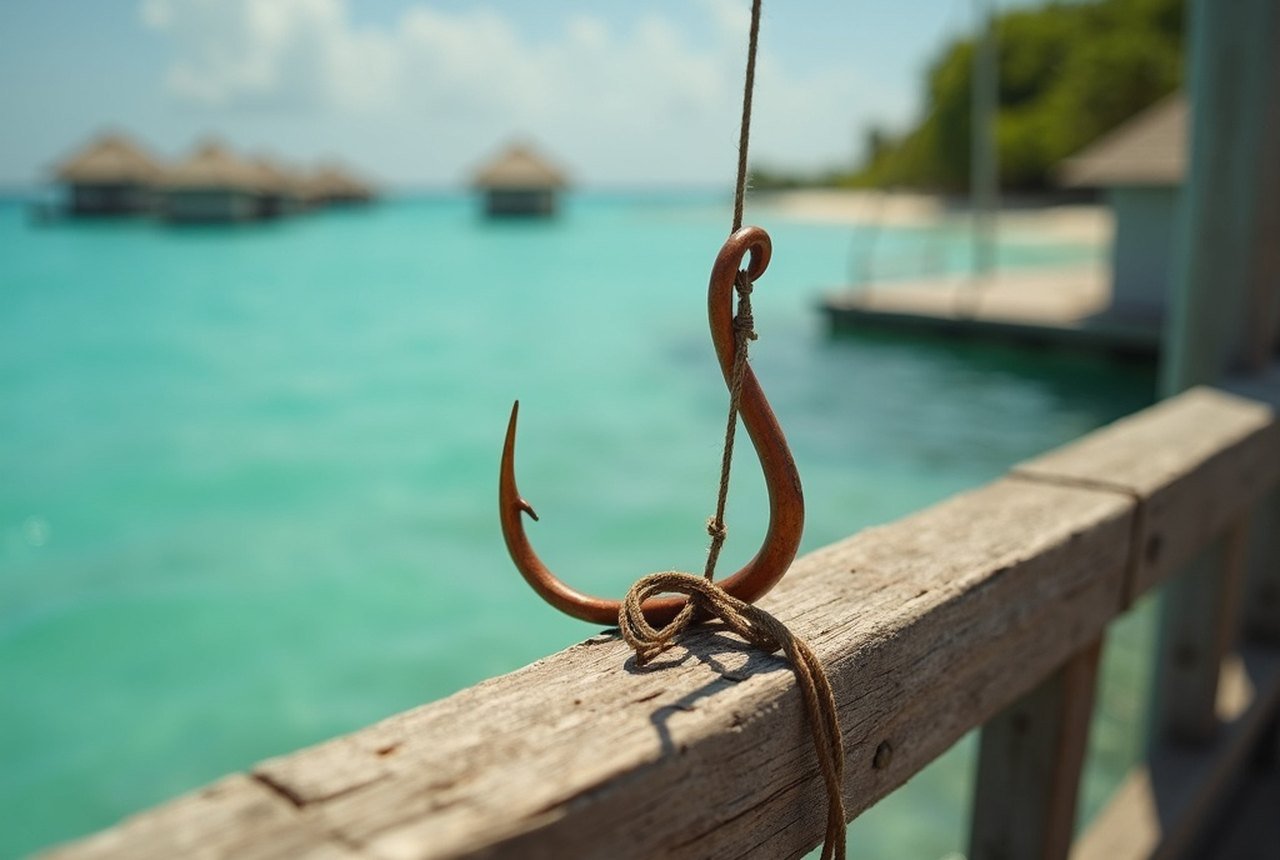
When skipjack are sighted — or when frigatebirds circle and dive above the surface, the oldest of fishing signals — the crew begins chumming: scattering live bait over the side to whip the school into a feeding frenzy. In that frenzy, the tuna stop being selective. The fishermen lower their barbless hooks into the churning water. Barbless is intentional: a barbless hook releases the fish in a single flick, straight over the shoulder and onto the deck, fast enough to keep pace with the frenzy. An experienced crew can land hundreds of fish in a short burst. Then the sea goes quiet again, and they move on.
The physical demand is real. Arms working continuously against the pull of a strong fish in open water, hour after hour, is gruelling work. These are not men fishing for leisure. This is skilled, strenuous labour — and it is work that has passed from father to son across the atolls for generations.
Why It Matters Now
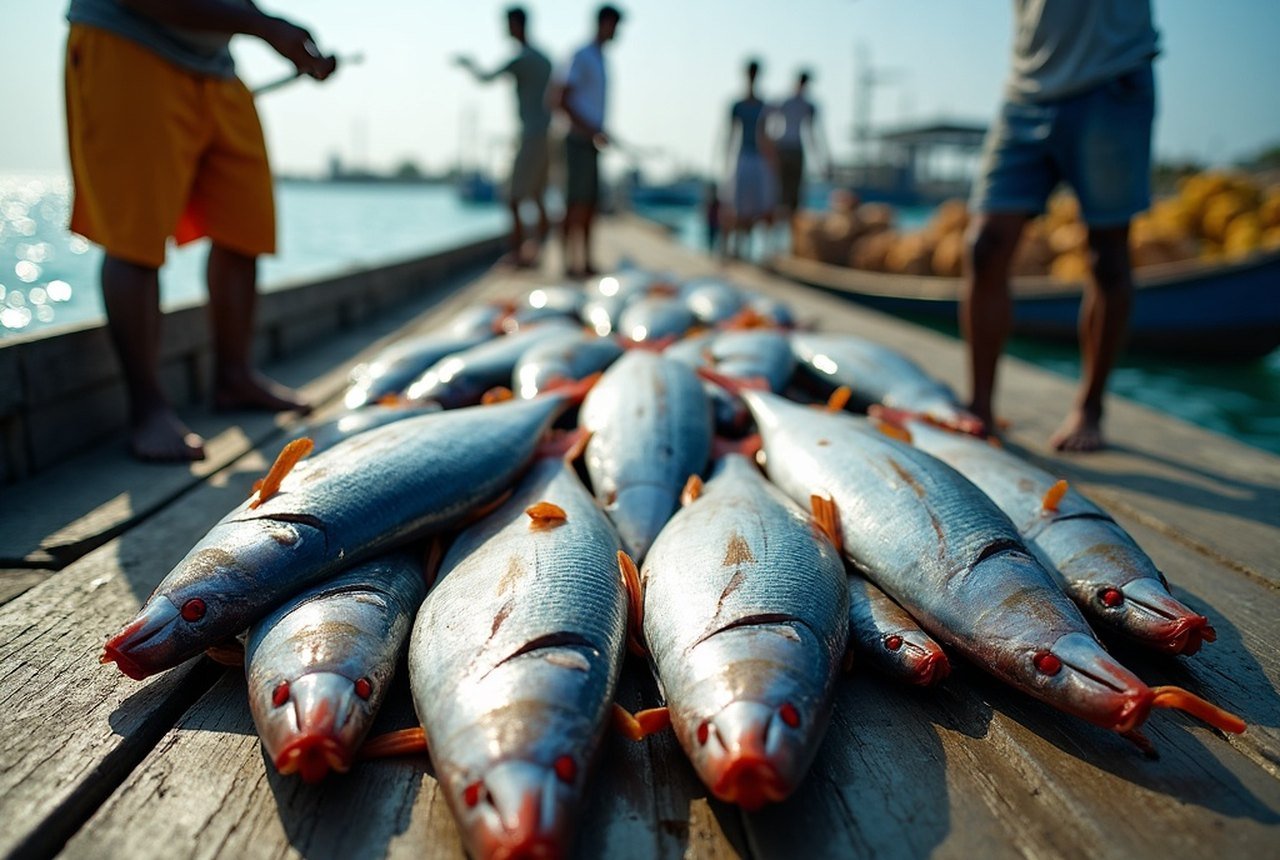
Pole-and-line fishing has received international recognition that other traditional methods rarely achieve. The Maldives' skipjack catch has long held certification from the Marine Stewardship Council, the global benchmark for sustainable wild-capture fisheries. That certification is not decorative. It means Maldivian tuna can reach markets — in Japan, in Europe, in the Gulf — with verified traceability and minimal ecological impact. In a world where industrial fishing fleets are emptying entire ocean basins, one fish at a time turns out to be a competitive advantage.
But the pressures are real too. Younger islanders weigh a life at sea against other possibilities. Fuel costs rise. Climate change shifts the fish. Some atoll communities have seen their fishing fleets shrink as men move to Malé or find work in tourism. The knowledge held in the hands of a seasoned fisherman — how to read the current, where the birds gather, how to feel the weight of a good catch — is not the kind of knowledge that lives easily in a classroom.
What keeps pole-and-line fishing alive is not nostalgia. It is the fact that it works: ecologically, economically, culturally. The dhoni still goes out. The bait still scatters across the surface. And somewhere off the reef, a man flicks a skipjack clean over his shoulder and reaches for the line again.