The Food the Resorts Don't Serve
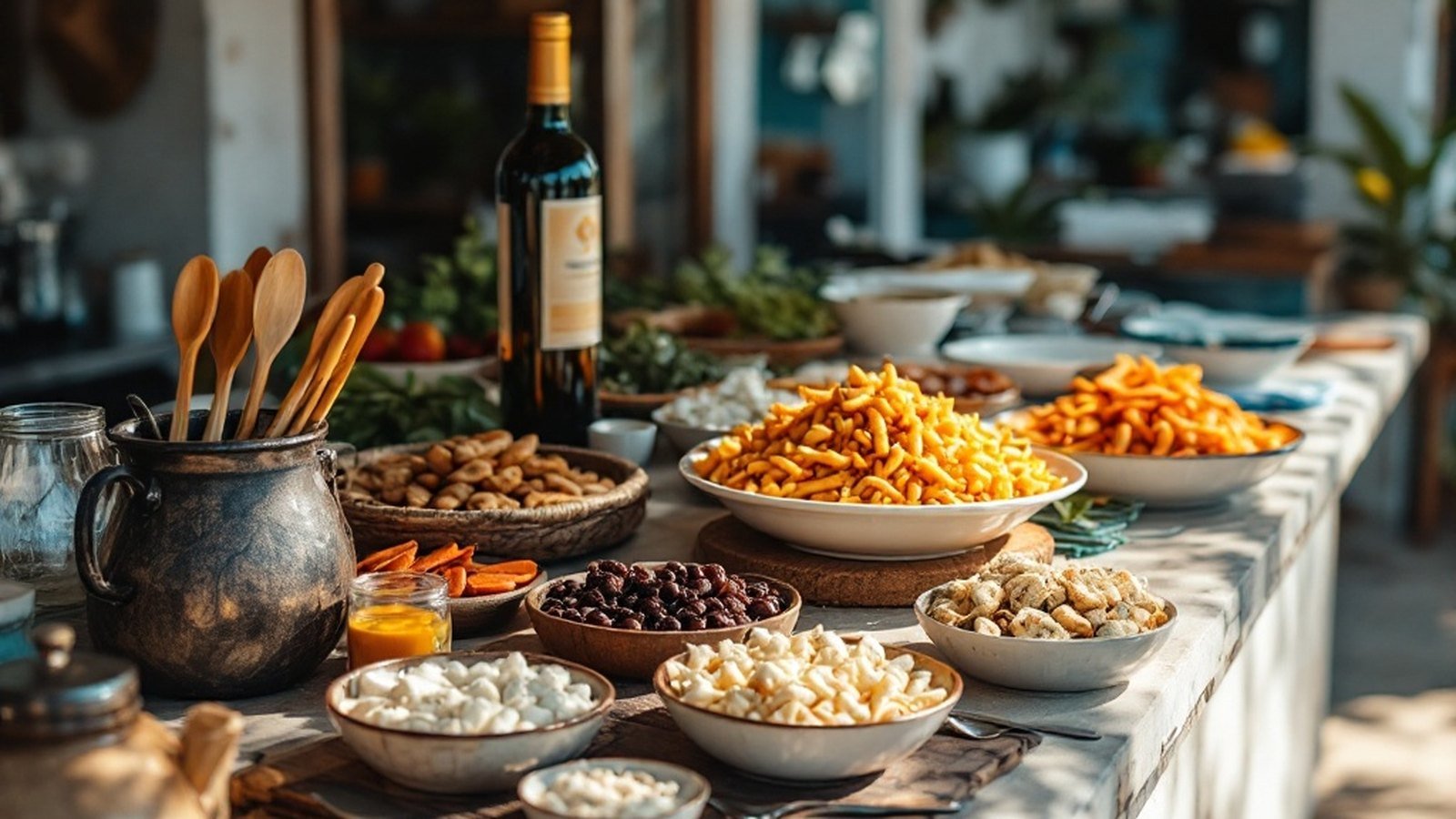
Maldivian cuisine is built on two things: skipjack tuna and coconut. From those two ingredients, an entire culinary world unfolds — mas riha, a tuna curry simmered low and slow in coconut milk with curry leaves, chilli and spices; roshi, the thin unleavened flatbread torn and dragged through it; and hikimas, the cured, smoked tuna that gives broths and relishes a deep, almost elemental savour. These are everyday foods, eaten at home and in the small local cafés called hotaa, and they taste nothing like the "Maldivian-inspired" dishes plated up at resort restaurants.
The architecture of a local meal is also different. Breakfast — hedhikaa — is the main event. Islanders eat it seriously: short eats piled on the counter, tea poured strong and sweet, the day's business conducted over little fish-stuffed pastries and tuna-filled roshi rolls before the heat climbs. Lunch is rice and curry. Dinner is lighter. Visitors who calibrate to this rhythm eat much better.
Where to Sit Down
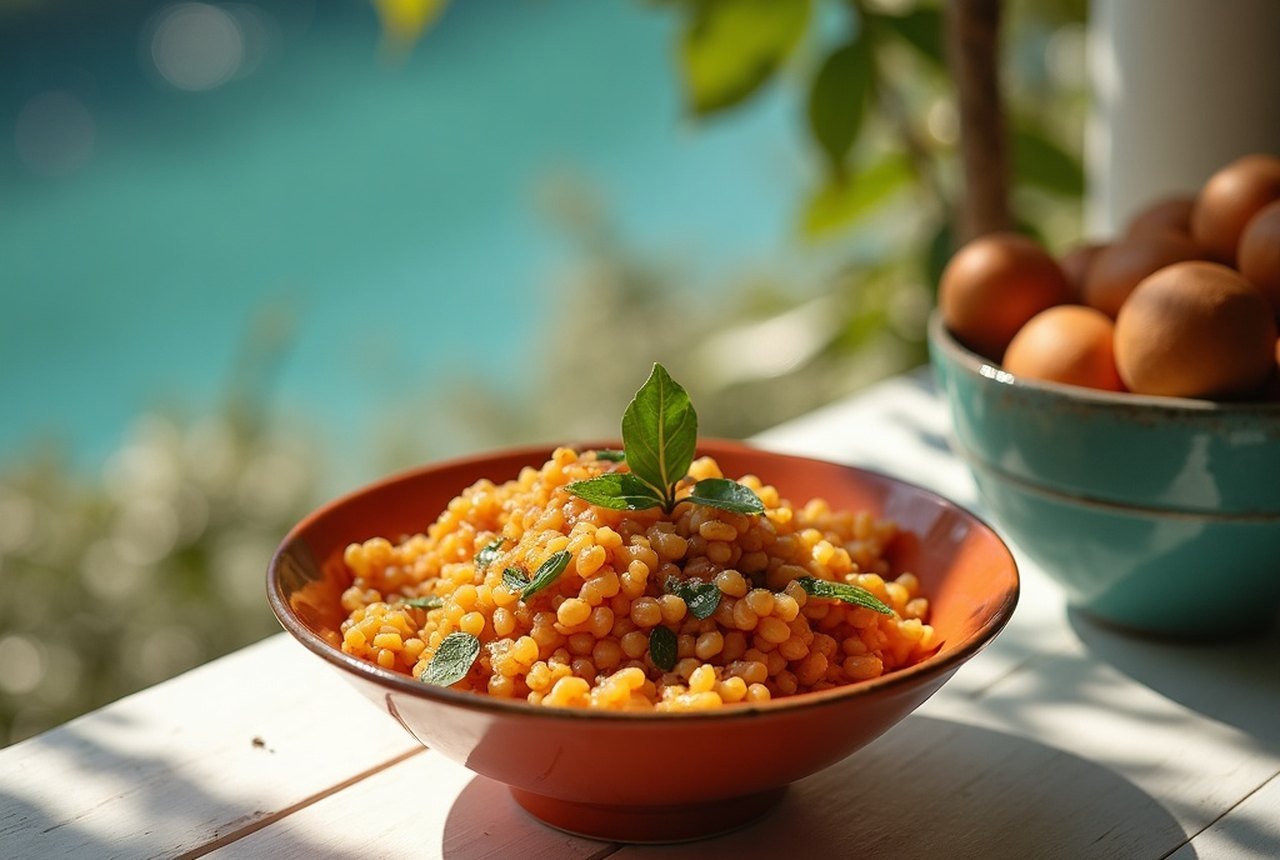
In Malé, the capital, the density of local eateries means you're never more than a few minutes from something real. The city runs on its hotaa culture — small, no-frills cafés that open early and close after dinner, serving short eats through the morning and rice plates at midday. Irudhashu Hotaa is one of the names that locals mention with the kind of casual certainty that means the food has always been good. Seagull Café, a longer-established spot near the waterfront, draws a mix of residents and the rare in-the-know visitor. Neither place will present you with a laminated tourist menu. You point, you pay in rufiyaa, you eat.
The inhabited islands — the ones with permanent local communities rather than resort infrastructure — are where the food becomes even less performed. On islands across the atolls, small tea shops serve the same short eats culture: gulha (fish-filled dough balls), bajiyaa (spiced tuna pastries), kulhi boakibaa (spiced tuna cake). Ask what's freshly made. In the Maldives, freshness is not a marketing claim — fishing is still practised daily, by hand, using a single-line technique that keeps bycatch almost non-existent. The tuna on your plate this morning may have been in the ocean last night.
A Few Practical Notes
Menus, where they exist, are often in Dhivehi. Prices are in rufiyaa — a full rice-and-curry lunch costs a fraction of anything at a resort. Friday prayers mean that commerce pauses around midday on Fridays; plan accordingly. On local islands, the rules around dress and alcohol (absent entirely outside resorts) apply everywhere, including wherever you eat.
Getting to inhabited islands from a resort requires intention: a speedboat transfer, or the government ferry network, which is slow, affordable and unexpectedly good for understanding how the country actually moves between its atolls. Day trips to local islands are now common from resorts; if yours offers one, treat the hotaa stop, not the souvenir shop, as the point of it.
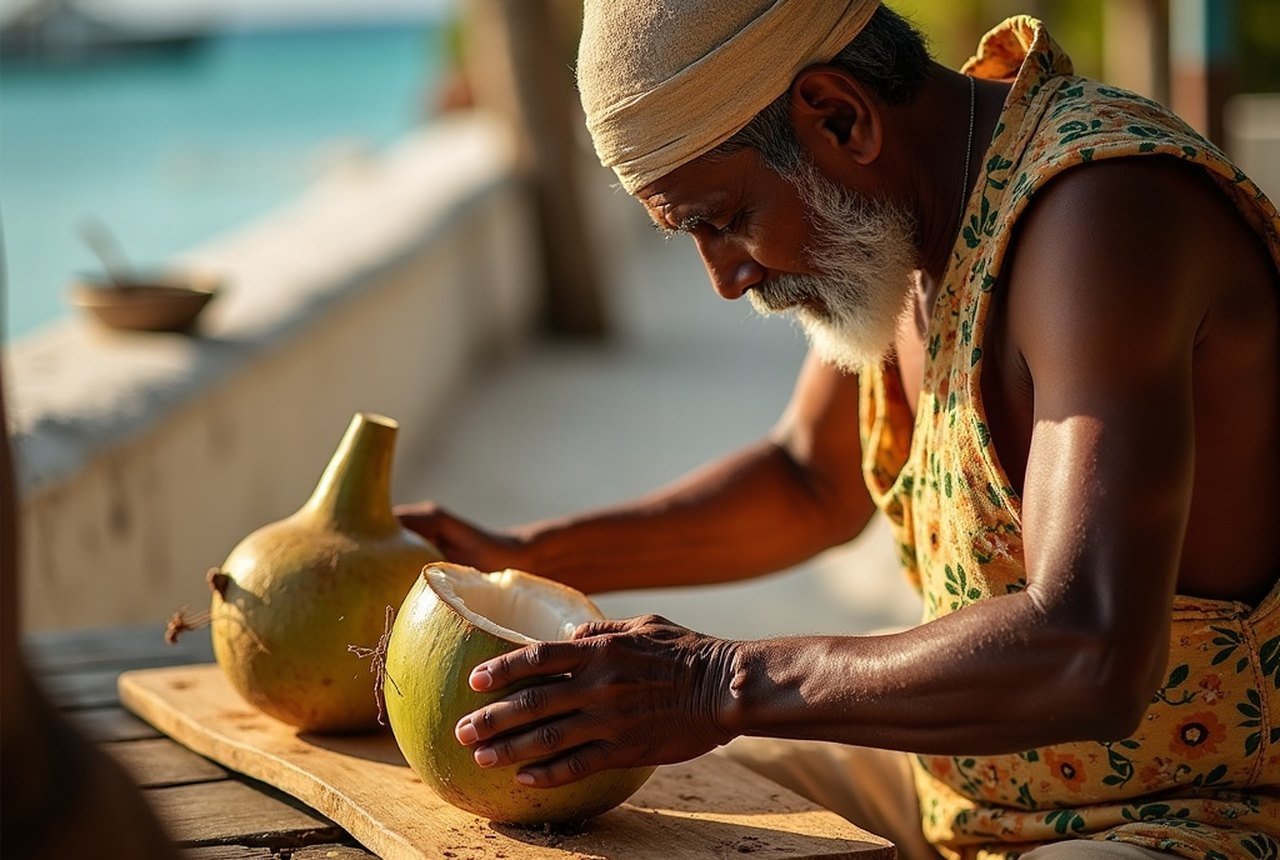
One tool worth seeking out wherever you are: the hunigondi — the traditional low coconut-grating stool — won't appear on your plate, but its product will be in almost everything. Freshly grated coconut folded into a relish, pressed into a paste for curry, scraped over rice: it is the labour behind the flavour, and it is still done by hand in most local kitchens. The culinary heritage of the Maldives survived centuries of isolation and trade precisely because it was practical, resourceful and deeply tied to what the reef and the palm tree could give. That hasn't changed. You just have to leave the resort to taste it.